Background: Quality incentive programs are increasingly used in hospitalist groups and can drive improvement in focus metrics (1,2). Due to the nature of hospitalist work including frequent signout and handoffs, group rather than individual metric attribution can be considered for certain metrics and incentive targets set for either individual or group performance.
Purpose: We investigated the acceptability of group vs. individual quality metrics and impact on individual performance improvement to inform the design of a quality incentive program that is equitable, impactful, and aligned with frontline hospitalist values.
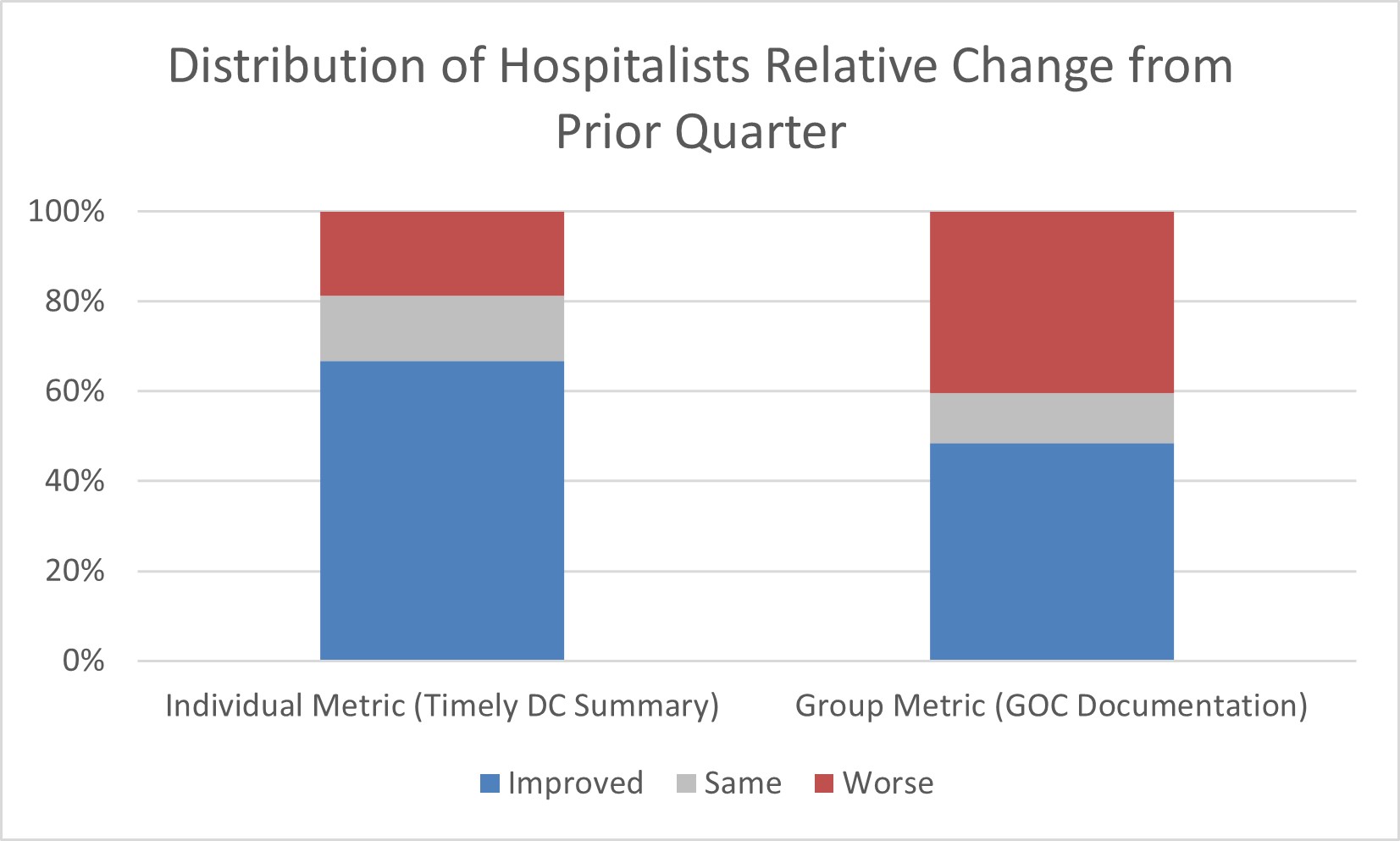
Description: In the design phase of a new hospitalist quality incentive program, we sought input from the group via a Qualtrics survey completed by 121 hospitalists (80% response rate). 40.7% percent reported preference for individual quality metrics, 19.5% for group metrics, and 39.8% no preference. There was no difference in preference for individual metric associated with gender, race, ethnicity, years in practice, work engagement, burnout, or involvement in quality improvement or service. Hospitalists involved in committees were more likely to prefer an individual metric (p=0.0375). The quality incentive program launched in July 2024 with one individual (timely discharge summaries) and one group (goals of care documentation) metric. In the first quarter, the group mean improved significantly in both metrics (from 85.4% to 93.3% of discharge summaries signed within 48 hours and 35.8% to 46.0% eligible patients with goals of care documented). 80.5% of hospitalists eligible for the incentive maintained or improved their performance on the individual metric whereas 59.7% of hospitalists maintained or improved their individual performance on the group metric. This difference is statistically significant with p=0.006.
Conclusions: Both individual and group quality metrics appear to be acceptable and motivate hospitalist behavior change and improvements in focus clinical metrics. In the first quarter after incentive program launch, significantly more individuals improved or maintained performance on the individual compared to the group metric. This difference will need to be monitored for persistence over time and across multiple different individual and group metrics.