Background: Chronic kidney disease (CKD) is associated with adverse perioperative outcomes, including mortality, with risk increasing with severity of CKD. (1) Long term dialysis is also associated with pneumonia, unplanned intubation, reoperation, and vascular complications. (2) Common preoperative practices for end stage renal disease (ESRD) patients include measuring day of surgery (DOS) potassium levels. Little literature addresses this practice, and the few available studies have been conducted in specific patient populations, such as transplant and parathyroidectomy. (3,4) Although it is common for ESRD patients to have DOS potassium measurements, it is unknown how often these are abnormal or change management.
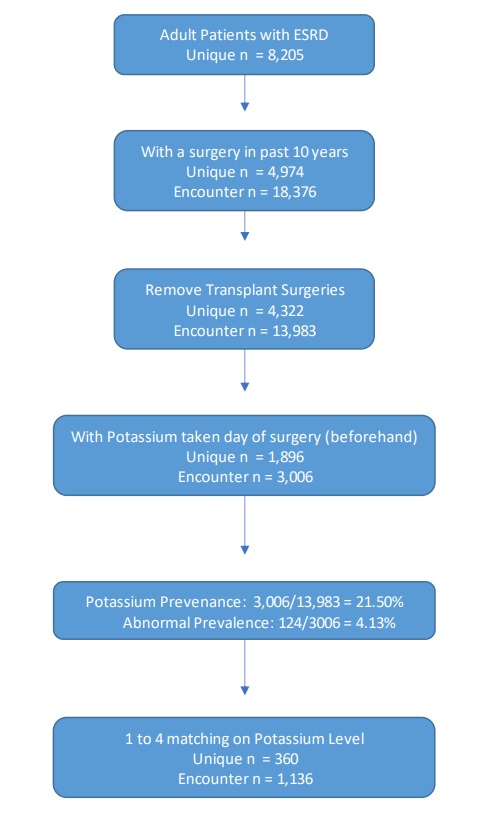
Methods: A retrospective study was undertaken at an academic medical center using data from the electronic medical record. ESRD patients > age 18 who had surgery within 10 years were included, excluding transplant surgeries. The prevalence of DOS potassium levels, hyperkalemia (defined as >5.5 mEq/L), and management changes were assessed using logistic regression modeling. Because there were more patients without hyperkalemia, 1:4 matching was performed.
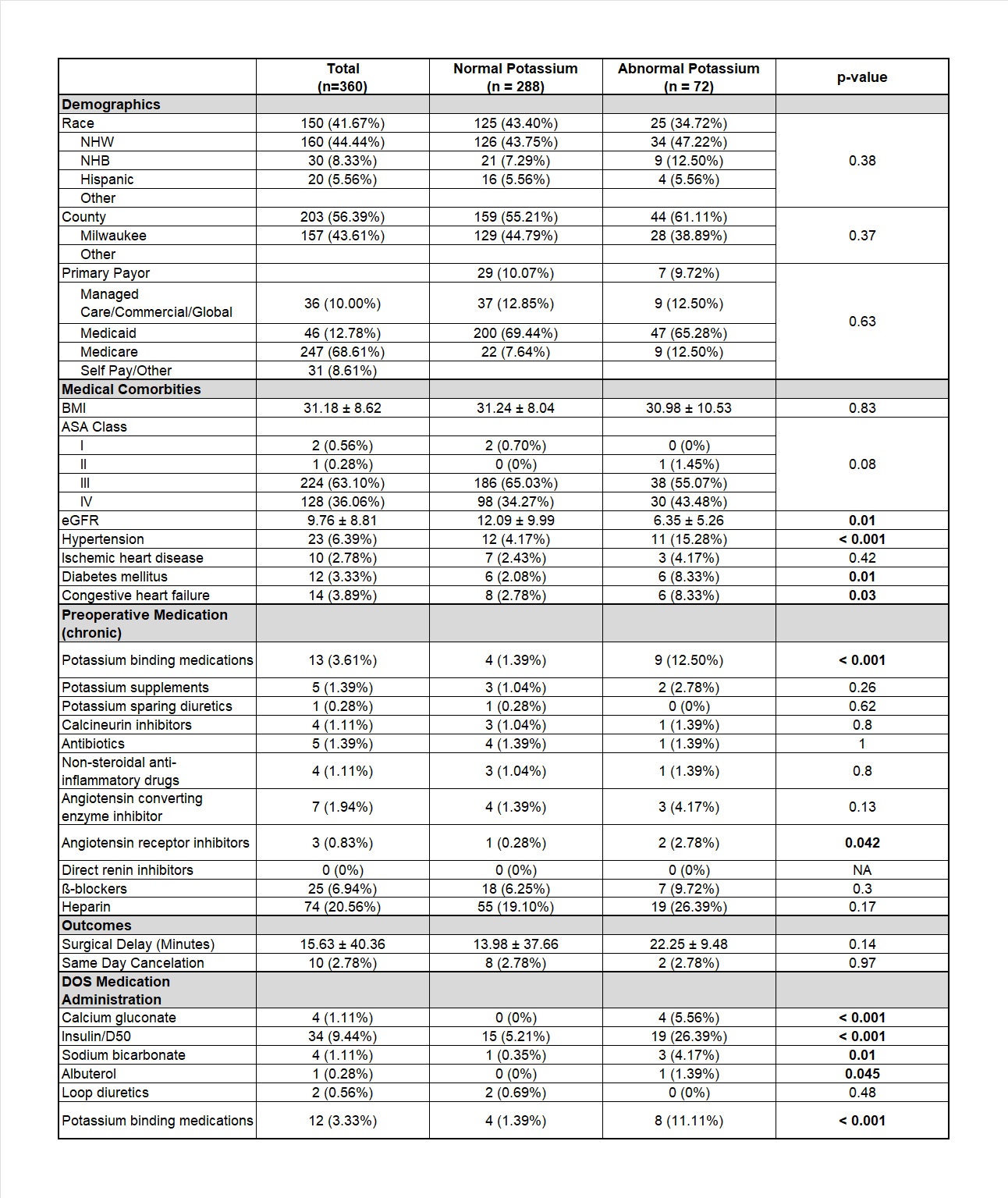
Results: 4,322 ESRD patients had 13,983 surgical encounters. Of these, 3,006 had DOS potassium measurements (21.5%), with hyperkalemia in 124 (4.13%). (Graphic 1). Comparing patients with and without hyperkalemia, there was no difference in surgical delays or cancelations. There were higher rates of DOS preoperative hyperkalemia treatment. (Table 1). Hyperkalemic patients were more likely to have lower eGFRs, higher ASA scores, and comorbidities such as hypertension, diabetes, and heart failure. Preoperative use of potassium binding medications and angiotensin receptor blockers were associated with hyperkalemia.
Conclusions: Of patients with ESRD, only 21.5% had DOS potassium measurements. Of these, a few had hyperkalemia. Risks associated with hyperkalemia included lower eGFR, HTN, DM and heart failure. This study may assist clinicians in choosing appropriate patients for DOS potassium measurements.