Background: Patients admitted to hospitals often have impaired capacity and contribute to a significant number of prolonged non-acute hospital days, often due to requiring a guardian for decision-making.(1,2) This puts incapacitated, unbefriended patients at a disproportionately increased risk of healthcare associated complications, loss of functional ability, and impacts those people and systems that care for them.(3-8) To address this issue, this study aims to describe the patient population, their clinical utilization, and the current guardianship process at our institution.
Methods: We conducted a retrospective study of hospitalizations with inpatient guardianship applications submitted at three hospitals within our urban, academic medical institution. We analyzed, using manual data extraction and chart review, differences in sociodemographics and clinical utilization.
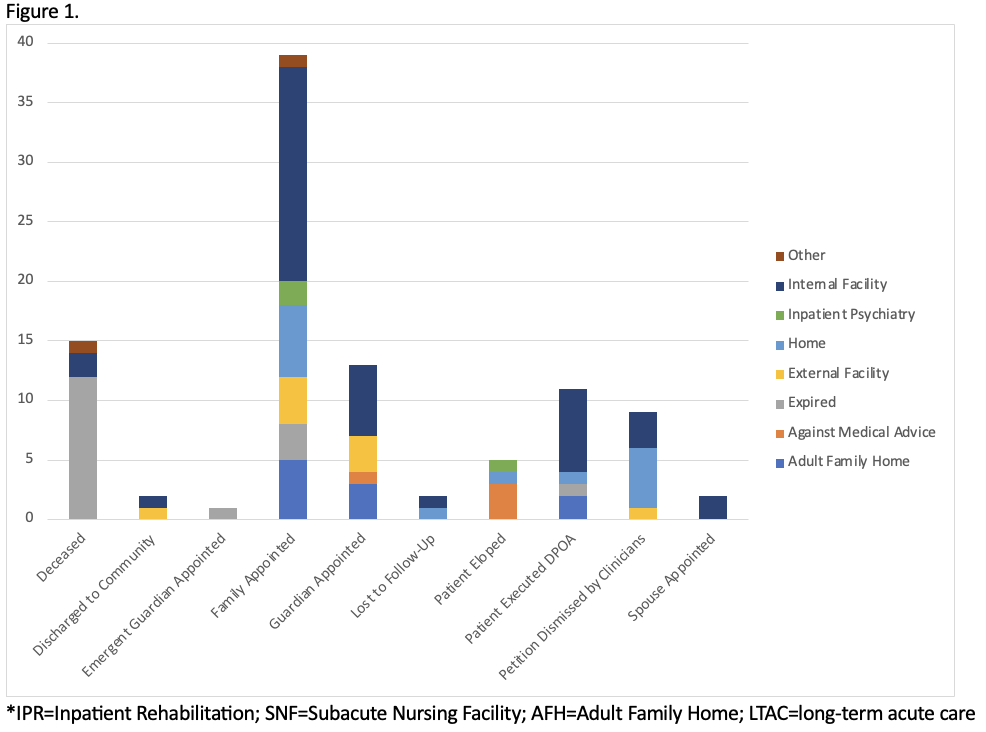
Results: There were 99 inpatient guardianship applications submitted in 2022 across the three sites, with 82 at the safety net hospital (Harborview Medical Center, HMC) and 17 at the two other sites combined (University of Washington Medical Center, UWMC). Overall, this patient population had a high relative proportion of minority patients and out-of-county/transfer patients with very long and expensive stays, including a range of avoidable days experienced. Patients at HMC were more often younger, male, Spanish-speaking, previously unhoused, Medicaid recipients, admitted with an acute illness, and experienced many more healthcare-associated complications, including a high rate of restraint use. Disposition for guardianship-appointed patients was largely dependent on internal facility options and adult family homes.
Conclusions: Patients requiring inpatient guardianship applications experience prolonged, expensive, and harmful hospital stays, with the safety net hospital responsible for most patients. Given the risk to patients and systems, intensive interdisciplinary coordination and resource mobilization are necessary for this patient population.