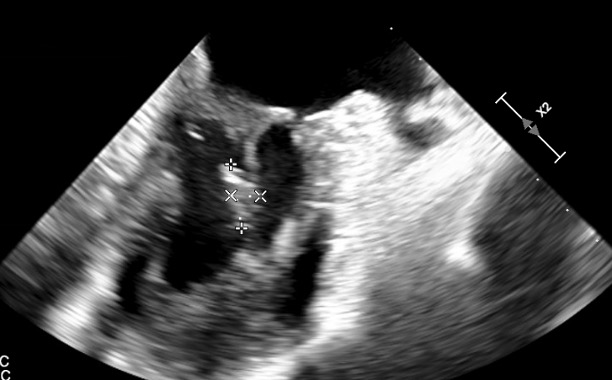
Case Presentation: A 51-year-old male presented to the Emergency Department with a chief complaint of fever, chills, and generalized malaise for several days. He denied any additional associated symptoms, denied recent travel, recent dietary changes, recent dental work, exposure to sewers, adventurous sex, unintentional weight loss, headaches, vision changes, neck stiffness, night sweats, chest pain, dyspnea, diarrhea, or dysuria. Patient has a pertinent past medical history of Streptococcus Constellatus Endocarditis of the Mitral Valve treated with long term intravenous antibiotics, intravenous drug use, alcohol use disorder (last drink over 3 years ago), type 2 diabetes, hyperlipidemia, iron deficiency anemia, and epilepsy with no known drug allergies. The only pertinent finding on physical examination was poor dentition with multiple dental caries. Pertinent lab data includes an elevated white blood cell count of 14.0 K/uL, an elevated erythrocyte sedimentation rate level of 89 mm/Hr, and an elevated C-Reactive Protein level of 157 mg/L. Both blood cultures drawn on admission yielded Gram Negative Bacilli later revealed to be Serratia Marcescens susceptible to Ceftriaxone, Ciprofloxacin, Gentamicin, Levofloxacin, and Ertapenem which had the highest Mean Inhibitory Concentration of less than 0.5 micrograms per milliliter. Transesophageal Echocardiogram revealed a mobile 1.5 cm mass attached to the underside of the anterior leaflet of the mitral valve with visible prolapsing into the left ventricular outflow tract. After starting antibiotics based on susceptibilities, repeat blood cultures were drawn and negative before discharge. The patient had significant clinical improvement while admitted to the hospital reporting complete resolution of his symptoms before discharge. Patient was evaluated by cardiothoracic surgery service for evaluation about potential valve intervention but based on the patient’s clinical improvement no intervention was recommended. A peripherally inserted central venous catheter was placed and the patient was discharged on a 6-week course of Intravenous Ertapenem 1 gram once daily starting from when the bacteremia was cleared. Patient is currently still following up with Primary Care Physician and doing well.
Discussion: This case highlights a rare presentation of infective endocarditis from Serratia Marcescens. Serratia has a predilection for water which likely accounts for why it is associated with many nosocomial infections such as Ventilator Associated Pneumonia, Catheter Associated Urinary Tract Infections, and multiple documented outbreaks associated with contaminated intravenous medications and medical devices (1). The most common risk factor for infection besides nosocomial exposure is a history of intravenous drug use (1), and although the right heart is where infective endocarditis most commonly presents, Serratia has a predisposition to present on the left heart as seen on this patient’s mitral valve (2).Serratia Endocarditis is deadly and carries a very high mortality rate, as high as 30%, (2) mainly due to its serious post-infectious sequelae such as Congestive Heart Failure and Renal Failure due to septic emboli. Urgent cardiothoracic surgery evaluation and close follow up after discharge is always necessary to minimize the risk of these complications (2).
Conclusions: This case report highlights a rare presentation of infective endocarditis from a gram negative bacillus commonly associated with nosocomial infection.