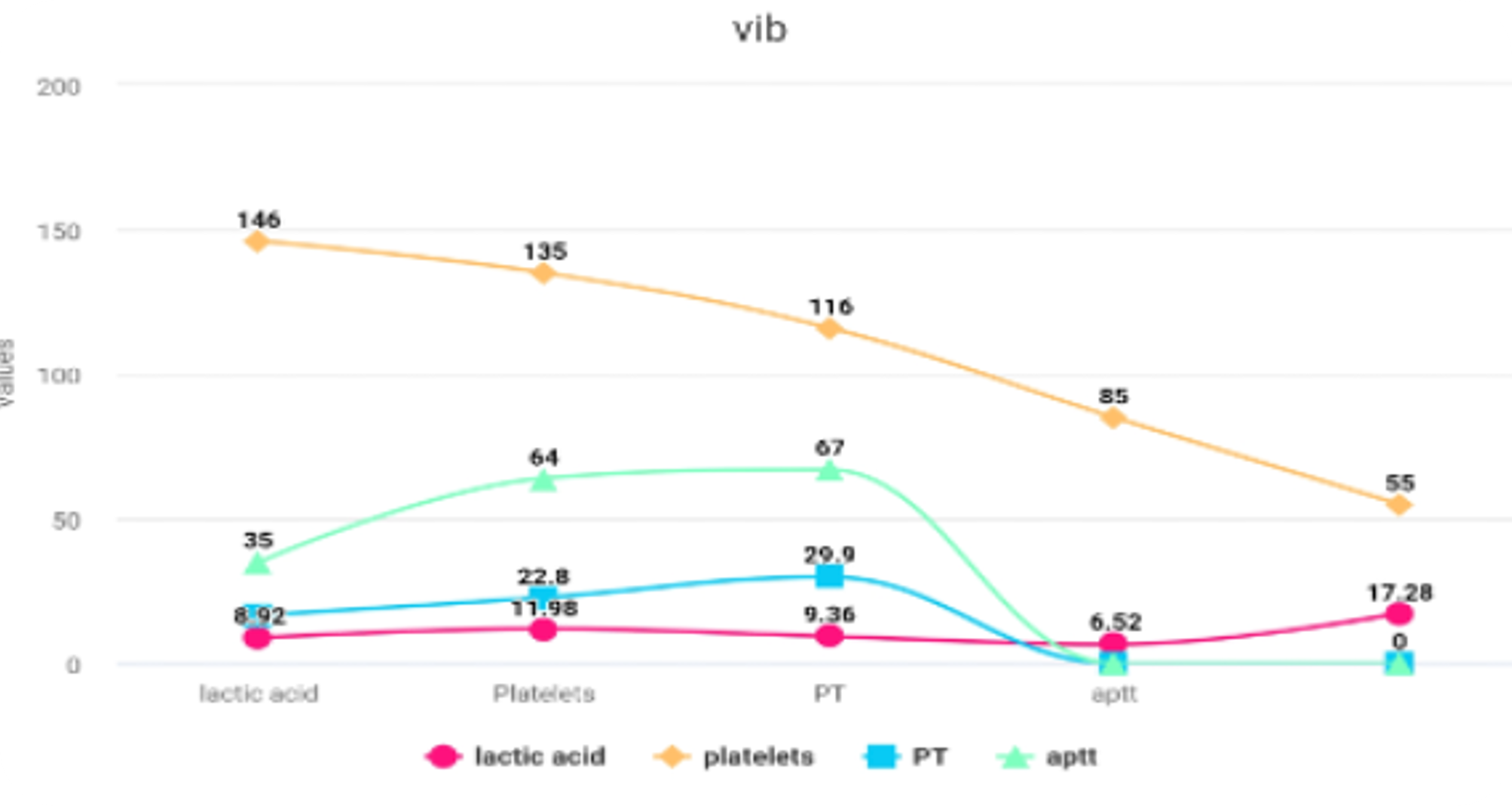
Case Presentation: IntroductionVibrio vulnificus is a gram-negative bacterium that can cause serious and sometimes fatal infections in humans. (1) It is the leading cause of shellfish-associated deaths in the United States.(2) Infections due to V. vulnificus are most common in individuals who have chronic, underlying illness like liver disease or hemochromatosis are at greatest risk.(2) We report an uncommon case of Vibrio vulnificus-induced primary septicemia with an atypical appearance.Case PresentationThe patient is a 52-year-old lady who has history of gastric bypass surgery, alcoholism and hypertension in the past. She complained bilateral lower extremities pain when she arrived at the emergency room. She had recently fallen and landed on her knees, but the pain was worse than what she expected from a simple fall. She also reported feeling feverish and weak. The patient had lactic acid on admission as high as 11.98, elevated LFT and was hypotensive requiring admission to intensive care unit and was started on vasopressor support. A clear source of sepsis could not be identified and given extreme bilateral lower extremity pain; a CT of the legs was done which did not reveal evidence of necrotizing fasciitis. Infectious disease was consulted, and patient reported traveling to Pennsylvania a few weeks earlier where she had gone for a river walk but denied any injury neither contact with water or consuming seafood. A CT abdomen and pelvis was done which revealed marked gall bladder wall thickening and cirrohtic liver. She was initially treated with empiric antibiotics and a cholecystostomy tube was placed due to suspicion for acute cholecystitis. At this point, she continued to require vasopressor support to keep MAP >65 and preliminary blood cultures showed growth of gram- negative rods. She was placed on appropriate antibiotics due to suspicion of possible V. vulnificus cellulitis but her condition keep on declining. Labs were trending up for lactic acid and coagulation factor and downtrending for thrombocytopenia giving picture for severe sepsis and disseminated intravascular coagulation (DIC) . She later ended up with multiple organ failure. Blood cultures eventually showed growth of Vibrio Vulnificus. She died 4 days after admission.
Discussion: Vibrio vulnificus can cause primary septicemia without a clear infection source, often linked to raw shellfish consumption. This condition is particularly fatal in individuals with underlying liver disease or other chronic conditions, presenting with rapid onset shock and distinctive symptoms such as bullous skin lesions, thrombocytopenia, and disseminated intravascular coagulation (DIC). (3) The high mortality rate, particularly among those presenting with hypotension. Advanced liver disease with MELD score >20, hypoalbuminemia, and severe anemia further increase the risk of death. (4)
Conclusions: The patient’s history of alcoholic liver disease accompanied by septic shock and DIC increased the risk of fatality associated with V. vulnificus infections. A fishing excursion without any source of infection emerged as a potential cause of the illness, meeting criteria for primary septicemia. The unique case showcased unpredictable septicemia effects, requiring intensive care and complex diagnostics. The mortality risks underscore the need for preventive measures and awareness regarding Vibrio vulnificus.