Background: Pediatric Acute Hospital at Home (PAHaH) is an emerging care model and as programs begin to care for inpatient children at home, it is important to gauge caregiver’s opinion of the model. This insight will aid in refining processes, innovating equipment, and modifying service delivery to maximize care quality in a patient centric manner. These are the building blocks of good clinical care and set the stage for further study as the care model expands.
Purpose: In February 2025, patients were enrolled into the PAHaH program from our tertiary care children’s hospital in a large metropolitan southern city. Our aim was to describe initial caregiver perceptions about the model.
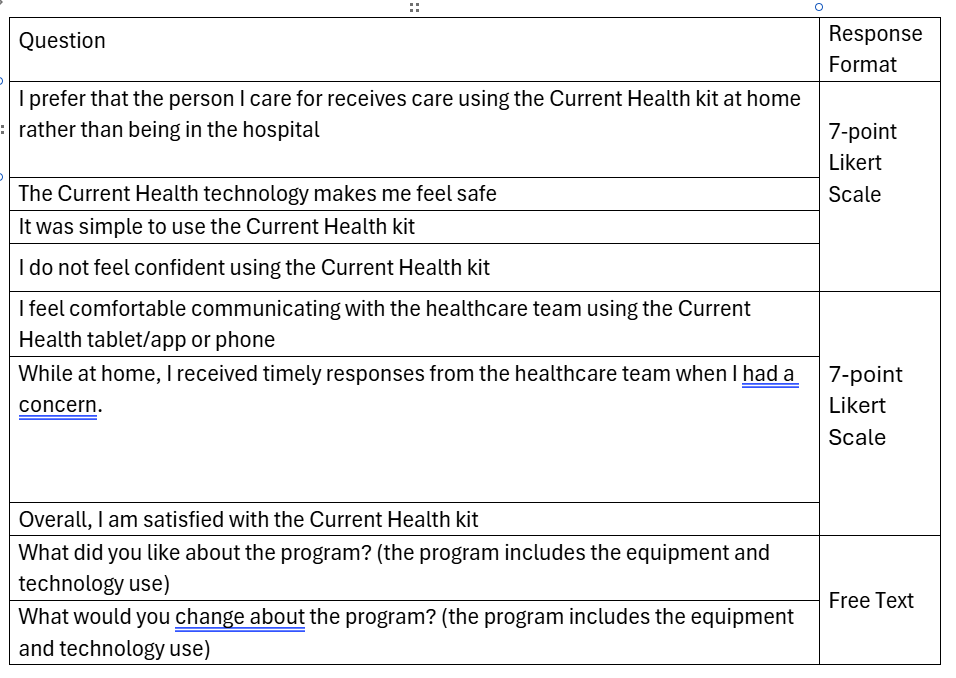
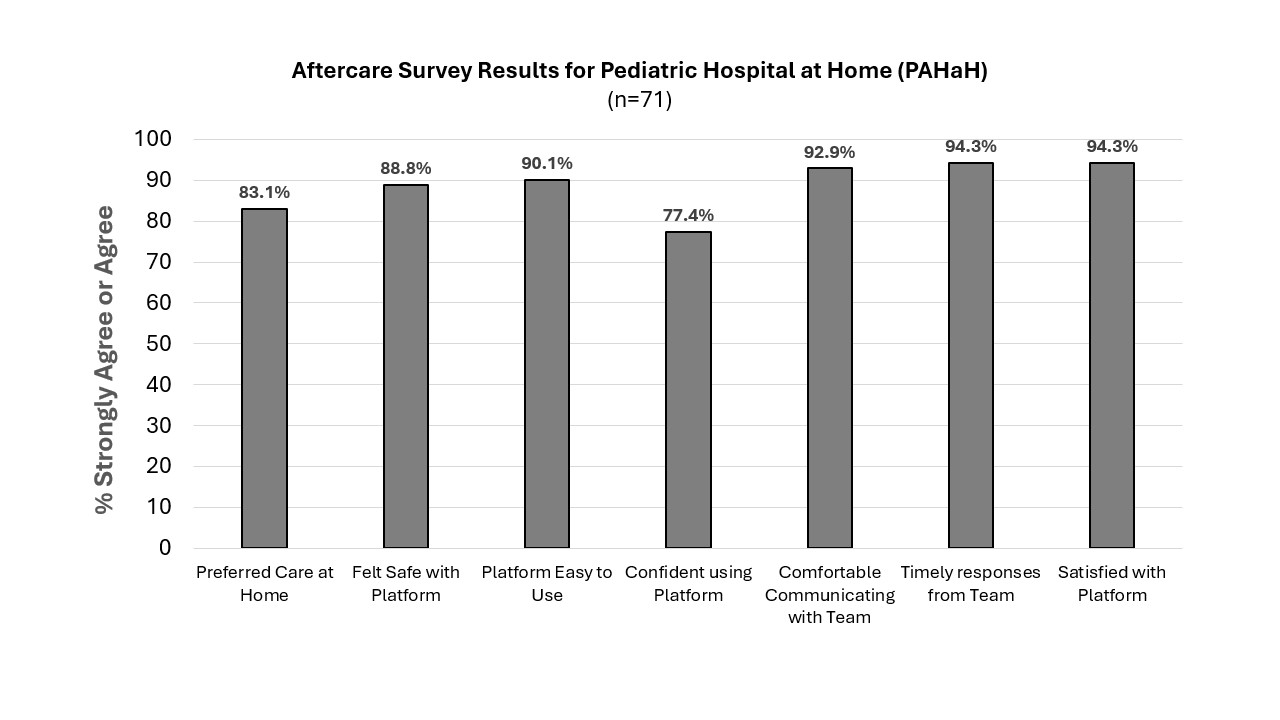
Description: Methods: We created a survey to evaluate preference for hospital care at home, confidence about safety, comfort with platform ease of use and communication effectiveness, and promptness of response to patient needs (Fig 1). The survey also assessed overall satisfaction with the platform. The survey was administered at the end of hospitalization and was incorporated into the discharge process workflow. We included NRC data on clinician satisfaction. IRB approval was obtained.Results: Seventy-one families (100% of participants) completed the survey. The combined percentage of strongly agree and agree responses for each category were as follows: the interface platform made them feel safe (88.8%), the platform was easy to use (90.1%), they felt confident using it (77.4%) they felt comfortable communicating with the healthcare team using the application or phone ( 92.9%), they received timely responses from the healthcare team (94.3%), they were satisfied with the platform as a care delivery device (94.3%). NRC data was collected and the PAHaH team had a likelihood to recommend clinician score of 93.8% versus the traditional inpatient PHM team score of 81.4%
Conclusions: The results show that caregivers and patients desire this model. When moving care to a new site, safety is a concern. Data suggest that families felt safety was at the forefront and that the platform used enhanced their confidence that care was safely delivered. The ease of use and interface design did not erode the feeling of safety. Safety was reinforced by the findings regarding prompt response to concerns by the healthcare team. The data suggest there is demand for this type of care, and that caregivers believe that acute hospital care can be done safely in the home in the right circumstances. The data also suggests that the current technology enhances the care experience for participants. Specifically, the NRC data show a higher level of satisfaction with clinicians suggesting that virtual visits do not degrade relationship building with patients in the model. The data is limited by the presence of selection bias introduced by the patient selection process. Those choosing to participate are early adopters and may have differing tolerance thresholds for risk in new models of care.PAHaH is a service desired by pediatric caregivers. Safety concerns are best addressed initially with families, and the survey data suggests that participants in the program felt the technology used enhanced their safety during hospitalization. The timeliness of communication, a key component of safety, was judged to be of high quality and not adversely affected by the care delivery platform. This data set provides a beginning point to ask further questions about how to improve communication, and platform communication enhancements to further increase feelings of safety while providing remote care.