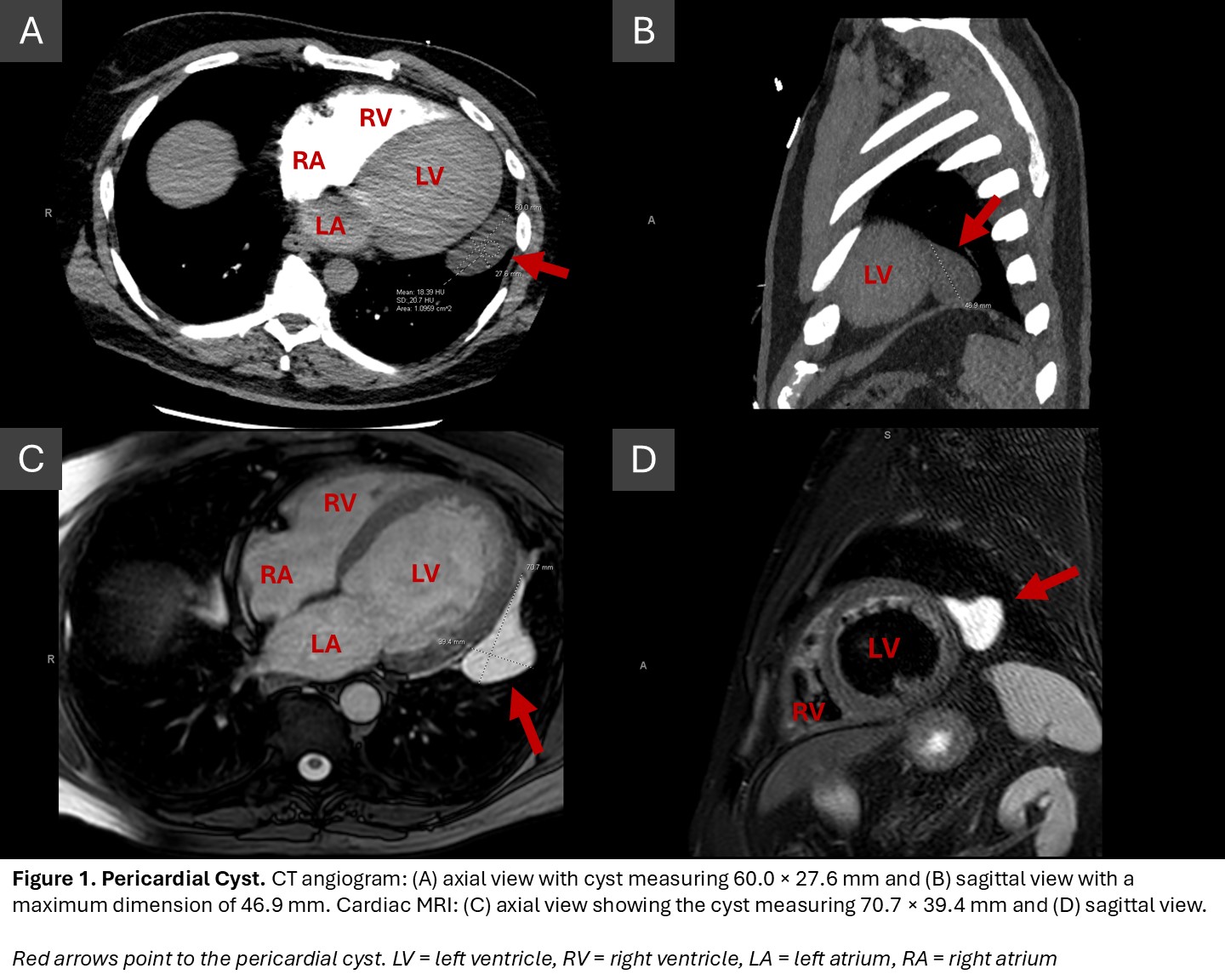
Case Presentation: A 57-year-old man with heart failure with reduced ejection fraction of 25%, hypertension, type 2 diabetes, untreated obstructive sleep apnea, and inconsistent outpatient follow-up presented with acute pressure-like chest pain radiating to the left axilla. Laboratory evaluation showed a troponin of 189 ng/L, pro-BNP 1239 pg/mL, eosinophilia of 9.2%, and a urine drug screen positive for methamphetamines. Electrocardiogram (ECG) revealed new lateral T-wave inversions with left anterior fascicular block, prompting treatment for suspected acute coronary syndrome (ACS).Computed tomography (CT) angiography incidentally identified a well-circumscribed cystic structure abutting the lateral left ventricular (LV) wall. Subsequent cardiac catheterization demonstrated patent coronaries and compensated cardiomyopathy, while echocardiography showed severe global hypokinesis with an ejection fraction < 15%.Review of prior hospitalizations revealed multiple non-ST-elevation myocardial infarction diagnoses despite normal coronary imaging. Troponin peaks had progressively increased over time, and serial CT angiograms over four years documented enlargement of the left-sided pericardial cyst from 4.4 cm to 6.7 cm.Given the cyst’s growth, lateral location, and lateral ischemic changes on ECG in the absence of obstructive coronary disease, a structural etiology for his recurrent ACS-like episodes was suspected. Cardiac magnetic resonance imaging (MRI) confirmed a 7 × 3.9 cm pericardial cyst compressing the lateral LV wall. CT-guided aspiration yielded clear fluid; infectious and autoimmune evaluations were unrevealing. Following drainage, his chest pain improved, and he was discharged on guideline-directed heart failure therapy.
Discussion: This case underscores how structural cardiac abnormalities can closely mimic acute coronary syndrome, particularly in patients with recurrent chest pain and rising troponins despite nonobstructive coronaries. The progressive enlargement of a lateral pericardial cyst, paired with consistent lateral ECG changes, highlighted an alternative mechanism of myocardial injury—intermittent extrinsic compression of the left circumflex territory. Hospitalists frequently encounter patients with recurrent ACS evaluations, and this case illustrates the importance of reassessing the differential diagnosis when traditional ischemic workups remain unrevealing. While stimulant-associated vasospasm and eosinophilia initially broadened the evaluation, serial imaging ultimately clarified the true etiology and prevented further invasive testing. Advanced multimodal imaging, particularly cardiac MRI, played a critical role in linking the structural lesion to the patient’s clinical pattern.
Conclusions: Pericardial cysts, though typically benign, can produce clinically significant myocardial compression and recurrent ACS-like presentations. In patients with repeated ischemic evaluations and normal coronary anatomy, clinicians can consider structural mimics of ACS and pursue advanced cardiac imaging when appropriate. Recognizing these atypical causes can prevent unnecessary imaging or invasive procedures and guide effective, targeted interventions such as percutaneous drainage.