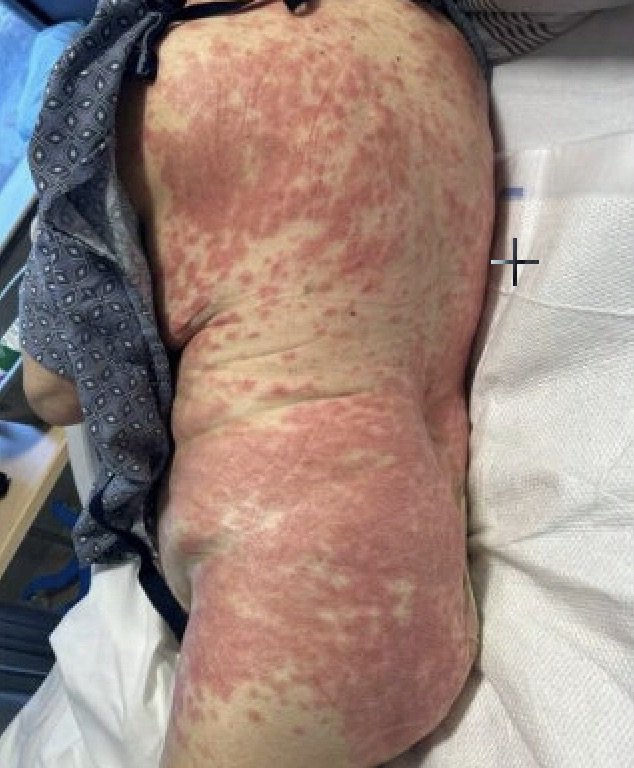
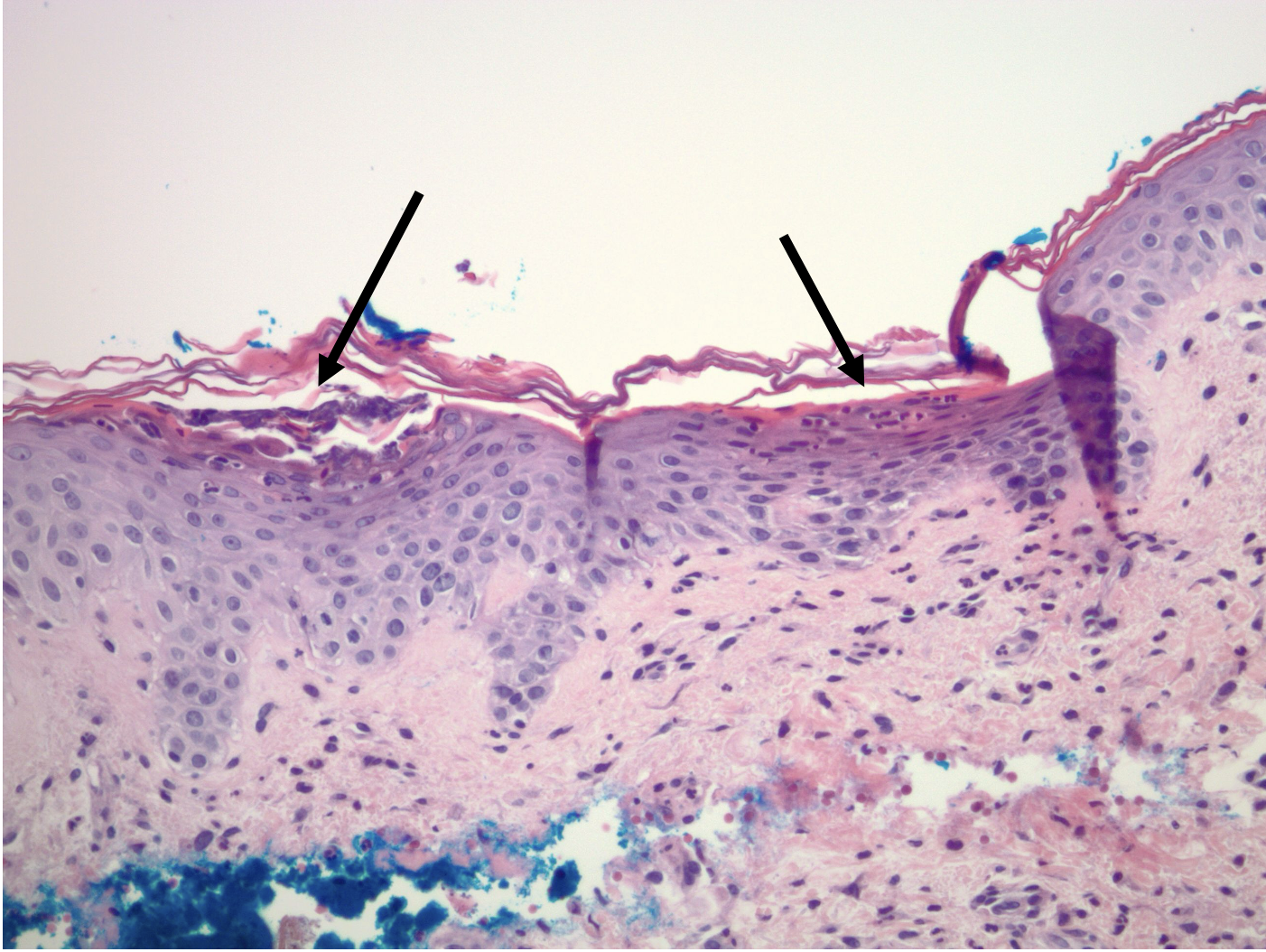
Case Presentation: Subcorneal pustular dermatosis (SPD), also known as Sneddon-Wilkinson disease, is a rare, relapsing remitting neutrophilic dermatosis characterized by flaccid pustules located under the stratum corneum. This condition most commonly affects middle-aged to elderly women, and has been associated with systemic diseases such as monoclonal IgA gammopathy and multiple myeloma. We present a patient with metastatic breast cancer who developed a diffuse pustular eruption initially concerning for DRESS but ultimately diagnosed as SPD after biopsy.A 76-year-old female with a history of metastatic breast cancer with bone involvement s/p three cycles of pertuzumab/trastuzumab/docetaxel (THP) with recent hospitalization for MRSA bacteremia treated with vancomycin presented as a code stroke for acute bilateral vision loss. The neurological workup was unremarkable, with her vision returning to baseline. Patient was found to have a new diffuse rash concerning for vancomycin-associated DRESS syndrome. The physical exam revealed numerous deep red, edematous, round papules coalescing into large plaques, diffusely involving the back, buttocks, abdomen, lower midface, cheeks, and proximal medial thighs. There was no mucosal involvement or blistering. Labs showed leukocytosis with neutrophilia and eosinophilia The concern for DRESS versus immune checkpoint inhibitor-related dermatitis prompted initial treatment with high-dose corticosteroids. Inpatient dermatology was consulted, with the subsequent shave biopsy revealing subepithelial collections of neutrophils consistent with SPD. Prednisone was tapered, and the patient was started on Dapsone after confirming normal G6PD labs, resulting in significant improvement. Outpatient follow-up was scheduled for consideration of adding a TNF-alpha inhibitor.
Discussion: While SPD is not recognized as a paraneoplastic dermatosis associated with breast cancer, its occurrence in this patient can be either coincidental or related to immune dysregulation from malignancy or chemotherapy. With the patient undergoing palliative chemotherapy, the effects of immune modulation could result in these dermatological findings. As described in the literature, SPD carries associations with hematologic malignancies but not solid tumors, making this a rare presentation. Distinguishing DRESS from SPD is critical as DRESS can rapidly lead to systemic symptoms and end-organ failure while SPD is a largely benign dermatologic condition, and misdiagnosis may lead to unnecessary prolonged steroid exposure.
Conclusions: This particular clinical vignette can highlight the similarities in presentation between both conditions, especially the eosinophilia seen in this case, which is more likely to occur in DRESS than SPD. In immunocompromised patients, it remains vital that biopsies and histopathological evidence are used in clinical correlation of disease to guide appropriate management and avoid unnecessary immunosuppression.