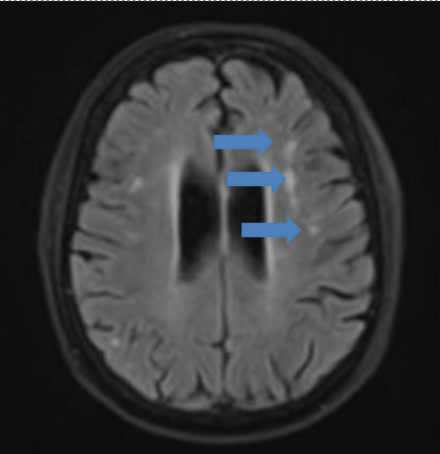
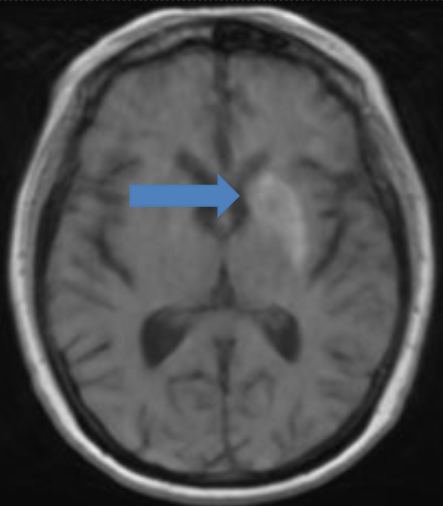
Case Presentation: Nonketotic Hyperglycemic Chorea (NHC) is a rare neurological complication associated with uncontrolled diabetes mellitus, characterized by involuntary, irregular movements typically affecting one side of the body. This condition primarily affects elderly females of East Asian descent, with an estimated prevalence of less than 1 in 100,000 2, 3. Clinical presentation includes acute or subacute onset of hemichorea-hemiballismus and severe hyperglycemia without ketosis.69 F, PMH T2DM, HTN, presented with SOB/DOE for few days, w/ fever cough, and facial/hand swelling ~ 1 week, found to be in acute renal failure, pulmonary edema, & received tx w/ HD, diuretics and thoracentesisDuring admission, pt noted to have mild involuntary spasms in her RLE, associated w/ poor coordination, ataxia, & dysmmetric heel-to-shin of RLE.A/c to pts daughter, she had been noticing involuntary jerking movements intermittently which had been causing disbalance over last 1.5 months Also, milder jerking seen on RUE. MRI brain showed nonspecific asymmetric T1 hyperintensity in left basal ganglia and caudate nucleus. A1c 9.9, glucose ranging 150s – 300. MRI + hyperglycemia led us to dx her with NHH.Interestingly MRI also revealed small, acute infarcts in left temporal & frontal periventricular white matter, likely suspected d/t uncontrolled HTN. However, these findings did not co-relate anatomically w/ the clinical symptoms of hemichorea.She was subsequently started on synaptic Vesicular Monoamine Transporter 2 (VMAT 2) inhibitors, and was discharged with outpatient Neurology follow up.
Discussion: There are 2 types of NHH, those with typical imaging findings and those without; thus, MRI findings are not a pre-requisite for dx. Prompt recognition is crucial as NHH is potentially reversible with adequate glycemic control. Epidemiology shows that avg A1c at dx is ~ 10%, similar to our patient. However, most pts have a higher glucose level, around 500, whereas our patients ranged 150-300.Pathophysiology is vague, but likely center on hyperglycemia induced metabolic disturbances in the basal ganglia. In the absence of sufficient insulin, cerebral metabolism shifts to anaerobic pathways, causing GABA utilization, which in non-ketotic states cannot be replenished via acetoacetate. This reduction in GABA ( a primary inhibitory NT) causes the hyperkinetic movements like choreaThe neuroimaging findings in our patient, specifically the asymmetric T1 hyperintensity in the left basal ganglia and caudate nucleus, are consistent with those described in other case reports of NHC. The characteristic neuroimaging findings, specifically T1-weighted hyperintensity in the basal ganglia; particularly the putamen, are valuable diagnostic clues. While the exact etiology of these hyperintensities is debated; petechial hemorrhage, ischemia, or even calcification have been proposed.Management is strict glycemic control, and dopamine depleting agents like VMAT inhibitors e.g. Tetrabenazine, Valbenazine, Deutetrabenazine.
Conclusions: This case demonstrates that NHC can present with atypical symptoms (ataxia) and be discovered incidentally during evaluation for other medical conditions. Maintaining a high index of suspicion for NHC in patients with uncontrolled DM & new neurological symptoms is essential for prompt diagnosis and management. Further research is needed to better understand the epidemiology, pathophysiology, and optimal treatment strategies for this condition.