Background: Efficiently identifying clinically appropriate patients is integral to the operation and growth of a hospital at home program. Given the nuances of a home-based care delivery model, this task typically relies on a specifically trained small group of experienced providers, significantly limiting the number of patients able to be screened. The Hospital at Home (HaH) service at Mount Sinai Health System (MSHS) successfully implemented a novel approach to patient identification by developing a programmatic algorithm and leveraging existing hospital resources.
Purpose: In partnership with a software development firm, we created a programmatic algorithm that uses real-time EMR discrete and non-discrete data to generate a priority-scored list of patients to consider for HaH. Criteria considered included trends identified by analyzing data from our program’s over 2000 patients treated to date, such as preferred diagnoses, preferred treatment teams and specific medications ordered.As part of a system-wide effort towards level-loading, MSHS created a Central Hospitalist (CH) role to review and expedite inter-facility transfers. Among their daily responsibilities, the CH uses our tool to review the highest scoring patients and refers them directly to HaH if clinically appropriate.
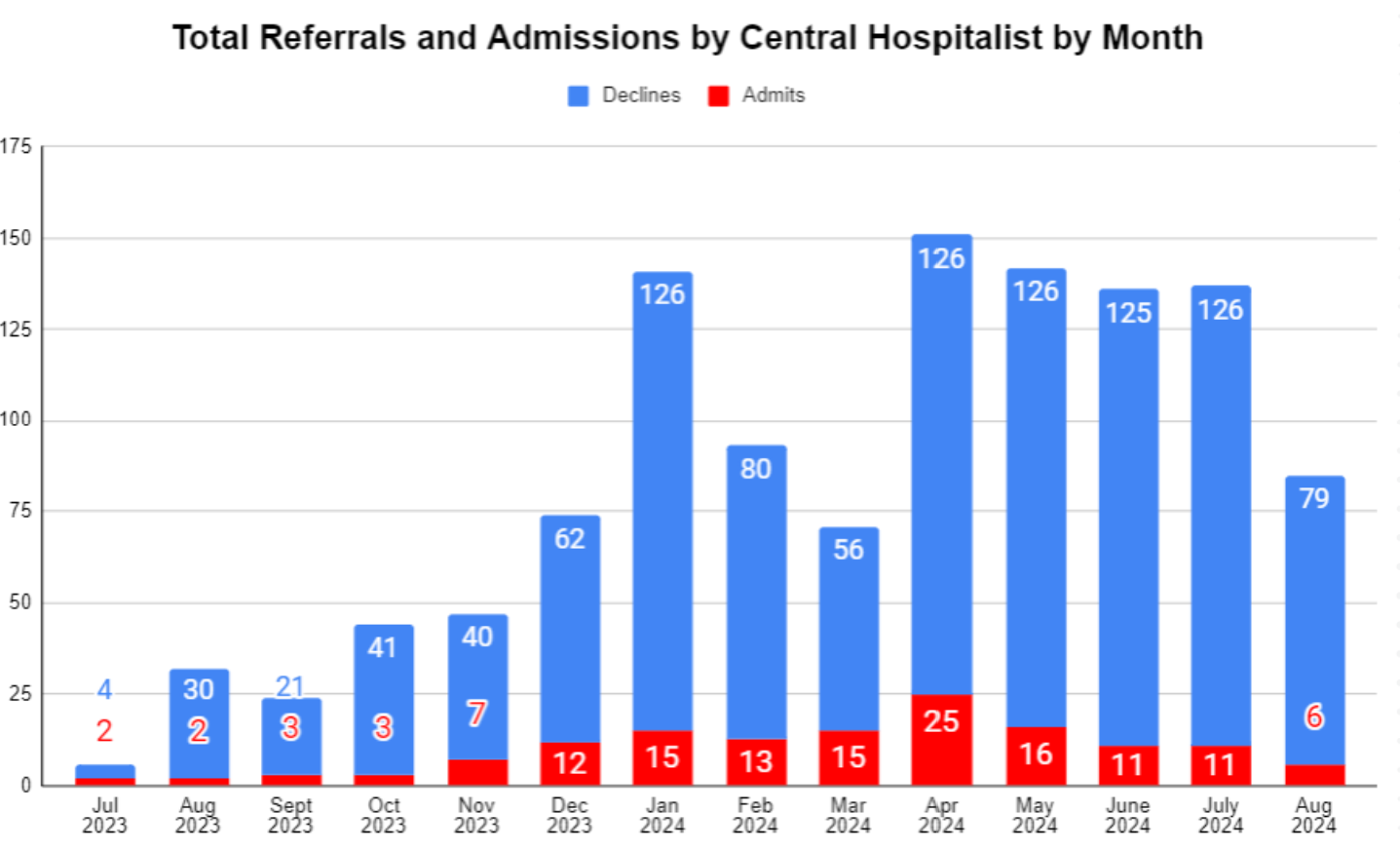
Description: Since its launch in July 2023, the Central Hospitalist has referred 1361 patients to HaH resulting in 164 admissions (12%). While this is already a dramatic improvement from our rates prior to implementing this screening tool (anecdotally, ~5%), further data suggests CH referrals were significantly stronger than the raw numbers imply. Since January 2024, only 21% of patients referred by the CH but not ultimately admitted were deemed clinically inappropriate by the HaH admitting team. The remaining 79% were appropriate targets for admission but ultimately were not admitted for non-clinical reasons, such as the patient declining the service or not passing our psycho-social screening process.
Conclusions: By leveraging an existing system resource and creating an AI decision support tool, we considerably extended our reach in identifying patients who are clinically appropriate for HaH without having to expand our admitting team. This has resulted in a new unique and robust referral base for our HaH program.