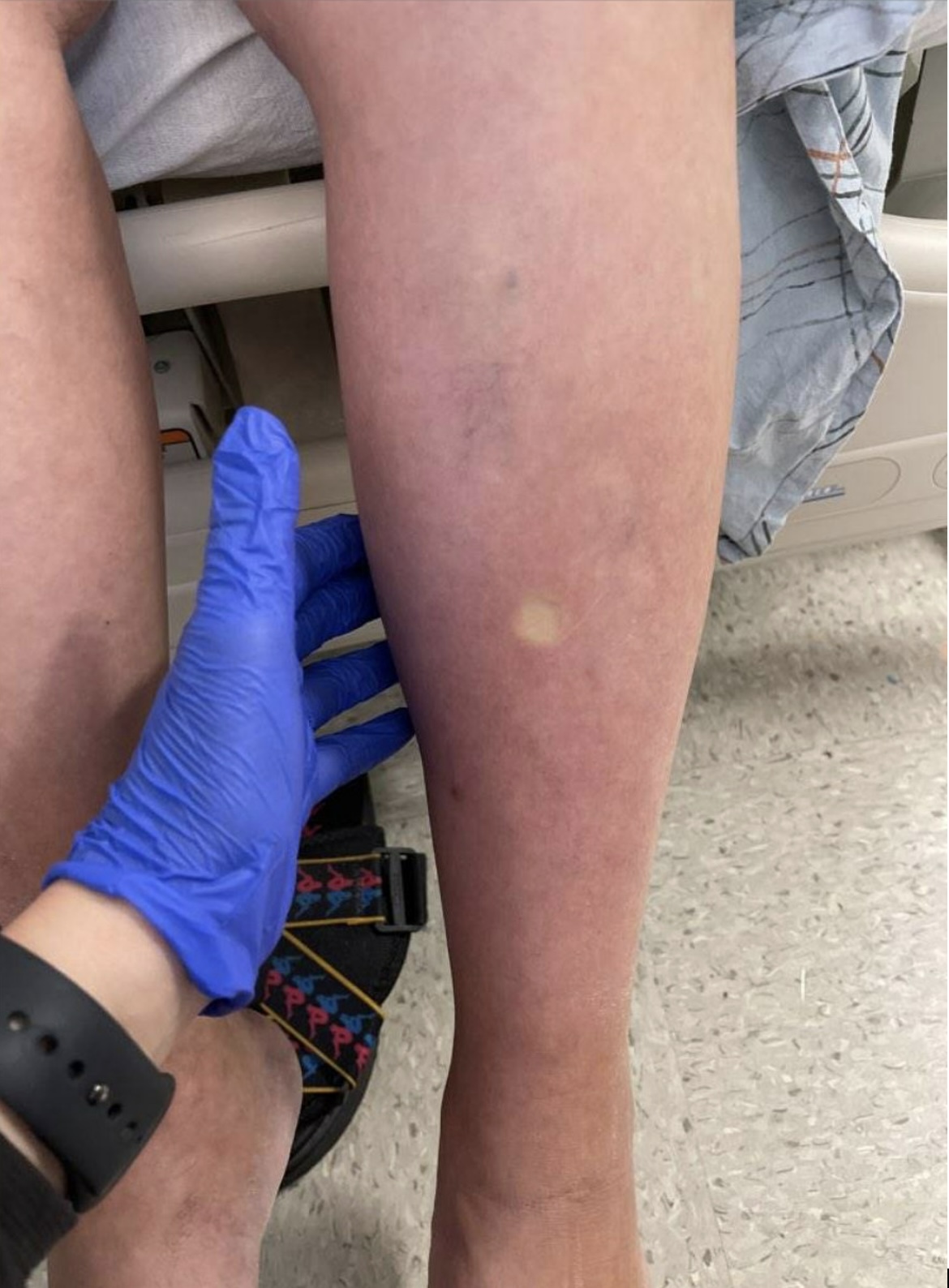
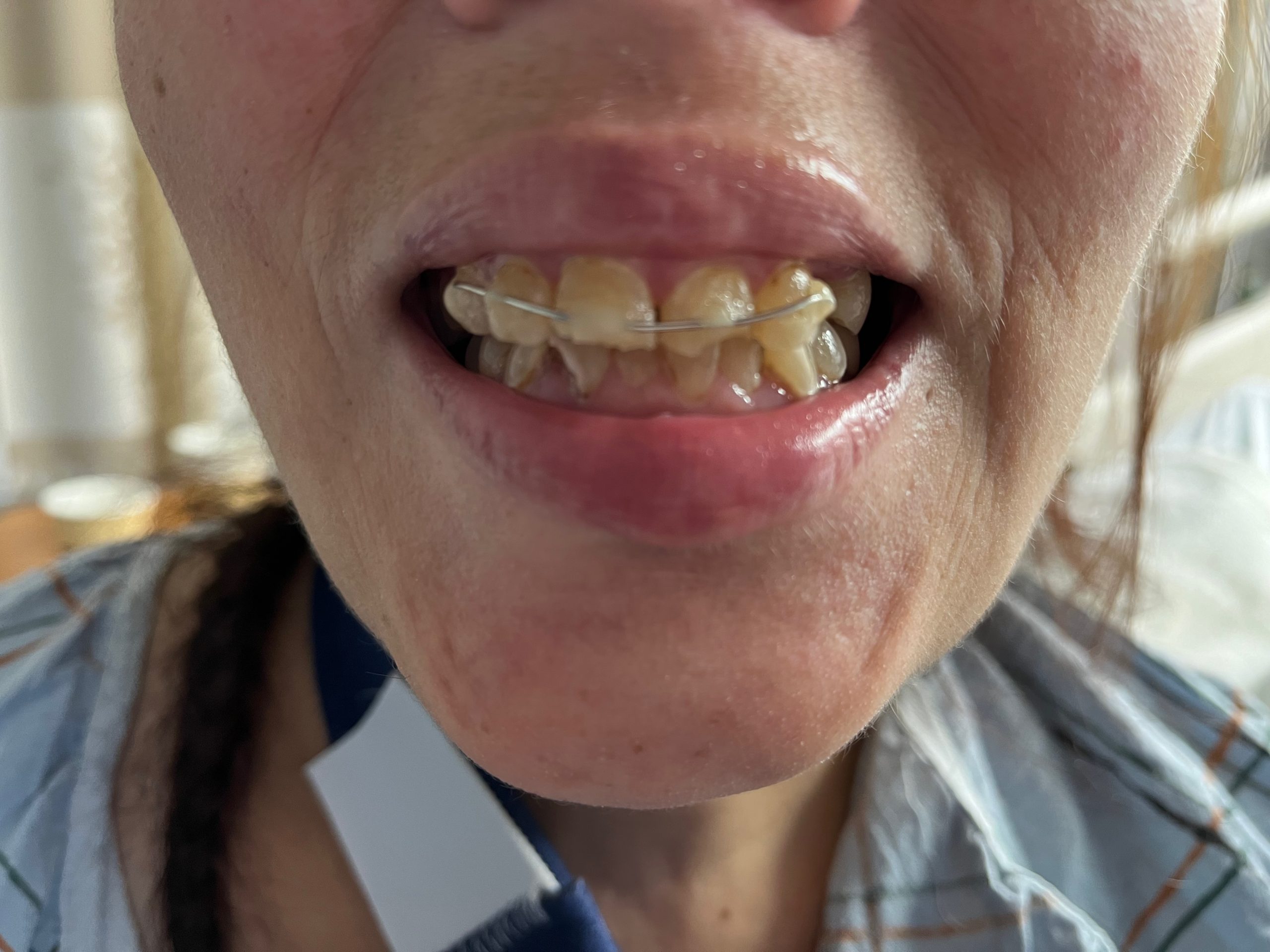
Case Presentation: A 47-year-old female with history of gastric bypass complicated by dumping syndrome, opioid use disorder on methadone, alcohol use disorder, migraines, and seizures presented with 3 weeks of painful bilateral lower extremity swelling, and 2 months of poor oral intake with persistent diarrhea. Her exam was also notable for tooth fragility, course hair, and scaling skin. Laboratory tests revealed macrocytic anemia, hypoalbuminemia without proteinuria, hypokalemia, and elevated lactate. Creatinine, liver function, and thyroid function testing were normal. Bilateral lower extremity Doppler ultrasound excluded deep vein thrombosis and lymphoscintigram was unremarkable. The patient was treated with diuretics, but her lower leg edema and pain persisted after combined intravenous and oral diuretics. Given her history of poor nutrition, alcohol use disorder, and diarrhea, she was treated with supplemental multivitamin, thiamine, folic acid, and B12. The patient’s medical and surgical history, negative clinical workup, and lack of response to diuretics cast suspicion for malabsorption and nutrient deficiency. Protein-losing gastroenteropathy was considered, but alpha-1-antitrypsin clearance was normal, making this unlikely. Expanded laboratory testing including both fat and water-soluble vitamins, minerals, and iron studies revealed an undetectable vitamin C level. These labs and her physical exam findings were consistent with scurvy. She was initially treated with enteral vitamin C with minimal improvement, followed by parenteral replacement, which improved her edema, pain, and erythema.
Discussion: Vitamin C is critical to collagen formation; deficiency inhibits collagen transcription and can result in unique skin findings such as scaly skin, hyperkeratosis, skin fragility, bleeding gums, and corkscrew hair. While not commonly thought to arise due to scurvy, several reports have demonstrated cases of significant peripheral edema in patients with vitamin C deficiency. Those with limited access to food, alcohol use disorder, or gastrointestinal malabsorptive disorders are at greater risk of developing a deficiency of vitamin C. Additionally, bariatric procedures disrupt the anatomy and physiology of the gastrointestinal tract, altering nutrient and mineral absorption. The most common deficiencies reported are B12, iron, vitamin D and calcium, while less emphasis is placed on deficiencies of other micronutrients and minerals, including vitamin C. In this case, it is likely the patient’s prior gastric bypass surgery coupled with her poor nutrition and alcohol use disorder resulted in a severe vitamin C deficiency. She presented uniquely with severe pain and hyperemic peripheral edema as well as classic signs of scurvy such as scaling skin and tooth fragility. Her symptoms subsequently improved with vitamin C supplementation confirming our suspicion that scurvy was affecting her clinical presentation.
Conclusions: Vitamin deficiencies are a known complication of gastric bypass surgery but reports of vitamin C deficiency post-Roux-en-Y are less commonly reported. This case emphasizes the importance of assessing long-term nutritional deficiencies in gastric bypass patients. Furthermore, having an awareness of other manifestations of vitamin C and other micronutrient deficiencies – including significant painful edema – is critical for prompt recognition and minimizing delays in diagnosis and treatment.