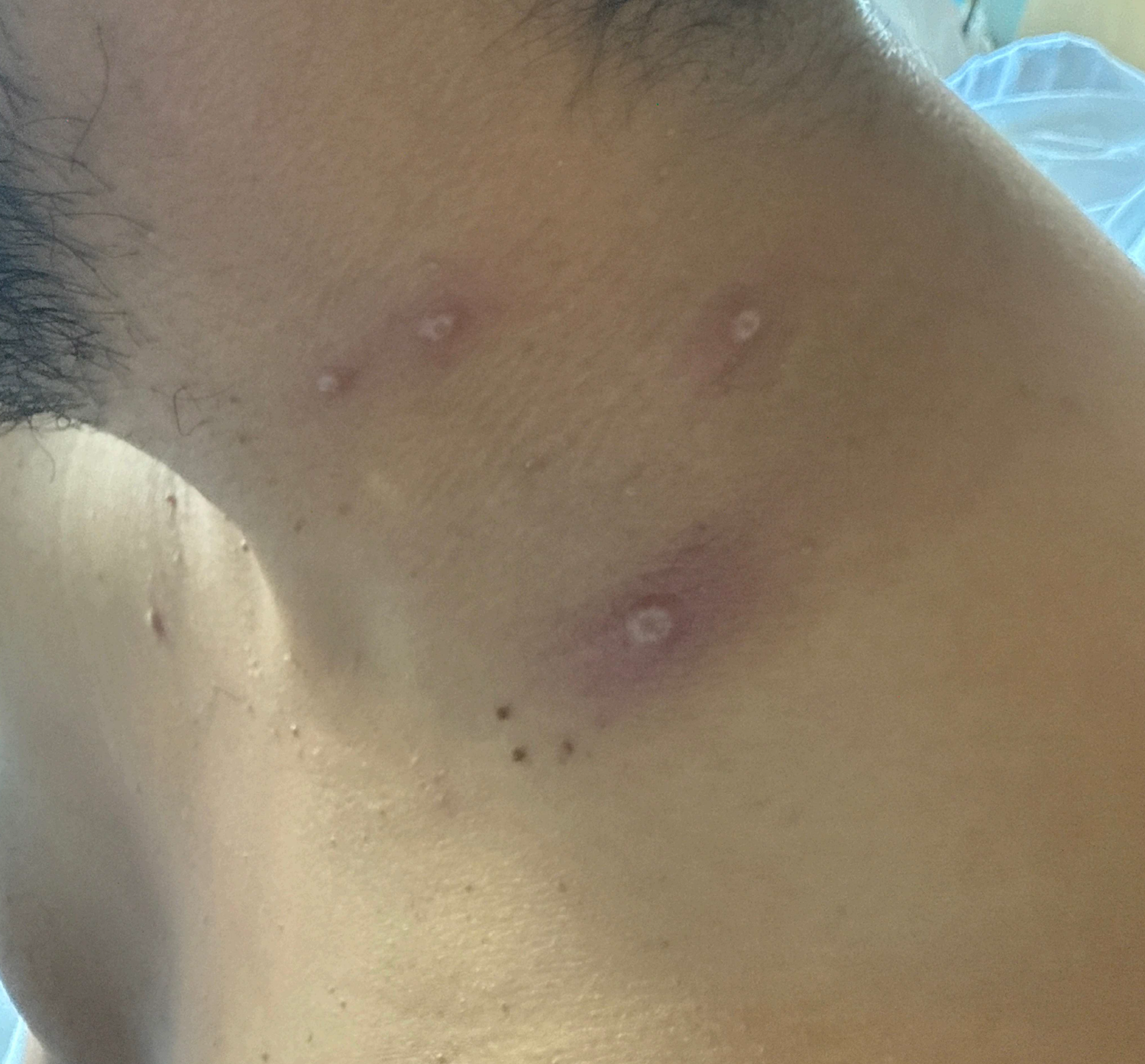
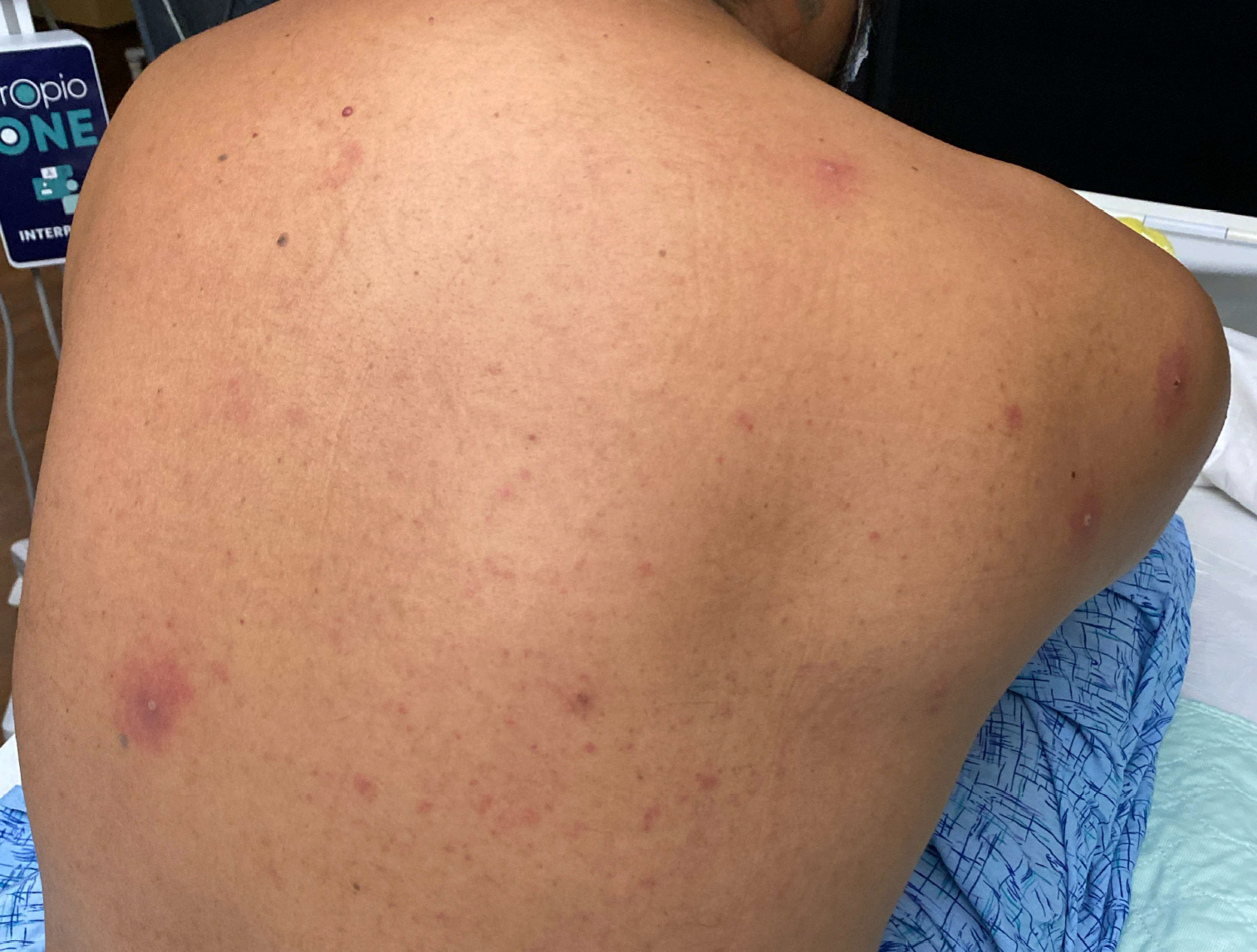
Case Presentation: A 40-year-old man with well-controlled HIV (CD4+ 590 cells/µL, undetectable viral load on Biktarvy) presented with four days of penile swelling, purulent discharge, and diffuse papular, pus-filled, lesions. He also reported fever, chills, dysuria, fatigue, and pain at lesion sites. Prior to arrival, he had self-administered intramuscular ceftriaxone and oral acyclovir obtained in Mexico without clinical improvement. He endorsed having a sexual encounter ten days prior to presentation. Examination revealed diffuse umbilicated papular, pus-filled lesions, tender inguinal lymphadenopathy, and balanitis with milky discharge. He was hemodynamically stable with unremarkable exam of the joints. CT of the abdomen and pelvis showed diffuse penile and scrotal soft-tissue swelling. Urine PCR was positive for Neisseria gonorrhoeae, raising concern for disseminated gonococcal infection (DGI), without joint involvement. Despite prior self-treatment, he received intravenous ceftriaxone for seven days and oral doxycycline with clinical improvement. Lesions were swabbed for Orthopoxvirus PCR, and public health officials were notified for possible Clade I mpox testing. He was placed on airborne precautions and instructed to limit direct contact with others until all lesions crusted. His soft-tissue swelling and lesions gradually improved, and his fevers resolved. Following discharge, Orthopoxvirus PCR returned positive, and his primary care provider was notified. Patient was informed that mpox management is largely supportive, and illness typically resolves within 2–4 weeks.
Discussion: Mpox is an Orthopoxvirus with two circulating clades—Clade I in the Congo Basin and Clade II in West Africa—each associated with differing severity. During the 2022–2023 mpox outbreak, many patients presented with genital, anal, or oral lesions as their initial symptom, often without the classic prodrome of fever, chills, or myalgias. The characteristic lesions typically progress from macules to papules and vesicles with central umbilication before crusting. Coinfection with sexually transmitted infections is common in mpox, with studies showing that up to 40% of patients have a concurrent STI such as gonorrhea, chlamydia, or syphilis. These overlapping conditions can obscure diagnosis, as symptoms like dysuria, purulent discharge, and mucosal lesions may be attributed solely to an STI. This case illustrates the diagnostic challenge: the patient’s positive urine PCR for Neisseria gonorrhoeae and genital discharge initially raised concern for DGI, which could have led clinicians to prematurely exclude mpox. Maintaining awareness of possible coinfection is essential to avoid anchoring bias and ensure appropriate isolation and testing. While mpox is usually self-limited, people living with HIV remain at increased risk for more severe or prolonged disease. Recognizing coinfections and atypical presentations is critical for timely diagnosis, public health notification, and prevention of further transmission.
Conclusions: Hospitalists should maintain a high index of suspicion for mpox in patients with new rashes and systemic symptoms, particularly those with HIV. In this case, anchoring on a positive gonorrhea test could have delayed recognition of mpox; dual infections can occur, underscoring the importance of comprehensive evaluation and targeted testing.