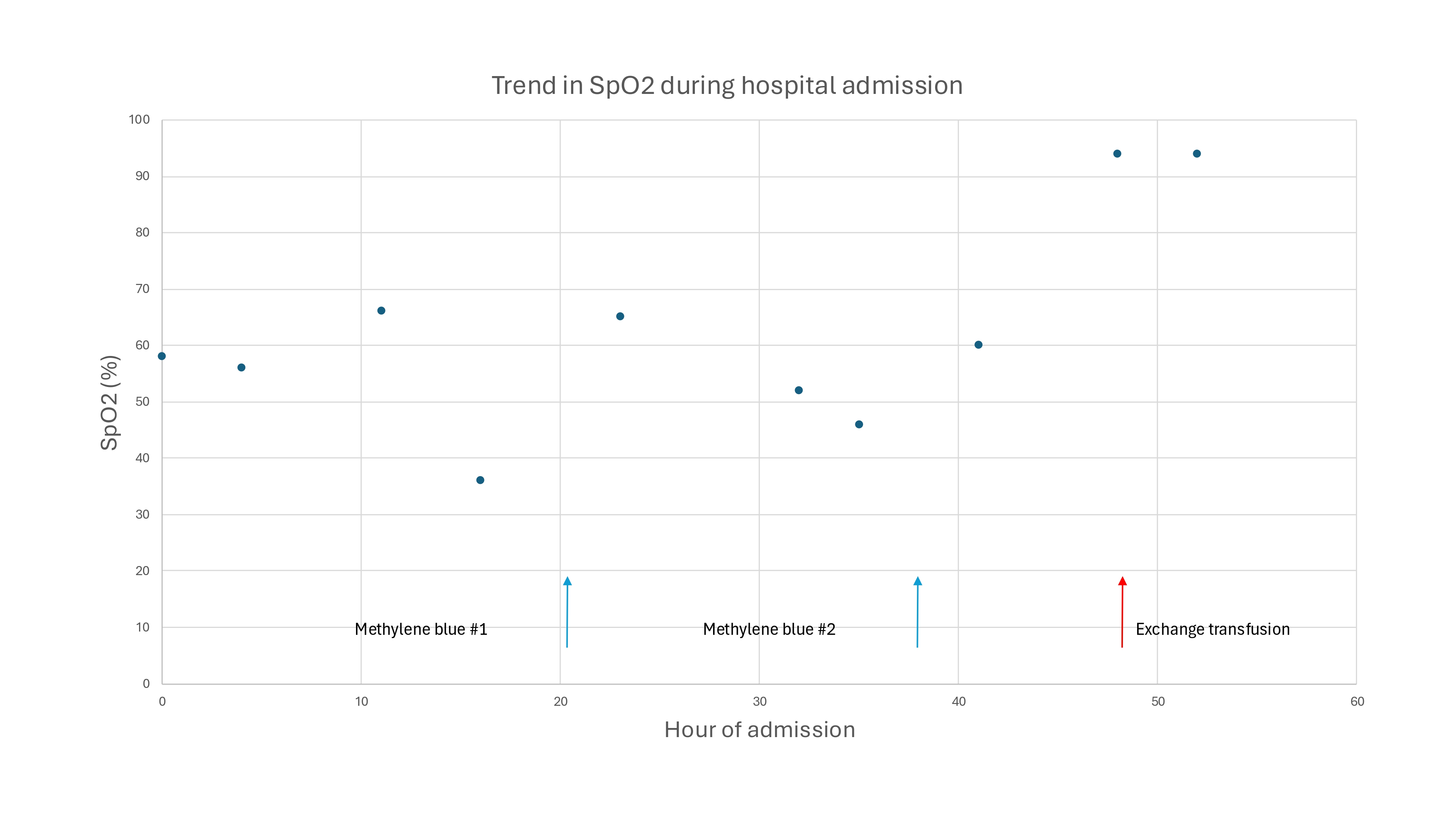
Case Presentation: An 88-year-old male with a history of dementia, chronic kidney disease, and hypertension presented with three days of nausea, vomiting, diarrhea, and altered mental status. On arrival to the emergency department, his peripheral oxygen saturation (SpO2) was 60% despite 100% oxygen supplementation. An arterial blood gas (ABG) on 100% FiO2 showed a partial pressure of oxygen (PaO2) of 306 mmHg, indicating a significant SpO2-PaO2 gap. Additional labs revealed white blood cell (WBC) count 33.5 10*9/L, hemoglobin (HGB) 13.2 g/dL, and venous lactate 4.6 mmol/L. Chest CT angiogram was negative for a pulmonary embolism. Methemoglobin levels were collected but did not result due to blood viscosity and hemolysis. The patient’s blood was notably chocolate brown appearing. After discussions with family, we discovered the patient may have ingested mothballs prior to symptom development. This patient was admitted to the hospital with presumed methemoglobinemia secondary to naphthalene toxicity from mothball ingestion. He received two doses of methylene blue with a mild improvement in SpO2 –PaO2 gap without complete resolution. On day two, his Hgb dropped 3 g/dL, with LDH rising to 2,306 U/L and haptoglobin decreasing to 17 mg/dL, concerning for hemolytic anemia. G6PD level was 8.4 U/g Hgb (reference range 5.3 – 10.3 U/g Hgb). His serum creatinine (Cr) trended up to a peak of 3.74 mg/dL from baseline 1.3-1.5 mg/dL. He received a red blood cell exchange with an improvement in clinical symptoms, resolution of SpO2-PaO2 gap, and normalization of HGB, LDH, and haptoglobin. His Cr trended down to 2.3 mg/dL on discharge with intravenous fluids and supportive care.
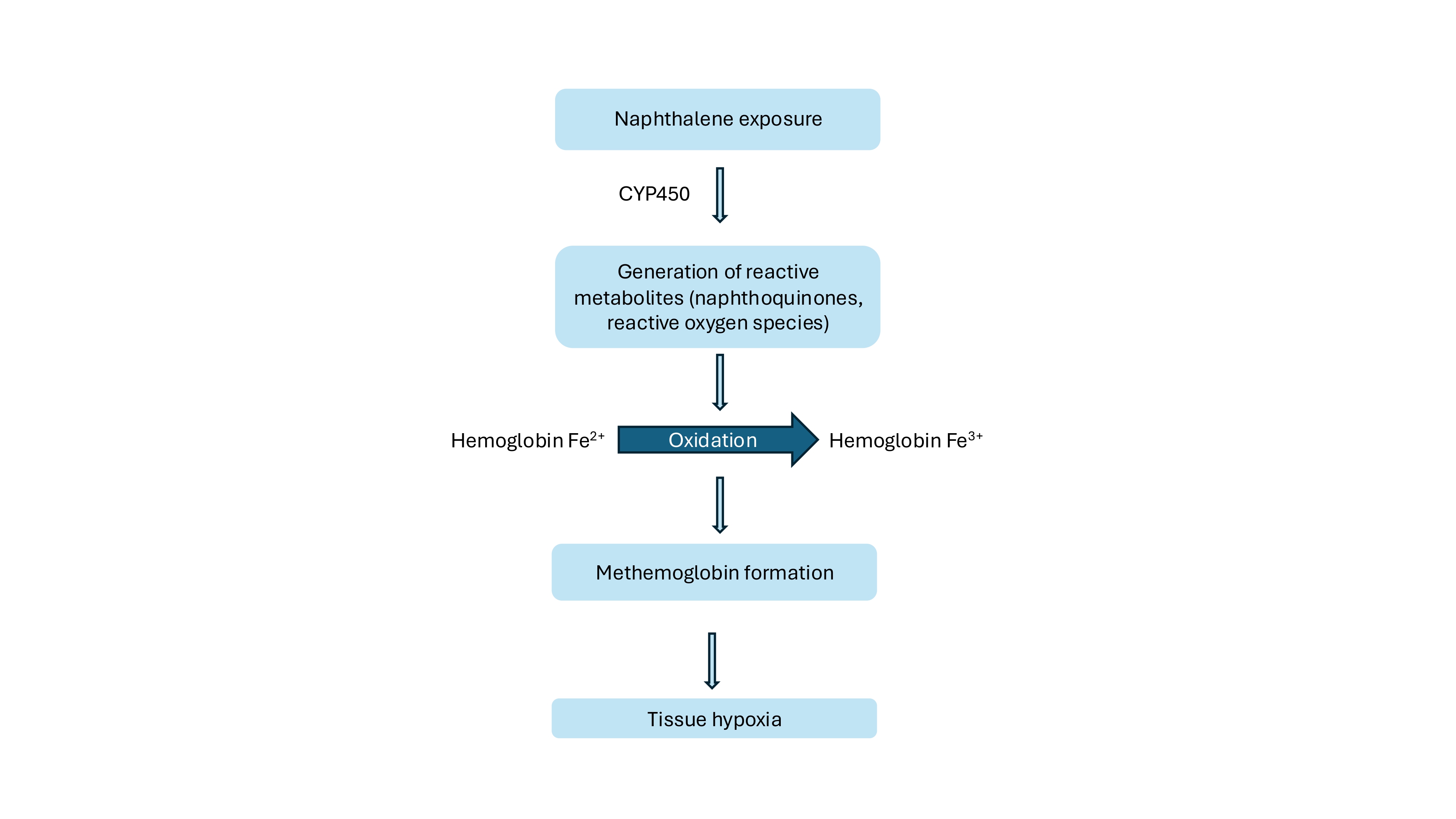
Discussion: Naphthalene, a common ingredient in commercial mothballs, can cause toxicity after ingestion of as little as one mothball. Symptoms include lethargy, altered mental status, nausea, vomiting, diarrhea, and dyspnea. Exam findings may include cyanosis, abdominal tenderness, dark urine, and confusion. Key features of naphthalene toxicity are methemoglobinemia, intravascular hemolysis, hepatotoxicity, and renal dysfunction. Methylene blue is the first-line treatment for methemoglobinemia, often showing effect within one hour. If ineffective, red blood cell exchange or ascorbic acid may be used as alternatives.In patients with glucose-6 phosphate dehydrogenase (G6PD) deficiency, methylene blue should be avoided due to the risk of precipitating hemolysis. Although this patient’s G6PD levels were within normal limits, it may have been falsely normal given the elevated WBC count. Methemoglobinemia can precipitate hemolysis independently of G6PD status, but methylene blue can further increase the risk of hemolysis in G6PD-deficient patients by causing a paradoxical increase in methemoglobin levels due to oxidative stress.
Conclusions: While there is no specific antidote to naphthalene toxicity, prompt identification through a thorough history and physical examination can be crucial to identifying clinical manifestations of the toxicity and providing supportive treatment. In this patient, the PaO2-SpO2 gap along with history of mothball ingestion allowed for timely diagnosis of naphthalene toxicity and initiation of supportive care through various interventions. Additionally, in patients with suspected methemoglobinemia, it is important to identify possible G6PD deficiency, as this will alter treatment course.