Background: Medicine consult rotations are essential in internal medicine training, offering experience in providing consultative care for surgical, psychiatry, rehabilitation, and other non-medicine services, including preoperative evaluation and perioperative management (1). Despite their importance, these rotations often function as part of a hidden curriculum with variable expectations, inconsistent teaching, and limited continuity due to daily attending turnover. At our institution, both residents and faculty recognized the absence of a structured, reliable curriculum.
Purpose: To develop and implement a structured perioperative and medicine consult curriculum using a mixed model that supports consistent teaching through synchronous and asynchronous methods for senior internal medicine residents.
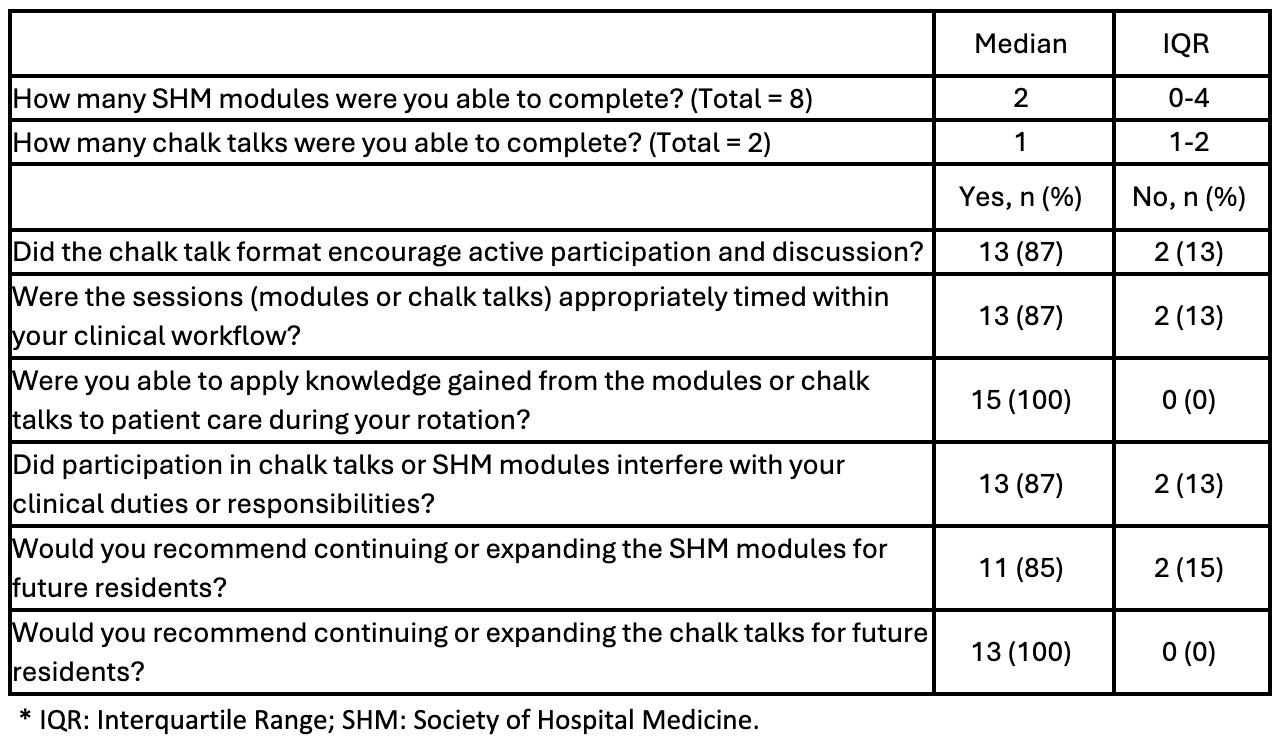
Description: In January 2025, we introduced a hybrid curriculum incorporating eight asynchronous Society of Hospital Medicine (SHM) modules (2) and weekly faculty-led chalk talks. Selected SHM modules emphasized cardiac risk assessment and anticoagulation management, supplemented by six high-yield internal medicine topics: delirium, diabetes/hyperglycemia, perioperative kidney injury, postoperative pain management, anemia, and perioperative fever/infectious disease. A faculty group with perioperative medicine expertise delivered 30-minute interactive chalk talks covering cardiac risk assessment, medication management, and gender-affirming surgery—a topic reflecting our institution’s patient population. SHM links, materials, and weekly schedules were distributed to residents rotating across two hospital sites, ensuring standardized education despite frequent attending changes. Twenty third-year residents completed the rotation between July and October 2025; 15 (75%) completed the post-rotation survey (table 1). Fifty-three percent completed at least one SHM module (median 2; interquartile range 0–4), citing module length and volume as barriers. All residents attended the faculty-led chalk talks and reported that the sessions enhanced engagement without significantly affecting clinical duties. Residents noted improvements in applying evidence-based perioperative principles—especially anticoagulation and medication management—to patient care. Most recommended continuing the curriculum due to its relevance, practicality, and role in standardizing the rotation.
Conclusions: The structured perioperative and medicine consult curriculum was well received and addressed a key educational gap in residency training. Survey feedback supports ongoing refinement and adaptation to resident needs, reinforcing the value of a consistent, evidence-based learning model.