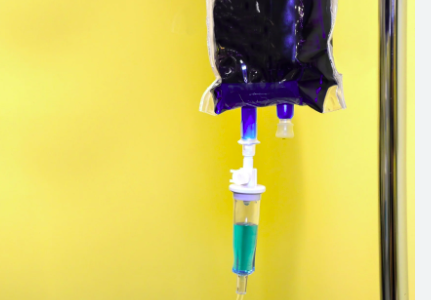
Case Presentation: A 66-year-old female with a past medical history of recurrent kidney stones bilaterally requiring stents and lithotripsy in 2022-24, hypertension, hyperlipidemia, type 2 diabetes mellitus, and lower back pain secondary to multilevel degenerative disc disease who presented to the emergency department with back pain, chills, nausea and vomiting from rehabilitation center (rehab). Patient states she was recently discharged from hospital about 2 days ago for which she was medically treated for lower back pain from disc herniations and also received an epidural injection. While at rehab last night she started having chills with nausea and vomiting. She endorsed oral dryness, thirst, severe sharp/stabbing right sided back pain and right hip pain. She also had a chronic foley in place since last admission due to difficulty urinating and retention secondary to her pain and being bedridden. Foley catheter was last exchanged 3 days ago. Labs notable for white blood cell count of 17.4 10*3/uL, lactic acid of 5.7 mmol/L, Cr of 2.25 mg/dL, and UA with many white blood cells, red blood cells, moderate bacteria, rare calcium oxalate crystals, large leukocyte esterase, and blood. CT abdomen and pelvis notable for 3 mm left sided obstructing calculi in the ureter causing hydronephrosis, also punctate calculus in bilateral kidneys. Patient was given 3 listers of intravenous fluids, Tylenol, and Ceftriaxone. Intensive care unit (ICU) was consulted due to persistent hypotension and initiation of pressors. Patient was taken by urology to the operating room (OR) for Emergent Cystoscopy, Left Retrograde Pyelogram, and insertion of left ureter stent. After returning from OR patient was on two vasopressors. That morning, stress dose steroids were initiated. A third vasopressor was added. Patient was maxed out on 3 pressors but mean arterial pressure (MAP) still consistently under 60 mmHg. Patient was pale and diaphoretic. Arterial blood gas showed severe acidosis, and patient was started on bicarbonate drip. It was decided to give methylene blue and immediately patient’s MAP suddenly rose to over 100s and her vasopressor requirements decreased. Patient was successfully transferred out of ICU and was discharged from facility back to rehab center.
Discussion: In the management of septic shock when patients fail fluid resuscitation the next step is vasopressor therapy to maintain a mean MAP of greater than 65 mmHg. Additional vasopressor agents, including vasopressin, terlipressin, and angiotensin-2, are linked to an increased likelihood of tachyarrhythmias, organic ischemia, and immune dysfunction. Methylene blue (MB) has been explored as a potential alternative to reach hemodynamic targets. MB acts by blocking the enzyme guanylate cyclase, reducing excessive nitric oxide production, and alleviating its vasorelaxant effect in vascular smooth muscle, restoring vascular tone and increasing blood pressure. This effect was seen in our patient in the ICU who was teetering between life and death. Several studies in the medical literature have shown that MB significantly increases MAP from baseline, reduced vasopressor requirements significantly, but no difference in mortality rate was noted.
Conclusions: MB is mostly studied in adjacent to norepinephrine, some studies include epinephrine. It has shown to improve MAP, however there is a lack of evidence for reduction in mortality. MG is only considered as a rescue vasopressor.