Background: Discharge by noon (DBN) is a widely implemented strategy in health systems aimed at expediting patient discharges early in the day to enhance hospital efficiency and increase bed availability. The characteristics of patients who successfully discharge by noon and their clinical outcomes are unclear.
Methods: We conducted a retrospective cohort study of adult patients discharged from a large academic hospital over a 12-month period from January 1 to December 31, 2023. We excluded patients who left against medical advice, died during hospitalization, were incarcerated, were discharged to hospice, or had a length of stay >180 days or < 24 hours. We examined the effect of DBN on 30-day mortality and 30-day readmissions using mixed effects logistic regression models without and with adjustment for age, sex, race and ethnicity, ICU utilization, zip code, primary diagnoses, discharge disposition, and hospital service and hospital floor.
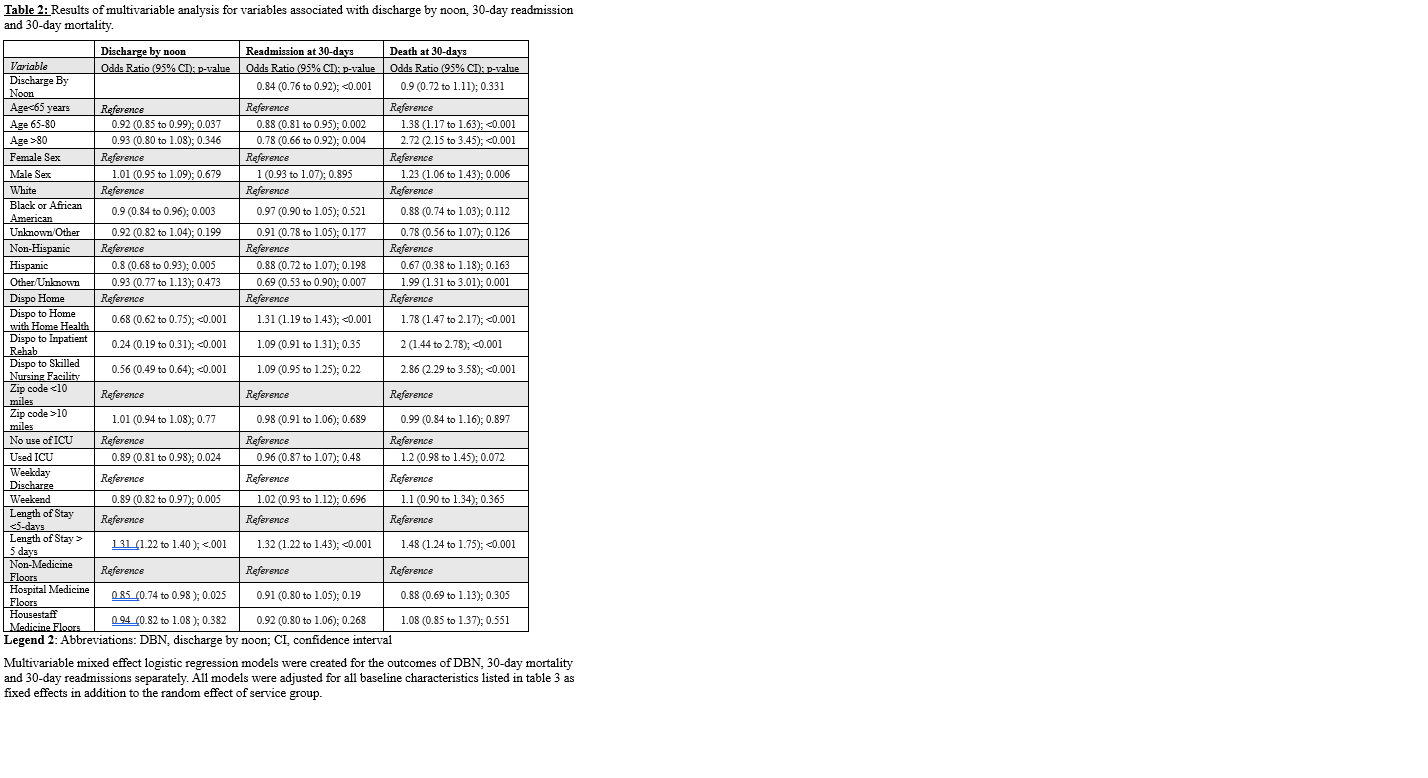
Results: Among 27,933 discharges meeting inclusion criteria, DBN occurred in 19.0% of encounters. Patients who DBN were younger than those discharged in the afternoon (55 vs. 58 years; P< 0.001). 30-day mortality rate was lower in the DBN group (2.1% vs. 3.0%; P< 0.001), as was the 30-day readmission rate (11% vs. 15%; P< 0.001). However, after multivariable adjustment, DBN was not a significant predictor of 30-day mortality (P=0.31), though it remained associated with lower readmission risk (OR=0.84; 95% CI, 0.76–0.92; P< 0.001). Factors associated with lower odds of DBN included African-American and Hispanic race/ethnicity, age 65–80, ICU utilization, and discharge to post-acute care. Longer length of stay (>5 days) was associated with higher odds of DBN.
Conclusions: Patients achieving DBN tended to be younger and have lower complexity with predictable disease courses. DBN was associated with lower 30-day readmission rates but had no association with 30-day mortality. DBN is unlikely to be protective for 30-day readmissions but a hospital strategy encouraging DBN was not associated with patient harm.