Background: Social isolation is associated with various adverse health outcomes, including an increased risk of chronic diseases, higher mortality rates, higher healthcare utilization, and costs. The National Academies of Sciences, Engineering, and Medicine has identified social isolation as an emerging public health concern. However, there is limited data on the factors linked to perceived social isolation in hospitalized individuals. This study aims to analyze a national database to identify independent factors associated with perceived social isolation among hospitalized individuals, helping in better recognition of socially isolated patients during hospital stays.
Methods: We utilized data from the 2022 Medical Expenditure Panel Survey to conduct our analysis. The sample comprised individuals who reported at least one inpatient stay in 2022. The primary outcome, “feeling isolated,” was assessed as a binary variable (0 = no, 1 = yes). Independent variables included a range of socio-demographic characteristics, comorbidities, and self-reported health status. Univariate analyses were performed using the Chi-square test for categorical variables and t-test for continuous variables. Multivariate logistic regression models were applied to conduct adjusted analysis. All statistical analyses were conducted using R (version 4.1.2).
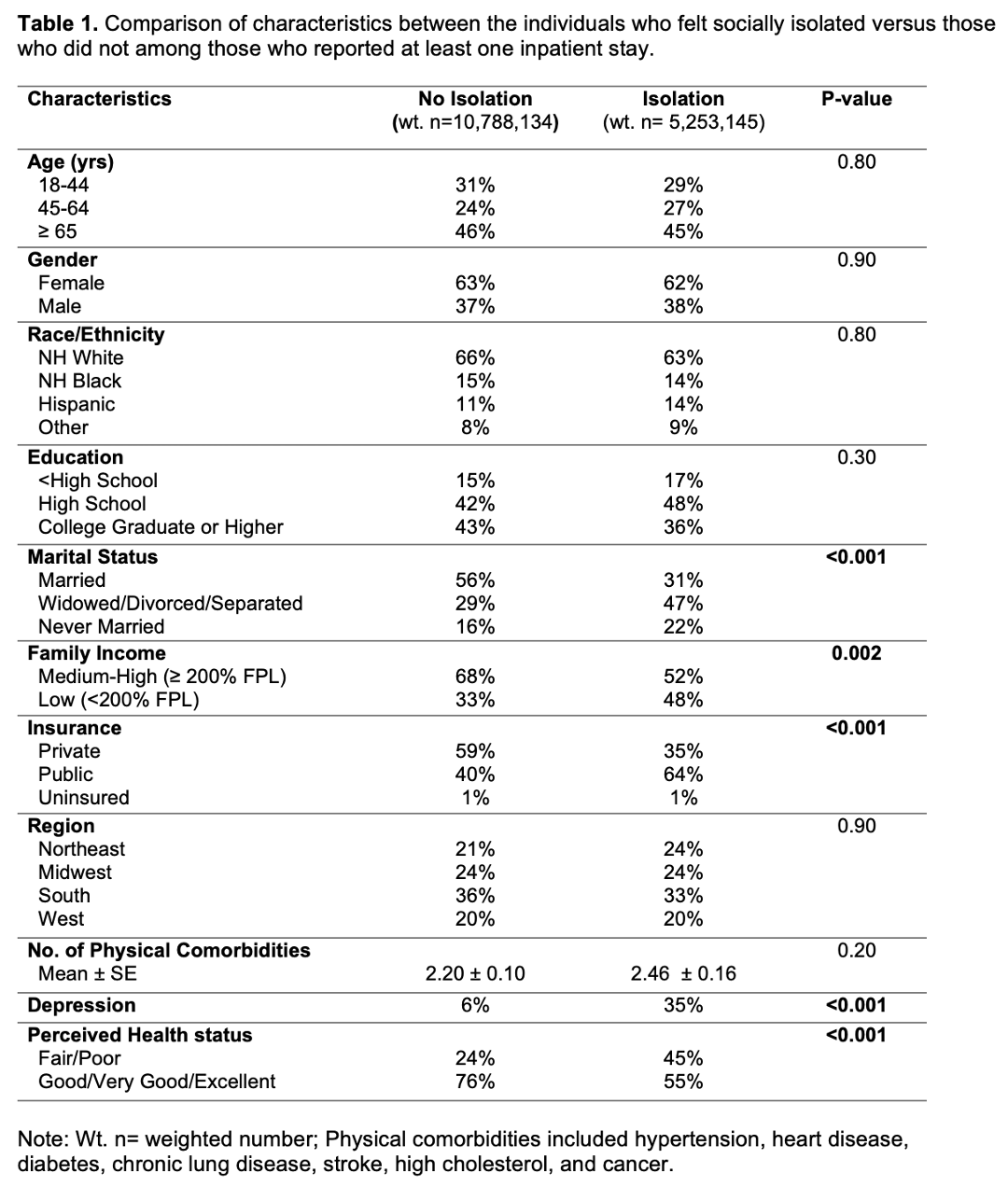
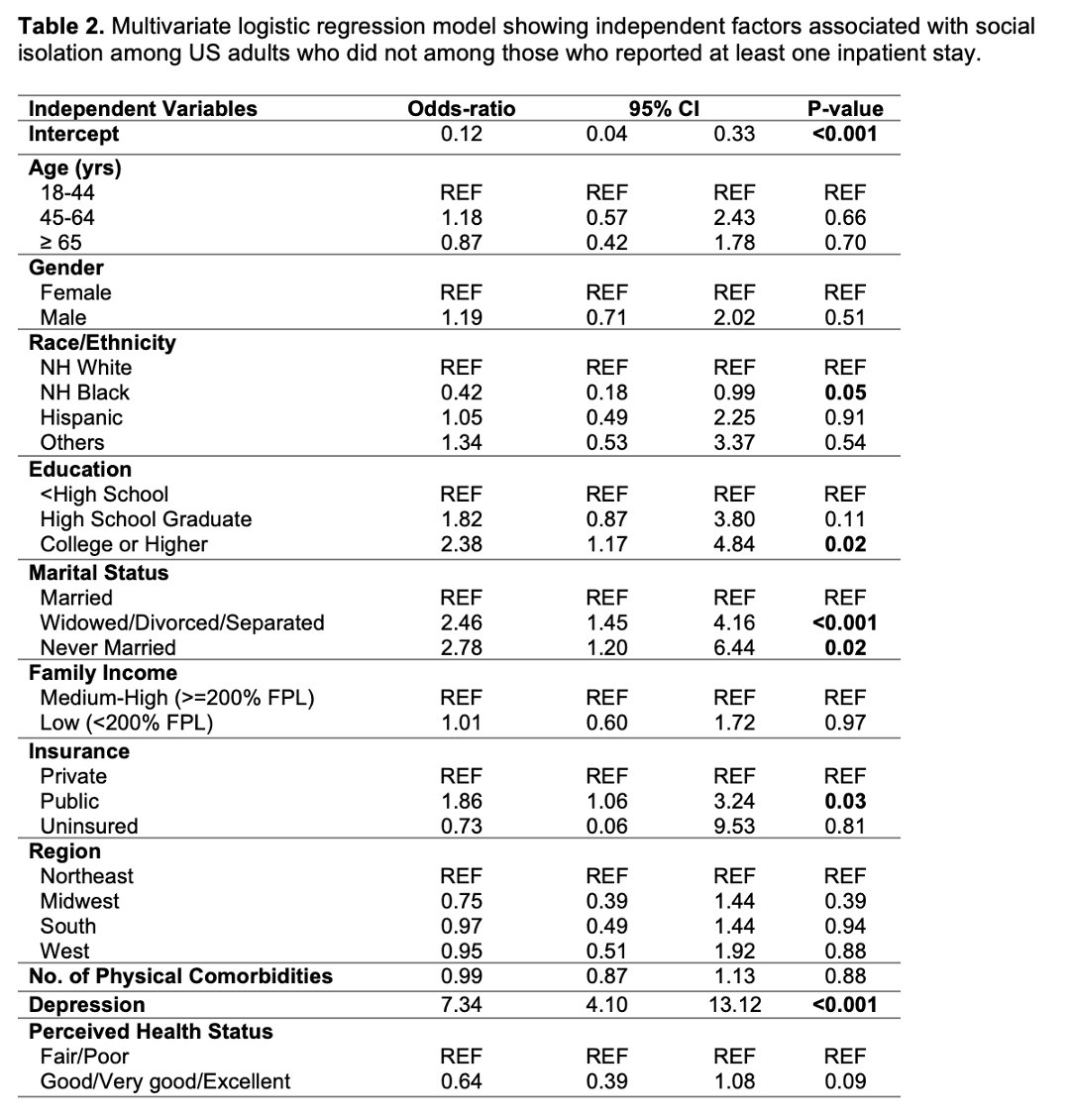
Results: Of the total weighted study sample of 16,520,260 US adults, about 33% reported social isolation. On the univariate analysis, social isolation was significantly present in those who were widowed, divorced, separated, or unmarried; low-income; had public health insurance like Medicare or Medicaid; had depression and reported fair to poor perceived health status (Table 1). On adjusted models, factors independently associated with social isolation were college graduates or higher (OR 2.38, 95% CI 1.17-4.84); widowed, divorced, or separated (OR 2.46, 95% CI 1.45-4.16), or unmarried (OR 2.78, 95% CI 1.20-6.44); those with public health insurance (OR 1.86, 95% CI 1.06-3.24), and depression (OR 7.34, 95% CI 4.10-13.12) (Table 2).
Conclusions: Our study reveals that approximately one-third of individuals who had at least one inpatient stay reported having social isolation. Hospitals may thus serve as critical points for identifying these individuals with social isolation. Our findings indicate that those who are college graduates or higher; widowed, divorced, separated, or unmarried; those with public health insurance, and those experiencing depression were more likely to report social isolation. Hospitalists have a unique opportunity to identify these at-risk patients and collaborate with social workers to connect them with social support services and promote social engagement. Further longitudinal and interventional research is necessary to expand the evidence base.