Background: Physicians often document patients’ anticipated discharge dates and care progression needs; however, this documentation can be challenging to locate in clinical notes and may be overlooked during care progression. At our institution, physicians are unable to consistently attend multidisciplinary rounds (MDRs), relying heavily on documentation to communicate plans of care and anticipated discharge dates. This lack of visibility in the plan of care results in increased communication burdens between the clinical care team and physicians, delaying care progression. To address this, our EHR system recently introduced Milestones to improve transparency in patient care progression. We adapted this feature to be activated via a smartphrase embedded in physicians’ daily documentation.
Purpose: To improve length of stay (LOS) through the integration of a smartphrase into the physician workflow, which activates EMR milestones, enhances visibility into the plan of care, and streamlines coordination among clinical care teams.
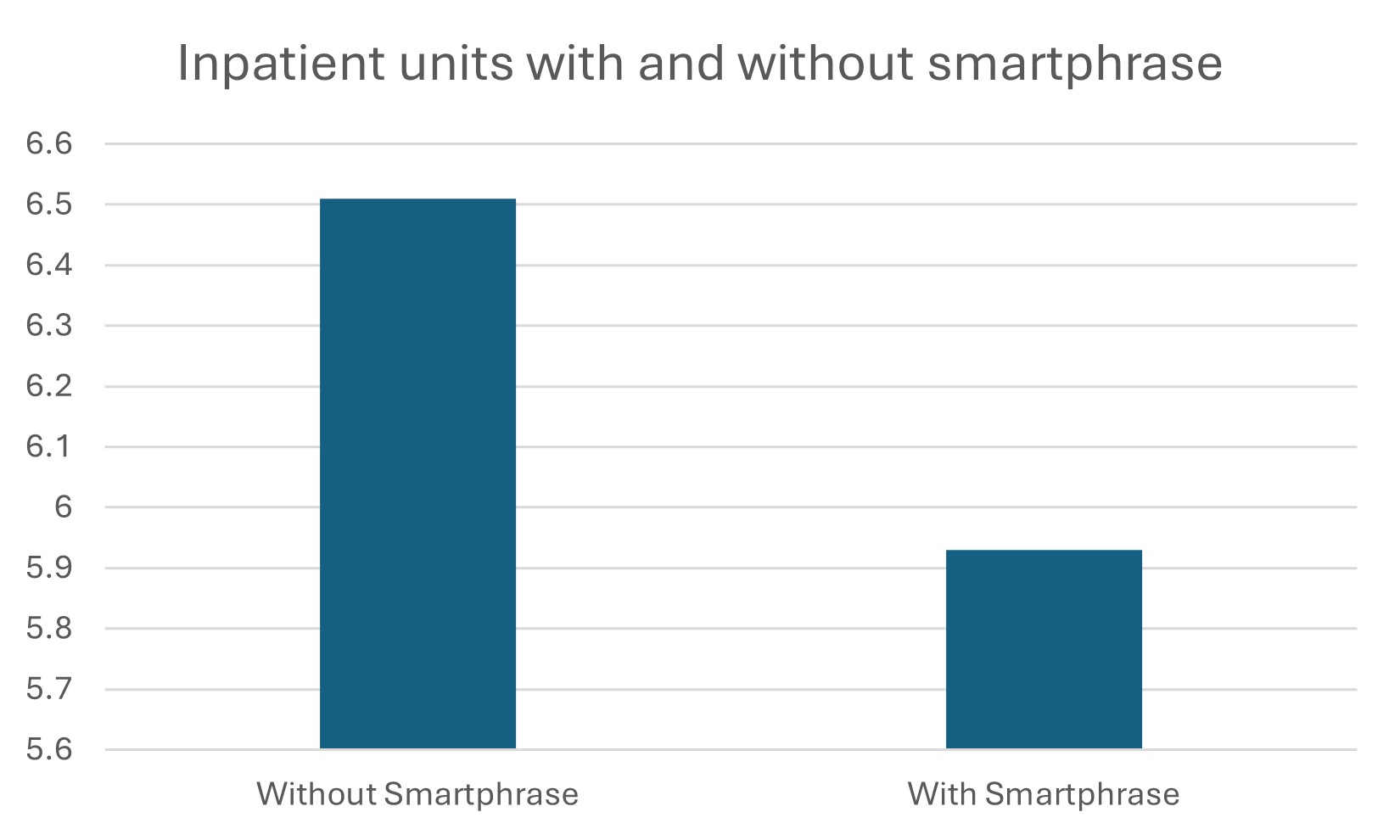
Description: We developed a smartphrase that integrates seamlessly into physicians’ daily documentation, addressing two critical questions:1. What is the anticipated medical readiness date?2. What are the patient’s specific needs?Anticipated medical readiness dates are selected from EMR-standardized timeframes:Ready Now, Anticipated Today, Anticipated Tomorrow, 2–4 Days, or 5 Days. Patient needs are categorized based on the most common discharge delays, as identified by the clinical throughput team, and include; Physical therapy, Occupational therapy, Speech therapy, home oxygen evaluation, Imaging, Case management, social work, Consult sign-off, and Follow-up appointmentWhen activated, these milestones appear on clinical care team unit lists or hospital-wide priority lists, enabling teams to better coordinate and prioritize care based on the anticipated medical readiness date. Milestones are tracked with start and end times; the end time is automated, triggered by completion of designated flowsheets or note templates to minimize manual intervention.We engaged individual clinical care teams for input and process improvement education to ensure seamless integration into workflows. The smartphrase was trialed within two main hospitalist groups at a tertiary academic medical center, covering an average of 20 patients daily. Hospitalists were encouraged to include the smartphrase in their H&P and daily progress notes.After an 8-week trial, we observed inpatient LOS reduction by 0.5 days and observation LOS reduction by 0.1 days (2.5 hours). Feedback sessions highlighted the smartphrase’s ease of use for physicians, though daily completion required reinforcement. There was also Appreciation from clinical care teams for enhanced prioritization using milestones and anticipated medical readiness dates.Based on the success of the trial, we are expanding this initiative to all primary provider groups with an anticipated go-live date of January 1, 2025.
Conclusions: Coordinating a plan of care among multidisciplinary teams is challenging, especially when not all team members can attend MDRs. Our smartphrase-enabled milestone system improves transparency, enhances communication, and reduces LOS by providing insight into patient needs and anticipated medical readiness dates. We are optimistic about continued LOS improvements as the program scales and milestone workflows are further refined.