Background: Secure text messaging systems that allow for bidirectional communication between a sender and recipient, instead of relying on unidirectional alphanumeric text or numeric-only messages, have fundamentally changed inpatient communications. At our institution, all clinical team members utilize the same secure messaging platform (Voalte). We aimed to explore physician and nurse overall satisfaction with our institution’s current secure messaging system and to identify factors that may be contributing to dissatisfaction among hospitalists and bedside nurses.
Methods: Via email listservs, we administered a survey to hospitalists and medicine unit nurses at our large, urban, academic institution. Survey questions were developed based on prior focus groups and semi-structured interviews conducted to identify existing challenges with physician-nurse communication. The survey included Likert-scaled questions exploring respondents’ overall satisfaction with the secure message system as well as with specific communication domains. Respondents were asked to rank-order various factors that impact their experiences with physician-nurse communication. All survey responses were anonymous.
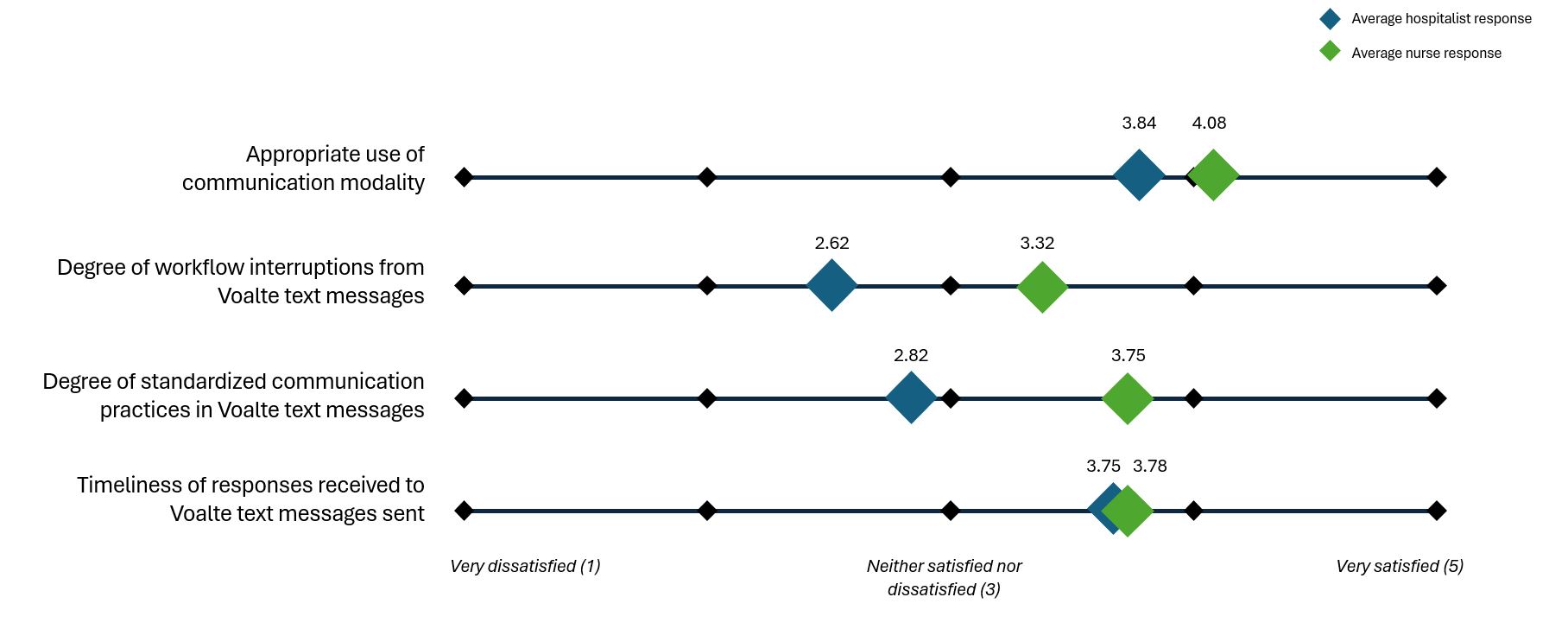
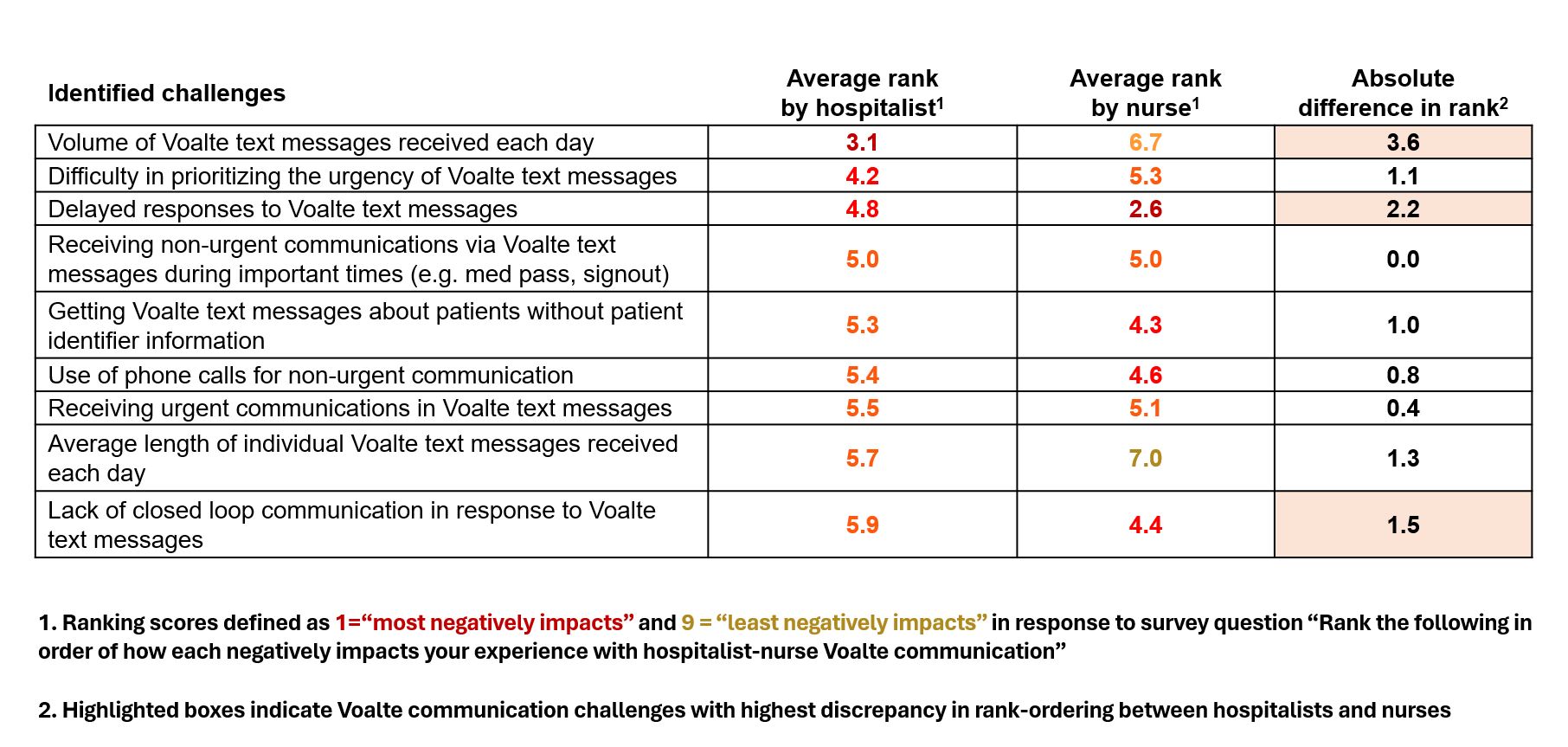
Results: 53 hospitalists and 27 medicine unit nurses completed the survey. Respondents reported relative overall satisfaction with the secure messaging system, with 74% of hospitalist and 85% of nurse respondents responding they were “very satisfied” or “satisfied”. Compared to nurses, hospitalists reported higher dissatisfaction in all communication domains, with hospitalists most dissatisfied with the degree of workflow interruptions and lack of standardized communication practices with messaging (Figure 1). Communication factors that most negatively impacted hospitalists’ communication experiences included the volume of messages each day and difficulty prioritizing urgency of messages (Figure 2). In comparison, nurse respondents reported that delayed responses to messages, receiving messages without knowing which patient they refer to, and lack of closed loop communication most negatively impacted hospitalist-nurse communication (Figure 2).
Conclusions: While most hospitalists and nurses were relatively satisfied with the current secure message system, they were dissatisfied with many aspects of the communication experience. Specific communication factors that most negatively impact hospitalist-nurse communication differed between hospitalist and nurse respondents. Understanding how these factors impact hospitalists and nurses differently may help to improve interdisciplinary communication. Importantly, efforts to standardize communication practices via secure messaging systems need to account for the needs and preferences of all users. These survey results emphasize the need for robust and diverse stakeholder engagement in developing and implementing institutional best practices for inpatient communications using secure messaging systems.