Case Presentation: A 61-year-old woman was admitted to our internal medicine teaching service with 5 days of epigastric pain accompanied by nausea and vomiting. She did not drink alcohol and did not take any home medications. Physical exam revealed epigastric abdominal tenderness. Laboratory tests revealed normal triglycerides and calcium with an elevated lipase of 173 U/L. Abdominal ultrasound demonstrated no cholelithiasis or biliary/pancreatic ductal dilatation. An abdominal CT scan ordered in the emergency room showed fat stranding posterior to the pancreatic body, consistent with pancreatitis. The plan was for “fluids, pain control and home.” IV saline and analgesics resulted in prompt resolution of her pain and she was set for discharge.
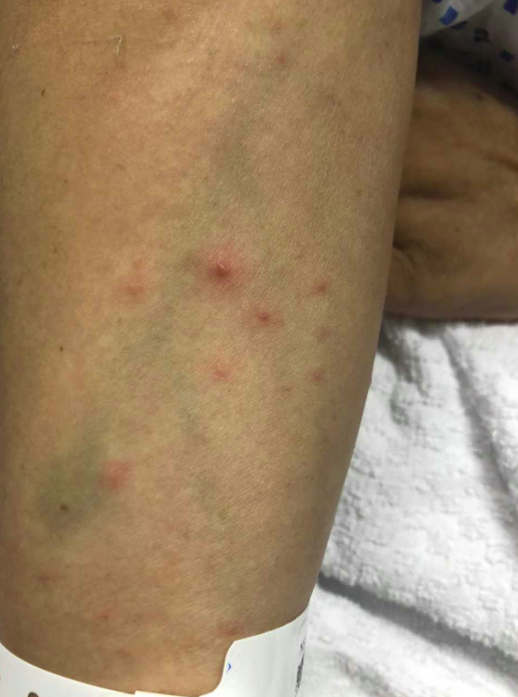
Hours prior to discharge, her daughter inquired about a rash that had developed five days before symptom onset. Closer exam of the patient’s skin revealed diffuse sub-centimeter vesicular lesions and crusted papules on the patient’s face, scalp, trunk and extremities bilaterally (Figure 1). A vesicular lesion was incised, the fluid sent for culture. PCR was positive for varicella zoster virus, consistent with a diagnosis of disseminated VZV: an unusual but reported culprit of acute pancreatitis. Further review of her record revealed a history of stem cell transplantation one year prior after diagnosis of Diffuse Large B-Cell Lymphoma. She completed a ten day course of IV acyclovir with resolution of her rash and improvement in her overall well-being.
Discussion: Cognitive bias is a common cause of diagnostic error, estimated to account for up to 17% of adverse hospital events. Premature closure is a form of cognitive bias that results from ending a decision-making process before all relevant details have been considered. Teaching teams are particularly susceptible to making these errors as they must negotiate the competing responsibilities of patient care and education during a finite period of work rounds. It is therefore tempting to see “bread and butter” and use the fast, but error-prone heuristic approach when deriving a treatment plan. This case highlights how premature closure resulted in the near miss of a rare, but well-established etiology of pancreatitis – disseminated varicella – that is associated with a high rate of mortality. To mitigate the effects of premature closure bias, our team implemented a daily debriefing session at the end of teaching rounds to encourage residents to apply a slower, more analytical diagnostic approach to “bread and butter” cases on our service.
Conclusions: Diagnostic errors resulting from cognitive bias are common and can negatively impact patient safety and outcomes. One way to reduce negative outcomes associated with cognitive biases is to increase awareness about their existence by reflecting on the thought process that guides clinical decision-making.