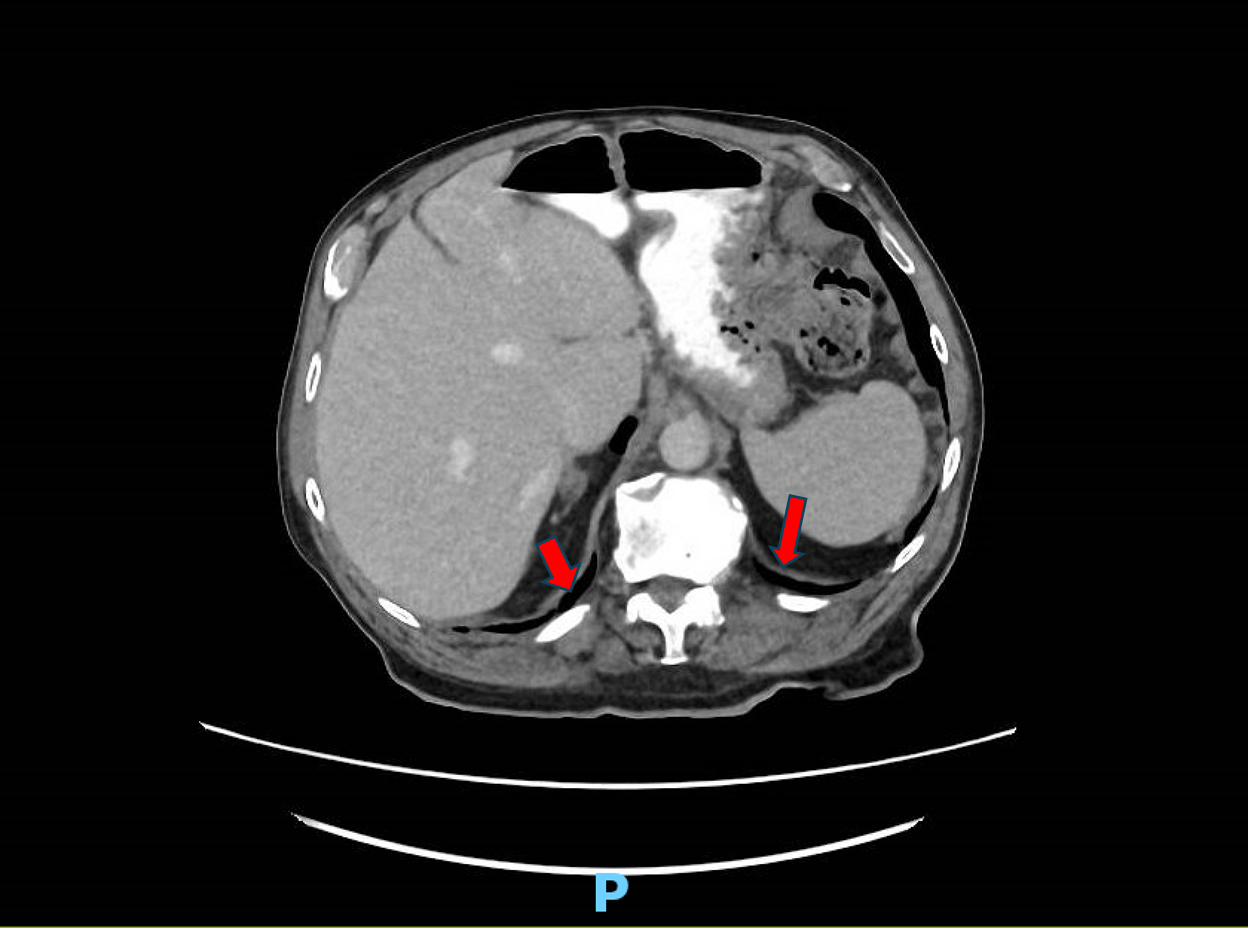
Case Presentation: A 75-year-old man with CAD on aspirin, prior diverticulitis (status post-laparoscopic Low Anterior Resection 6 years prior to this admission), and chronic back pain managed with NSAIDs and long term prednisone presented with LUQ and epigastric pain. He denied nausea, vomiting, chest pain, or SOB, and reported normal bowel movements and flatus. On ED presentation, he was afebrile, hypotensive (BP 102/66), and in atrial fibrillation with WBC 13 and lactate 2.3. CT abdomen revealed retroperitoneal air and duodenal inflammation with a diverticulum in the third part of the duodenum. He was made NPO, started on IV fluids, piperacillin-tazobactam, fluconazole, solumedrol, and PPI. NG tube could not be placed due to previous nasal fractures. TPN was initiated. On hospital day 3, he experienced fever (102°F) and leukocytosis (WBC 17) with repeat CT unchanged. Blood cultures remained negative. Antimicrobials were changed to Ertapenem and fluconazole. Progressively severe leukocytosis (WBC 22) and continued fever prompted IR-guided drainage. 80 mL of purulent material was aspirated and yielded a carbapenem resistant Proteus spp. Antibiotics were adjusted to ciprofloxacin with fluconazole and metronidazole. He tolerated a regular diet and TPN was discontinued. There was resolution of left retroperitoneal collection and the drainage catheter was discontinued after four weeks. After completing 10 weeks of antibiotics, he is afebrile and without abdominal pain.
Discussion: Duodenal diverticular perforation remains a rare but life-threatening condition, often presenting with nonspecific symptoms that delay diagnosis. In this case, the patient’s chronic steroid use, along with prior gastrointestinal and cardiac comorbidities, likely contributed to tissue vulnerability and impaired healing. The patient was considered high surgical risk prompting a conservative management approach. The patient’s clinical course was complicated by persistent leukocytosis and fever, ultimately requiring image-guided drainage demonstrating an antibiotic resistant pathogen. Conservative management has been acceptable strategy though occasionally surgery is ultimately required. (2) This case highlights the importance of individualized, multidisciplinary care in high-risk patients, where non-operative strategies can be effective when surgical risk is prohibitive. Early recognition and close monitoring were critical to achieving a favorable outcome.
Conclusions: Duodenal diverticular perforation remains a rare and diagnostically challenging condition, particularly in elderly patients with multiple comorbidities and chronic immunosuppression. This case highlights the importance of early imaging, multidisciplinary collaboration, and a tailored, stepwise approach to management. Despite initial conservative therapy, escalation to interventional drainage was necessary, ultimately leading to clinical improvement. This case underscores that non-operative strategies can be effective in select high-risk patients, avoiding the morbidity of more invasive surgical interventions.