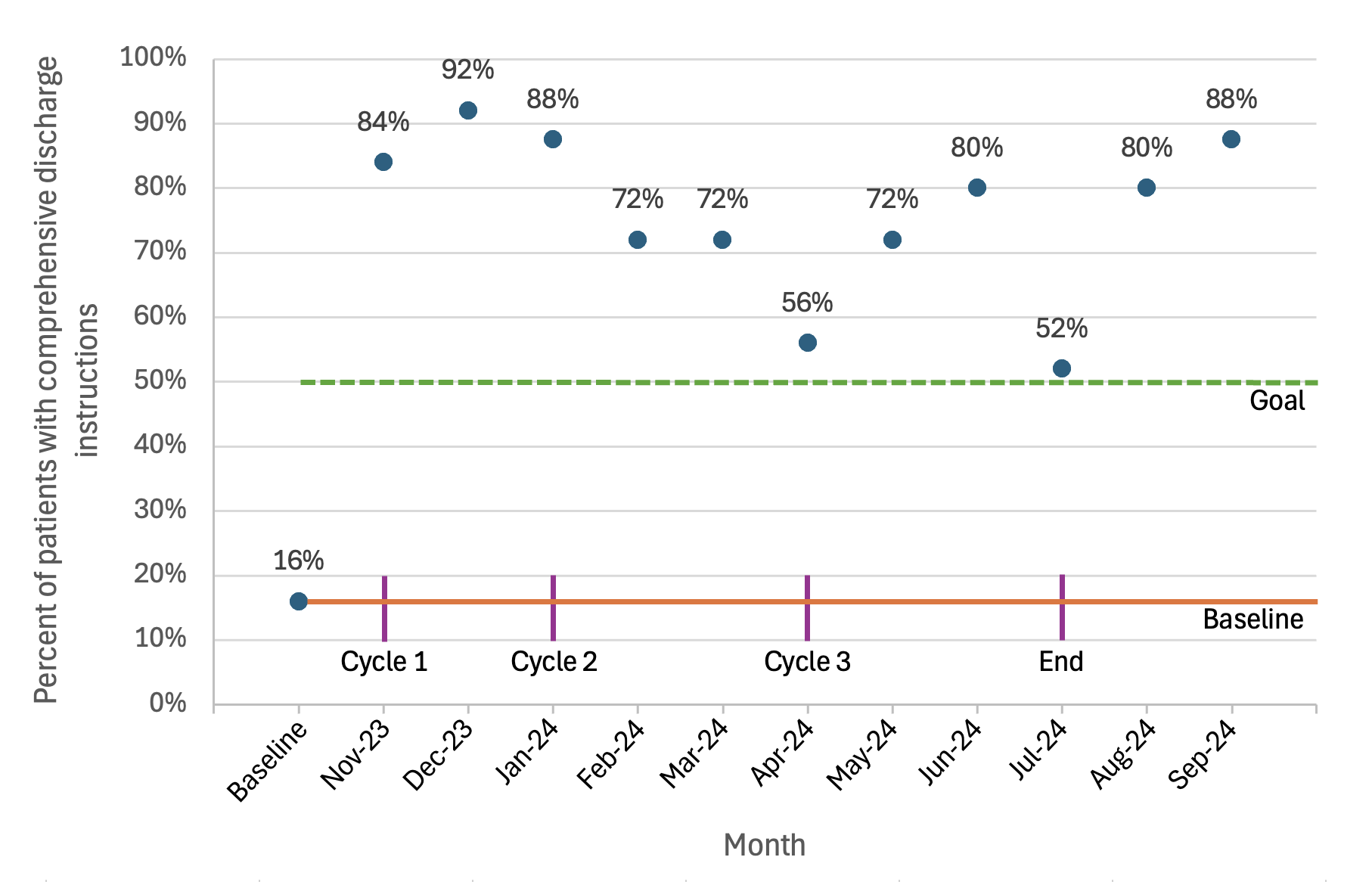
Background: Effective discharge instructions are critical for safe patient transitions to outpatient care. However, patients may misunderstand the information they receive, particularly those with complex plans and limited English proficiency. The Institute for Healthcare Improvement and Solutions for Patient Safety recommend discharge instructions that outline the patient’s primary issue, care steps, signs of worsening, where to seek help, and medication reconciliation. Pediatric discharge instructions may lack standardization, leading to inconsistent communication and leaving families at risk of errors and avoidable healthcare visits. This quality improvement project aimed to increase the percentage of pediatric patients under 18 discharged from the pediatric medicine service at a large academic hospital who receive comprehensive discharge instructions from 16% to 50% by the end of June 2024.
Methods: A discharge instruction template was developed to standardize the content provided to families. The template includes fields for the primary reason for admission, care plan at discharge, signs of worsening, where to seek help if worsening, and medication reconciliation. The project was carried out in three cycles: Cycle 1 (November 1 – December 31, 2023) involved creating the template and notifying staff via email, cycle 2 (January 1 – March 31, 2024) focused on translating the template into Spanish, and cycle 3 (April 1 – June 30, 2024) involved posting reminders in resident work areas to encourage consistent use. Residents and nursing staff were educated on the discharge template and its importance, and a smart phrase encompassing all template components was created in the electronic health record. Monthly audits were conducted through September 2024 to track template usage and the percentage of patients receiving comprehensive discharge instructions.
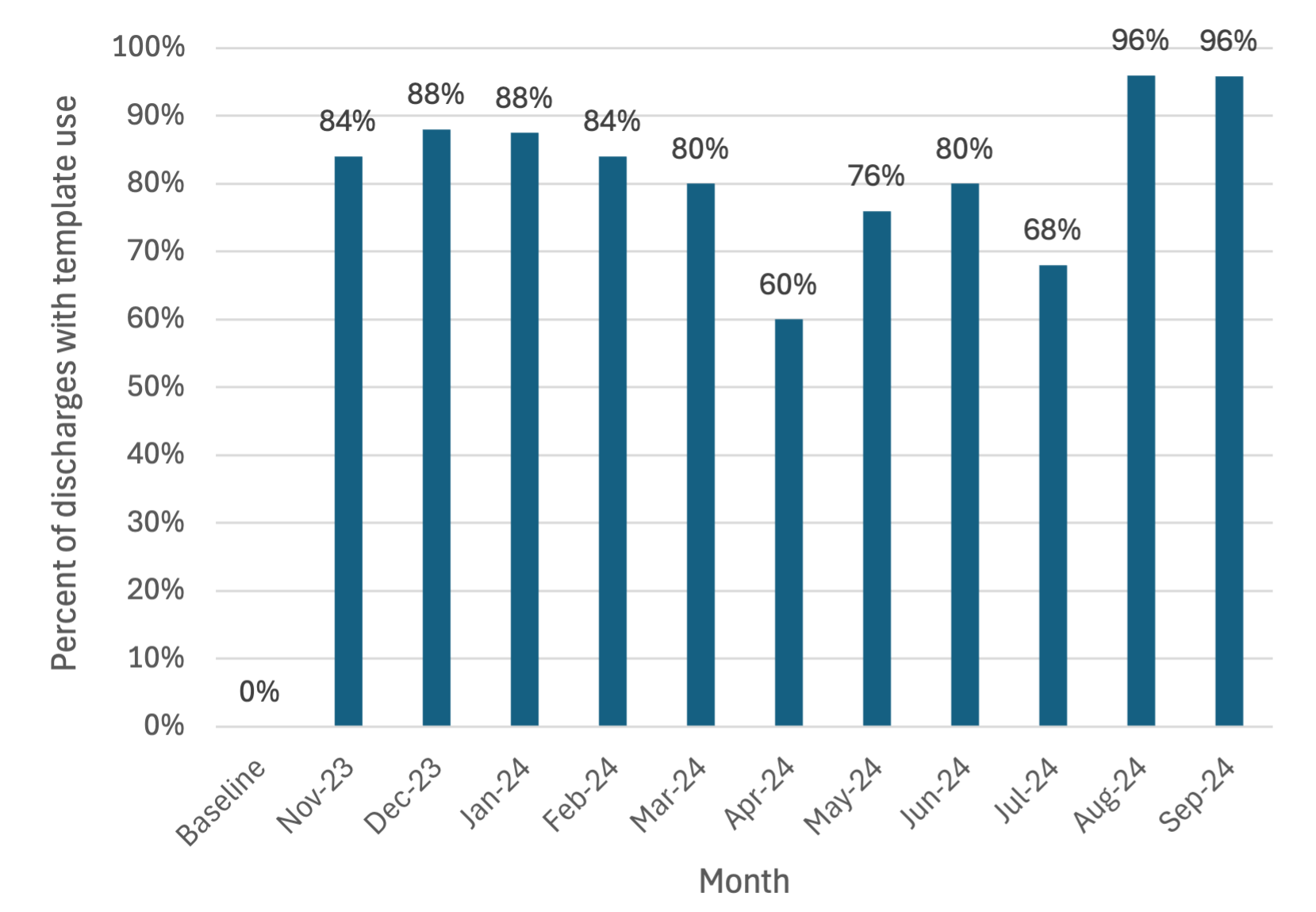
Results: From July to October 2023, 16% of patients had comprehensive discharge instructions. Discharge instructions were found to exclude one or more of the following components: admit reason (57%), care plan (47%), signs of worsening (22%), and where to seek help if worsening (29%). From November 2023 to June 2024, 77% of patients received comprehensive discharge instructions, with an 80% utilization rate of the discharge template. From July to September 2024, 73% of patients received comprehensive discharge instructions, and the discharge template was used in 86% of encounters.
Conclusions: Our study demonstrated a substantial increase in the number of pediatric patients receiving comprehensive discharge instructions using a standardized template on the pediatric medicine service, with sustained improvement after the intervention period. The results demonstrate the efficacy of template utilization, staff education, and language concordance in increasing the provision of comprehensive discharge instructions. Future research could explore the impact of these interventions on readmission rates and assess their applicability in other services.