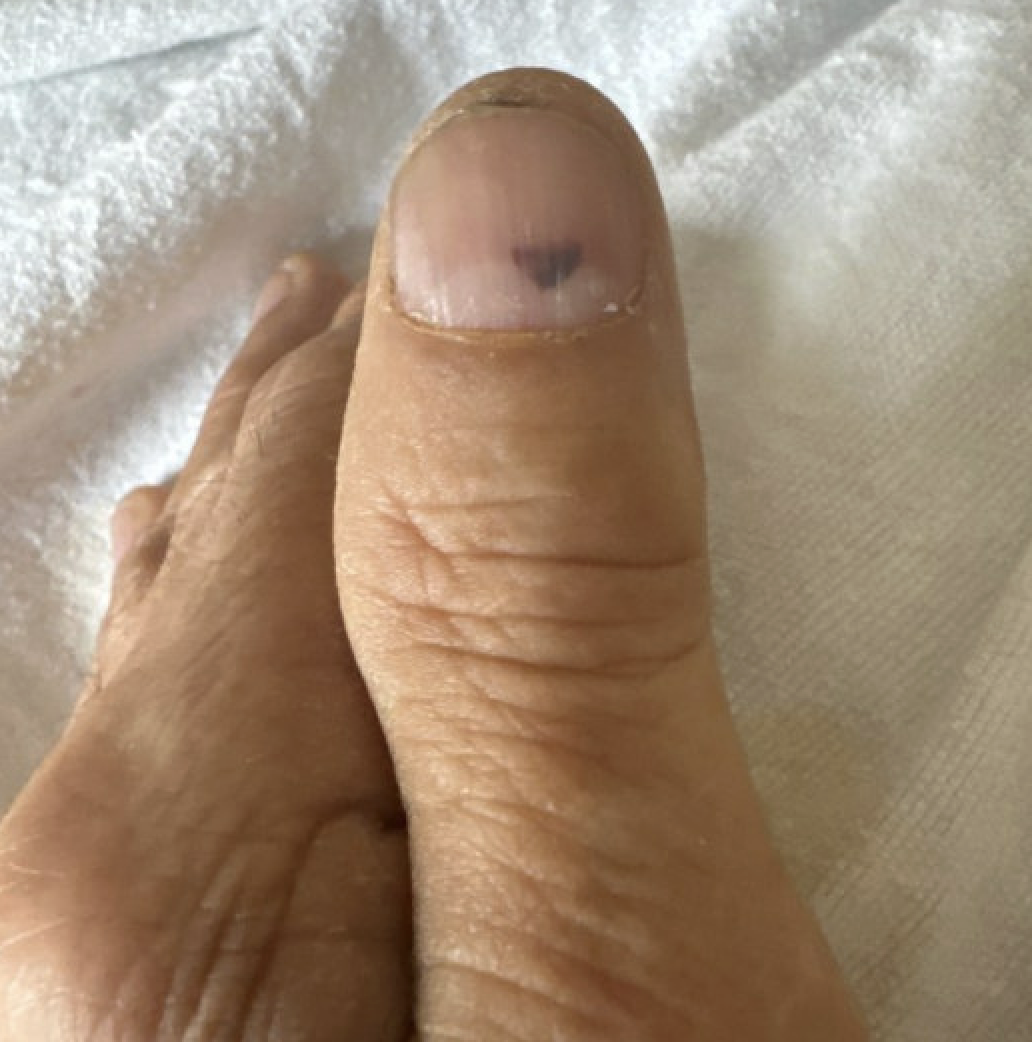
Case Presentation: A 76-year-old man with atrial fibrillation and gout presented with one week of worsening dizziness and headache. On arrival, his vital signs were normal, and laboratory studies showed an unremarkable leukocyte count and comprehensive metabolic panel. A brain MRI revealed no acute infarct. Overnight, he developed new acute left shoulder and right ankle pain. The right ankle was swollen, erythematous, and tender; the left shoulder had limited mobility without swelling. Colchicine and NSAIDs were started for a presumed gout flare.However, he developed left wrist pain on hospital day 3 and left knee pain on hospital day 4. He remained afebrile. His headaches remained severe and refractory to acetaminophen and NSAIDs, prompting concern for meningitis. Lumbar puncture was deferred because he was on anticoagulation. Blood cultures drawn on hospital day 3 grew Streptococcus dysgalactiae subspecies equisimilis, and empiric vancomycin was initiated.He subsequently had an arthrocentesis of the left knee yielding 29,000 PMNs without crystals. Right ankle aspirate culture also grew S. dysgalactiae. Given his polyarticular septic arthritis and a subungual hemorrhage, there was heightened concern for infective endocarditis (IE). A transthoracic echocardiogram was unremarkable, but a transesophageal echocardiogram on hospital day 6 revealed a 3 mm aortic valve vegetation. Antibiotics were narrowed to intravenous penicillin for a six-week course. His persistent headaches ultimately responded to IV magnesium and valproate and were attributed to status migrainosus.
Discussion: Streptococcus dysgalactiae, a beta-hemolytic streptococcus typically associated with skin and soft tissue infections, is an uncommon cause of IE but is being reported more frequently in older or immunocompromised adults. This case highlights an atypical presentation of S. dysgalactiae IE manifesting primarily as progressive polyarticular pain due to multifocal septic arthritis.Suspicion for infection was initially low because of the patient’s known history of gout, absence of fever (possibly masked by scheduled acetaminophen), normal leukocyte count, and lack of a murmur. A severe migraine further confounded the presentation, and the early assumption of gout delayed recognition of septic arthritis and bacteremia.Clinicians should consider multifocal septic arthritis secondary to endocarditis in patients with new polyarthritis, even in the absence of classic systemic signs. Early joint aspiration confirming an infectious etiology may have expedited the diagnosis of bacteremia and IE in this patient.
Conclusions: This case underscores that any new inflamed joint warrants prompt aspiration, which can rapidly identify septic arthritis and, as in this case, may also uncover underlying bacteremia or infective endocarditis.