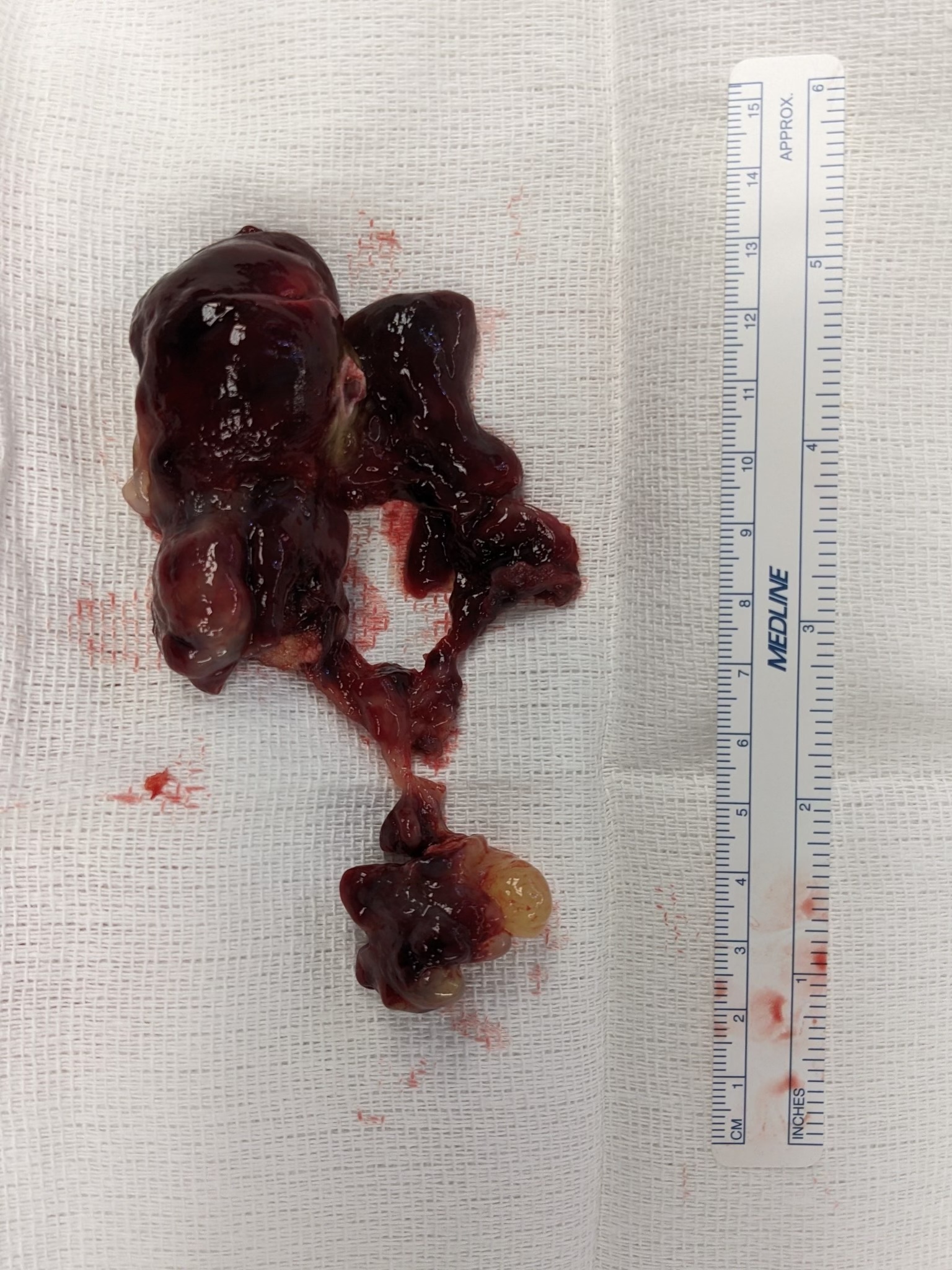
Case Presentation: Patient is a 53-year-old female with a medical history of hypertension, hyperlipidemia, diabetes, and tobacco use, presented with a right middle cerebral artery (MCA) stroke and left-sided weakness. She initially delayed seeking care, attributing her symptoms to chronic back pain, but was eventually brought to the hospital by her family. MRI revealed a right MCA stroke along with other small infarcts; however, the patient was outside the window for thrombolytic or thrombectomy interventions. Further evaluation revealed a left atrial mass on transthoracic echocardiography, prompting a cardiology consultation. Physical examination showed a loud “plop-like” murmur and left-sided neurologic deficits, while cardiac imaging confirmed a large, mobile left atrial mass, likely an atrial myxoma, with concerning features for associated thrombus. The mass caused left atrial inflow obstruction and functional mitral stenosis, evidenced by a mean gradient of 20 mmHg. The patient also demonstrated findings of moderate pulmonary hypertension and trivial pericardial effusion. Despite her cardiac mass, she reported functional capacity of at least 4 METs without significant cardiac symptoms.
Discussion: This case highlights the complex interplay between a left atrial myxoma, systemic embolization, and neurologic sequelae. Atrial myxomas are the most common primary cardiac tumors and often present with nonspecific symptoms or complications, such as stroke due to tumor emboli or associated thrombi. In this patient, the large mass not only contributed to her embolic events but also caused functional stenosis of the mitral valve, potentially compounding her symptoms. Echocardiography remains the cornerstone for diagnosing myxomas, providing critical information about the mass’s size, mobility, and hemodynamic impact. The findings in this case, including biatrial enlargement and turbulent flow across the left atrium, underscore the importance of timely identification and intervention.Management of atrial myxomas typically involves surgical excision due to the risks of embolization and hemodynamic compromise. However, this patient’s recent stroke complicates the management strategy, as anticoagulation to reduce thrombotic risk may exacerbate hemorrhagic transformation of her cerebral infarcts. Multidisciplinary collaboration among cardiology, cardiothoracic surgery, neurology, and neurosurgery is crucial to balance the risks of anticoagulation with the need for urgent surgical intervention.
Conclusions: This case illustrates the critical need for multidisciplinary management in patients with atrial myxomas presenting with embolic complications. Left atrial myxomas pose unique diagnostic and therapeutic challenges, particularly when associated with systemic embolization and neurologic compromise. Prompt identification via echocardiography and collaborative decision-making are paramount to optimize outcomes, particularly in complex scenarios requiring anticoagulation in the setting of recent ischemic stroke. Further studies are warranted to establish best practices for managing atrial myxomas in patients with concomitant cerebrovascular and cardiac complications.