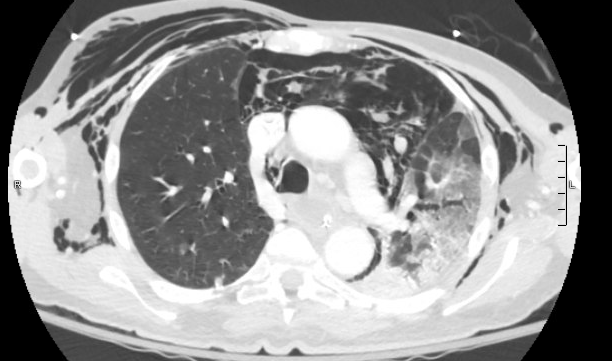
Case Presentation: A 61-year-old male presented to the hospital with metastatic adenocarcinoma and peritoneal carcinomatosis causing small bowel obstruction. Following an aspiration event he was admitted to the ICU with multifocal pneumonia and findings consistent with acute respiratory distress syndrome. He was intubated in the setting of hypoxemia, and after approximately 12 hours was noted to have developed crepitus of the neck with visible subcutaneous emphysema. Chest CT and direct bronchoscopy did not reveal any gross perforation. Barium esophagram did not reveal evidence of a fistula connecting the esophagus to the mediastinum. In the setting of positive pressure ventilation there was a rapid progression of the visible subcutaneous emphysema. Air dissection through his skin was evident across his entire chest wall from his sixth rib to maxilla, with a depth of 4cm visualized on CT scan. On exam, his skin was cool, pale, and crepitus present at the edges of subcutaneous spread. At the earliest possible time he was extubated to high flow nasal cannula, with a gradual improvement in his subcutaneous emphysema. After a prolonged hospitalization with limited improvement in his respiratory function and multiple complications, he was ultimately transferred out of the ICU to a comfort care suite and died of hypoxemic respiratory failure.
Discussion: Spontaneous pneumomediastinum is rare in adults. It occurs more frequently in pediatric patients, most commonly in the setting of acute asthma exacerbations with severe obstructive physiology. In adults, spontaneous pneumomediastinum and subcutaneous emphysema has been reported predominantly in the setting of gastrointestinal or esophageal trauma with perforation. We describe a patient in whom subcutaneous emphysema developed following the onset of severe ARDS, and we suspect peripheral alveolar rupture was the predominant mechanism of pneumomediastinum. Bubbles are thought to dissect along vasculature sheaths to the mediastinum, which communicates anatomically with the submandibular space, retropharyngeal space, and the vascular sheath of the neck. Occasionally, respiratory compromise and dysphagia can result from the distortion. An important teaching point from this case was the role of positive pressure ventilation in driving the rapid progression of his subcutaneous emphysema. To the greatest degree possible, mechanical ventilation should be avoided and PEEP should be limited. Air in the mediastinum is evidence of active barotrauma, and suggests a patient is at high risk of spontaneous pneumothorax. Despite a dramatic cosmetic appearance, most cases follow a benign clinical course with self-resolution over days to weeks and no long-term sequelae. Our patient’s subcutaneous emphysema and the emotional distress that it provoked in his family was ultimately a large part of his decision to transition to comfort-oriented care.
Conclusions: Spontaneous pneumomediastinum and subcutaneous emphysema is a rare occurrence in adults with ARDS, and is exacerbated by the need for mechanical ventilation. Appropriate airway management necessarily supercedes even dramatic skin changes, as the clinical course is self-limiting. It should, however, be recognized as a sign of of early barotrauma exceeding the limits of alveolar compliance, and ventilator management adjusted accordingly.