Background: Interns feel stressed about assuming responsibility, prioritization of tasks and working in multi-professional teams when they transition to residency. Games offer the ability for learners to engage in active learning, application of knowledge, skill building, problem solving, time-management, simulated patient interaction and teamwork. A medical escape room can offer a unique opportunity to practice these skills in a fun and immersive environment and is appealing to millennials and generation Z learners.
Purpose: We designed and implemented five medical escape rooms over half a day in our Internal Medicine transition to residency course focused on knowledge application and skills practice for beginning of internship. We present an overview of the curriculum and evaluation data from two cohorts.
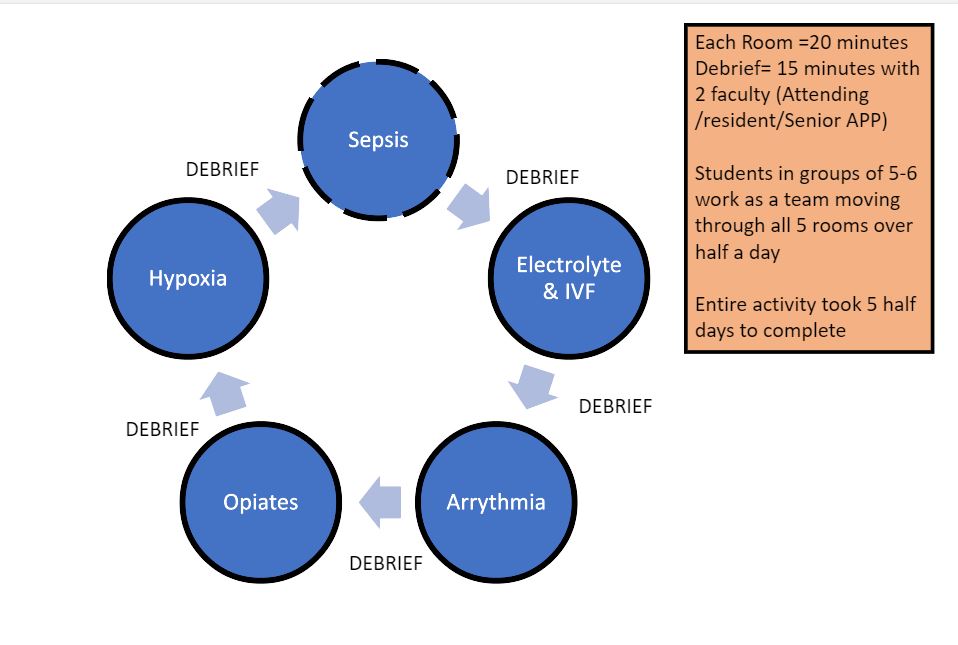
Description: A total of 243 graduating 4th year medical students in teams of 5 worked their way sequentially across five in-person escape rooms (at the simulation center)–sepsis, electrolyte and acid base, arrhythmia, pain management and hypoxia. Simulation best practices were followed with a common prebrief followed by room activities and debrief after each room. We used a varying combination of props and puzzles and two facilitators were present per room. Students completed a pre and post Likert-scale questionnaire rating their comfort in managing the clinical conditions covered in this session. Additionally, they completed an activity evaluation with a comment section for strengths and areas for improvement. Results: Over a two-year period, 243 4th-year medical students participated in the session. 220 students (90.5%) completed the pre activity survey and 216 (88.8%) completed the post survey. About 95% of students either agreed or strongly agreed that the escape room format was conducive to learning, helped prepare them for their intern year and helped build teamwork skills. Students’ changes in comfort level in managing the clinical topics were assessed using Wilcoxon signed rank test. Comfort levels for all topics improved significantly (p <.001).
Conclusions: Students noted the escape room format was a fun and engaging way to learn about multiple topics in a quick fashion and that it allowed for teambuilding and learning with peers. Other institutions are encouraged to employ escape rooms in medical education. Limitations include availability of resources and time for content development.