Background: As generational gaps between leadership and early-career academic hospitalists continue to widen, acknowledging shifting priorities around mentorship is essential for success of new faculty. We noted decreased engagement with mentorship and scholarship among our junior faculty and sought to characterize contributing causes. We hypothesized that our existing dyad mentorship framework, designed by senior hospitalists, did not match the needs of younger faculty, who may be seeking innovative and flexible approaches to mentorship.
Purpose: To identify and address mentorship gaps by conducting a comprehensive needs assessment of our faculty hospitalists.
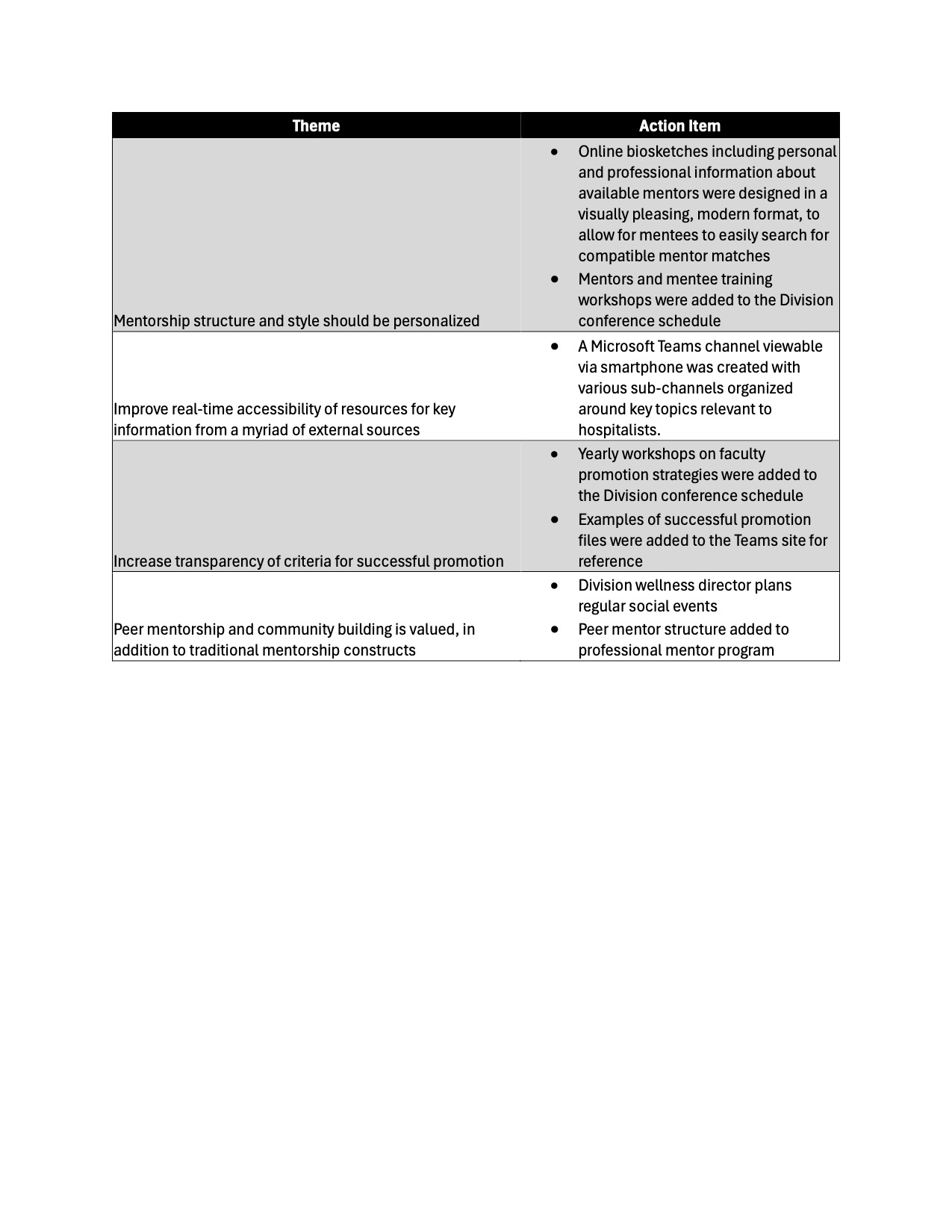
Description: All hospitalists at an urban academic medical center were surveyed during the summer of 2024. Response rate was 69% (17 staff physicians, 16 assistant, 11 associate, and 10 full professors). Questions targeted satisfaction with and engagement in scholarly opportunities, perceived barriers to success, and mentorship. Findings revealed notable dissatisfaction with scholarly engagement (42%), particularly among early and mid-career faculty. While most respondents (70%) reported a strong motivation to enhance their academic portfolios, mentoring emerged as a key barrier. Impact analysis of the survey comments revealed that mentorship and career development were the most prevalent areas of concern. Interestingly, no correlation was found between having a mentor and satisfaction with academic success. To further understand the challenges presented by our traditional dyad mentorship model, we conducted a focus group with 8 representative early career faculty. We included a mix of recent graduates and experienced physicians who had newly joined our group, as well as nocturnists and day hospitalists.Focus group questions were circulated in advance to allow for optimum use of the 60-minute timeframe. Senior faculty facilitated the discussion but did not contribute to the content. The session was recorded and transcribed to facilitate thematic analysis, which was performed with the assistance of AI software (Open AI GPT 4).Major themes from the focus group and their associated action items are summarized in Table 1.
Conclusions: We aim to build a supportive and accessible mentorship ecosystem aligned with the needs of today’s academic hospitalists. Our needs assessment revealed critical gaps in our existing mentorship structure. Mentees highlighted the importance of personalized mentorship, real-time access to resources, transparency in promotion criteria, and community building. As we build these elements into our program, ongoing monitoring to ensure changes lead to improved outcomes will be essential.