Background: The selection of medical specialties by physicians may be shaped not only by their academic interests and aptitudes but also by socioeconomic factors within their families. However, research on the relationship between parental income and specialty choice among physicians remains limited. This study aimed to elucidate the socioeconomic backgrounds of parents across various medical specialties in Japan.
Methods: A nationwide cross-sectional survey was conducted in June 2022 via the website of Nikkei Medical, Japan’s largest physician membership platform. The primary outcome was the proportion of physicians whose parents’ annual household income exceeded $60,000 USD (defined as the threshold for high-income households in Japan and adjusted for currency fluctuations), analyzed across various medical specialties. Logistic regression models were employed to evaluate associations with gender, age, hospital size, parental occupation, birthplace, and other relevant factors.
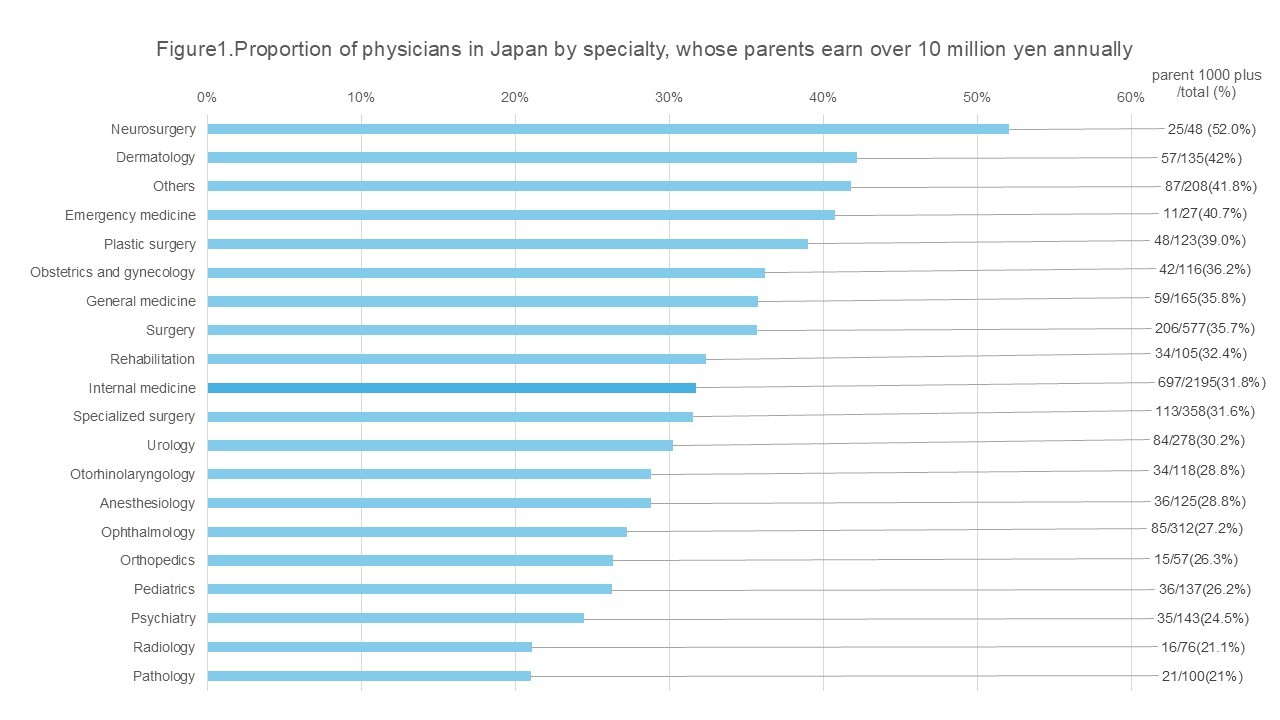
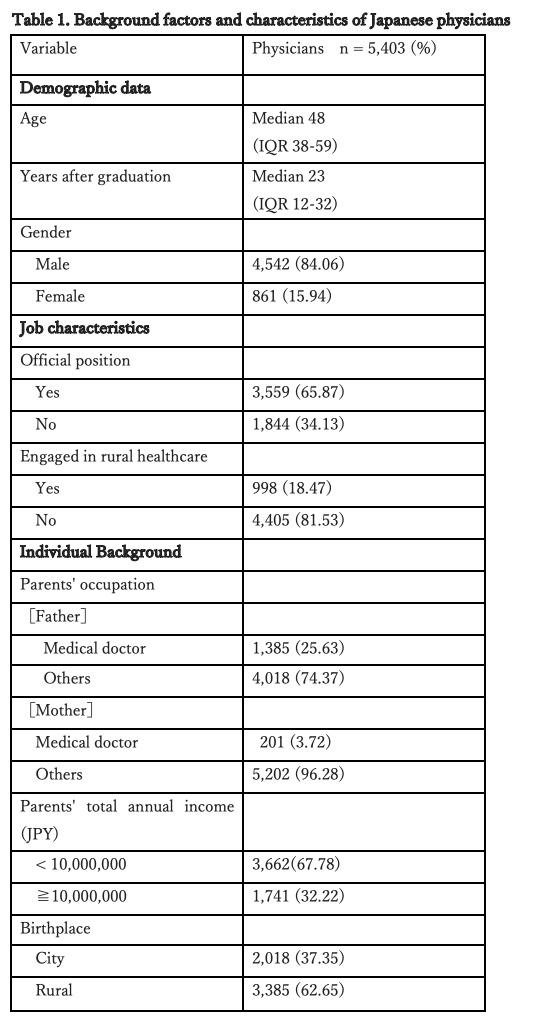
Results: Of the 7,047 respondents, 5,403 were eligible for analysis after applying exclusion criteria. The median age was 48 years (interquartile range [IQR] 38–59), and 4,542 (84.06%) were male. Among the participants, 3,559 (65.87%) held official positions, and 998 (18.47%) worked in rural healthcare. Overall, 32.2% of physicians reported parental household income exceeding $60,000 USD. Neurosurgery had the highest proportion (52.1%), followed by dermatology (42.2%) and others (41.8%). The lowest proportions were observed in pathology (21.0%), radiology (21.1%), and psychiatry (24.5%). Compared to internal medicine, neurosurgery was significantly associated with high parental income (adjusted odds ratio [aOR] 2.19, 95% confidence interval [CI] 1.16–4.12; p = .015). In contrast, ophthalmology (aOR 0.74, 95% CI 0.55–0.99; p = .041) and radiology (aOR 0.52, 95% CI 0.28–0.94; p = .032) were less likely to show an be association. Physicians holding official positions were more likely to report high parental income (aOR 1.40, 95% CI 1.20–1.64; p < .001), while those working in rural areas showed reduced odds (aOR 0.84, 95% CI 0.71–0.99; p = .038). Regarding parental occupation, having a physician father was the strongest factor (aOR 5.29, 95% CI 4.58–6.11; p < .001), followed by having a physician mother (aOR 1.51, 95% CI 1.07–2.11; p = .017). Physicians born in urban areas were also significantly associated with high parental income (aOR 1.38, 95% CI 1.21–1.57; p < .001).
Conclusions: This study highlights the socioeconomic backgrounds of parents across medical specialties. Neurosurgery, ophthalmology, and radiology demonstrated significant associations with parental income in compared to internal medicine. Furthermore, having physician parents and being born in urban areas were strongly linked to higher parental income. These findings underscore the importance of considering socioeconomic factors in shaping medical workforce policies in Japan.