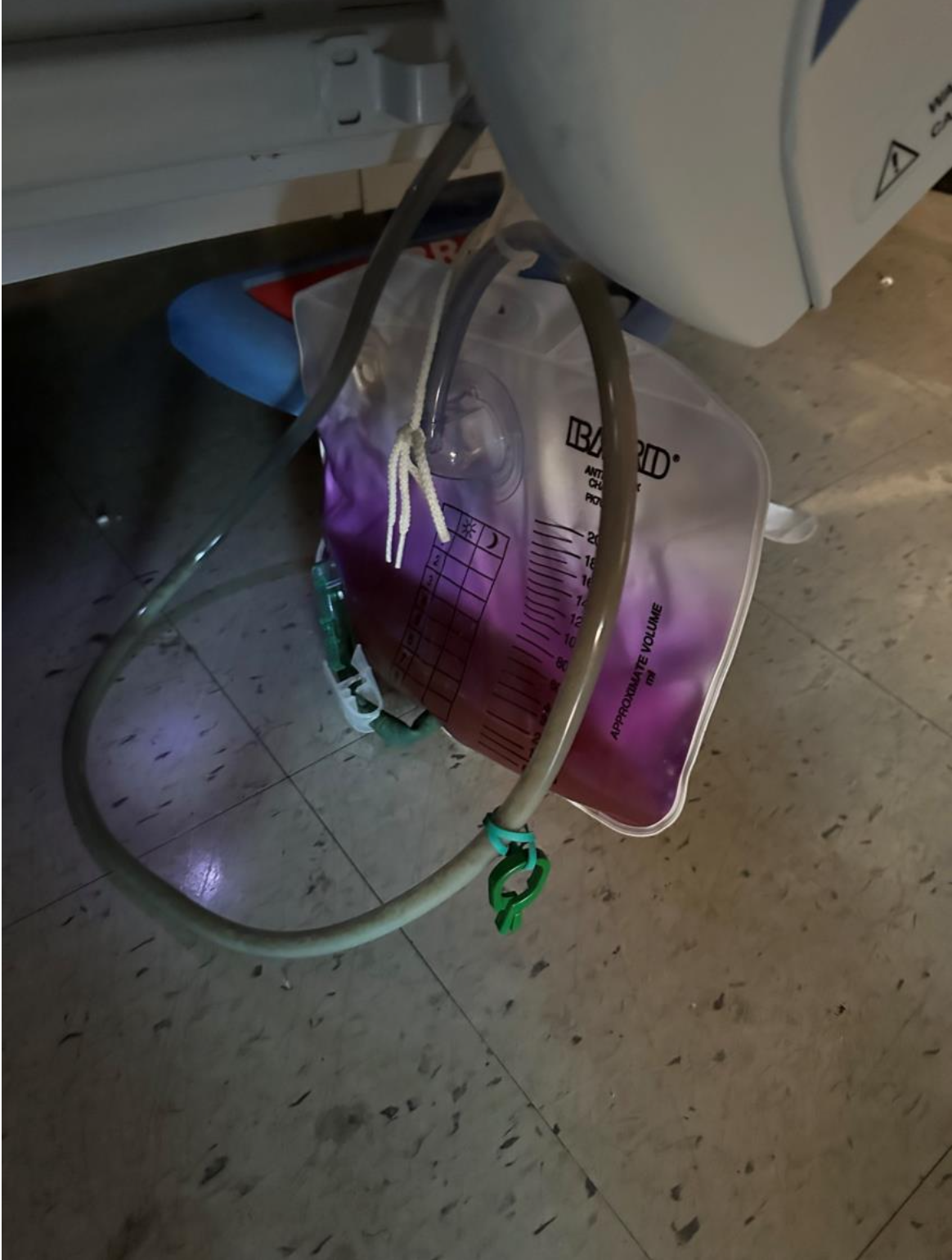
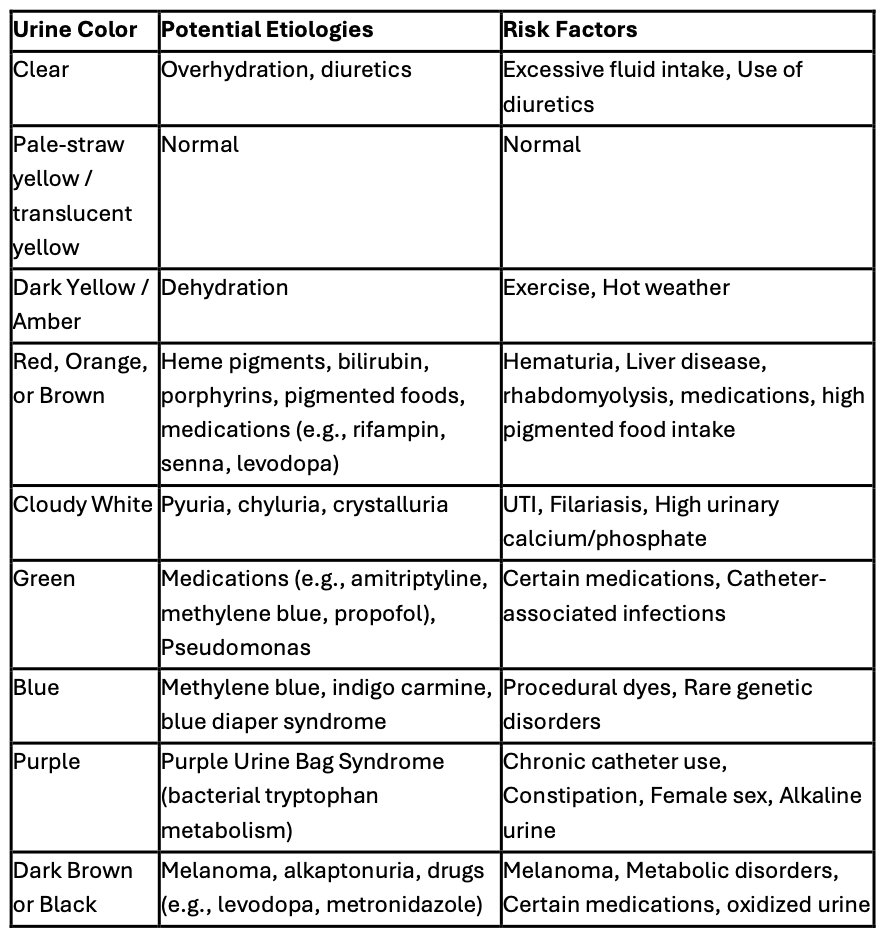
Case Presentation: A 46 year-old man with paraplegia from a gunshot wound to the spine complicated by neurogenic bladder with bilateral nephrostomy tubes, CKD III, and recurrent urinary tract infections, presents to the emergency department with gradual decrease of urine output from the right nephrostomy tube over the preceding one to two weeks. He also had cloudy, malodorous, and purple urine draining from the left nephrostomy tube. On arrival, he was afebrile but hypotensive (91/77 mmHg) and appeared ill. The right nephrostomy tube had no notable urine output, but the left nephrostomy tube had purple-colored urine draining, consistent with purple urine bag syndrome (PUBS). Initial significant labs showed: sodium 129, potassium 5.5, bicarbonate 19, anion gap 19, BUN 127, creatinine 7.69, WBC 15 , and lactic acid 0.7. CT abdomen and pelvis demonstrated bilateral xanthogranulomatous pyelonephritis and a displaced right nephrostomy tube. He was started on IV Vancomycin plus Cefepime. Interventional radiology was consulted and exchanged both nephrostomy tubes, restoring right-sided urine drainage and clearing urine discoloration from the left nephrostomy tube (Figure 2). Urine cultures grew ESBL Proteus mirabilis and blood cultures grew Bacteroides fragilis, Globicetella sanguinis, and Enterococcus species. Antibiotics were escalated to IV meropenem and infectious disease was consulted. The patent developed worsening encephalopathy due to acute on chronic kidney injury, requiring vascath placement and ICU transfer for hemodialysis. His mental status improved with infection control and dialysis.
Discussion: Urine discoloration has a broad differential, including include medications (e.g., rifampin, phenazopyridine), foods (e.g., beets), metabolic disorders (e.g., porphyria), hematuria, and infections [5]. PUBS is a rare but striking manifestation of urinary tract infections, typically in chronically catheterized patients. It affects roughly 8-16% of such individuals, with other risk factors including female sex, older age, high dietary tryptophan intake, alkaline urine, and renal failure [1, 2]. PUBS results from bacterial metabolism of indoxyl sulfate into indigo and indirubin pigments where the bladder serves as reservoir for where this chemical reaction occurs [1,3]. Although often a benign condition, it may signal a serious underlying infection particularly when associated with polymicrobial bacteremia or urosepsis as seen in this patient. Common causative organismis include Proteus, Providencia, Klebsiella, E.coli, Enterococcus and Morganella. Management of PUBS involves treating the underlying urinary tract infection with appropriate antibiotics and ensuring proper urinary drainage. Catheter or nephrostomy tube replacement is often necessary to resolve discoloration and prevent recurrence. This case is notable for PUBS in a relatively young patient with bilateral nephrostomy tubes, one of which was dislodged. It suggests that the PUBS reaction can occur in the upper urinary tract [4].
Conclusions: This case highlights the importance of recognizing PUBS as a potential marker of serious infection, even in younger patients with nephrostomy tubes or catheters. Prompt evaluation, including blood cultures and imaging, is essential to guide the appropriate antimicrobial agents, particularly in the setting of acute kidney injury. Early intervention can optimize outcomes in these complex patients.