Background: Small bowel obstruction (SBO) is one of the most common diagnoses encountered in medical and surgical practice. It causes significant morbidity and mortality. Post-operative adhesions are the most common cause. Several studies done in the past reviewed if early operative management would be of benefit compared to conservative management. Some studies have shown that early surgical management might be beneficial in recovery and morbidity outcomes, compared to conservative management however not many studies commented on readmission rate. Our purpose of this research was to determine if a conservative approach, as opposed to surgical, is more effective in reducing recurrences, readmissions from surgery and complications from small bowel obstruction.
Methods: Data from 200 patients admitted to the Pinnacle Health Hospital between 2006 -2011were obtained from database using retrospective chart review. Further analysis included in this study were (1) Patient demographics including age, gender and racial background (2) Risk factors including diabetes, hypertension, smoking, alcohol use and BMI, proton pump inhibitor use, past abdominal surgery and inflammatory bowel disease. (3) Post surgery complication rate (4) Number of readmissions within a year (5) Number of readmissions for surgery (6) Average days before first admission. To compare the difference between the conservative and surgical approach, the students’ t-test, chi-squared, Fisher’s exact test, and univariate analysis were used. A p-value <=0.05 was considered statistically significant.
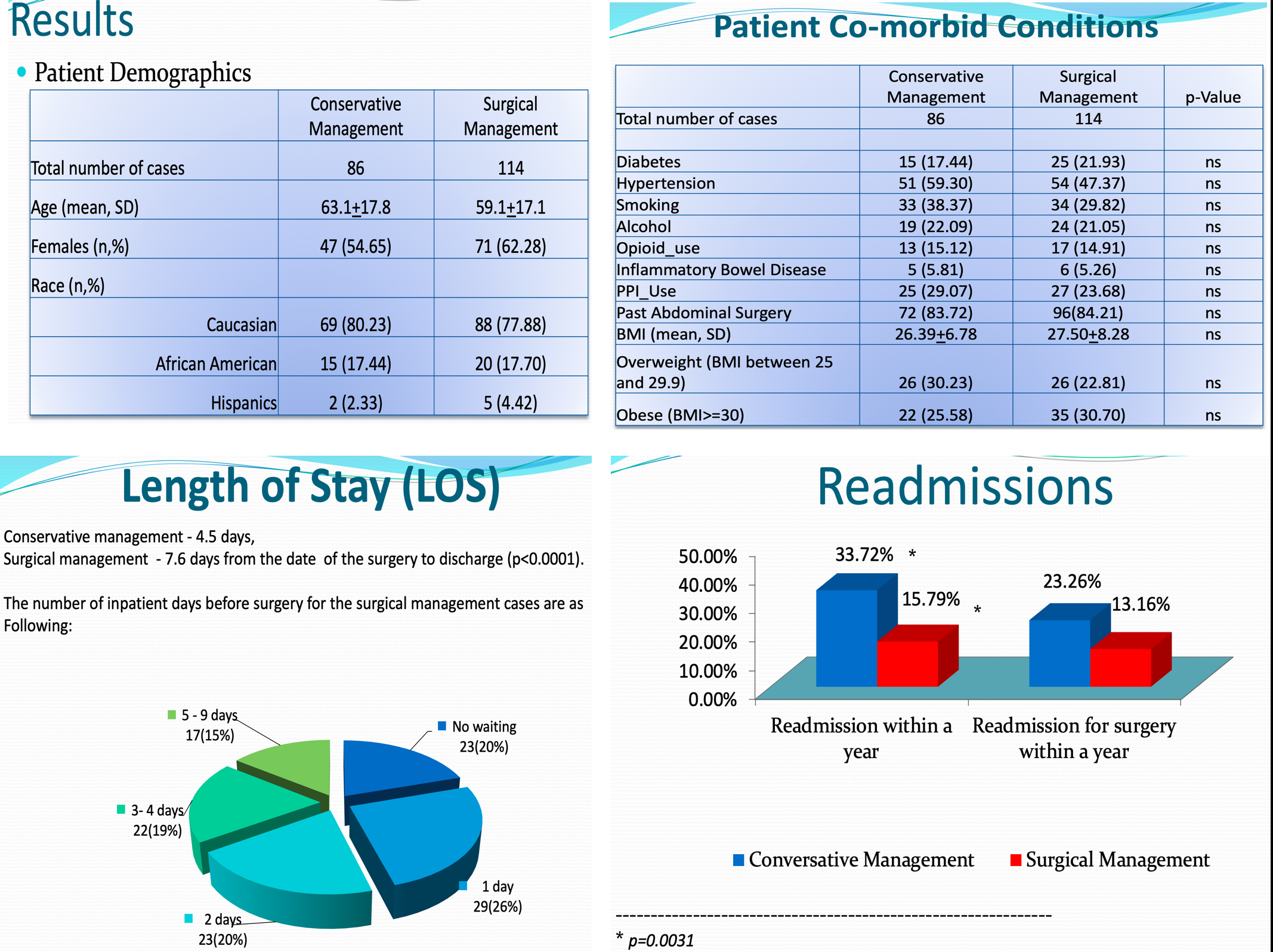
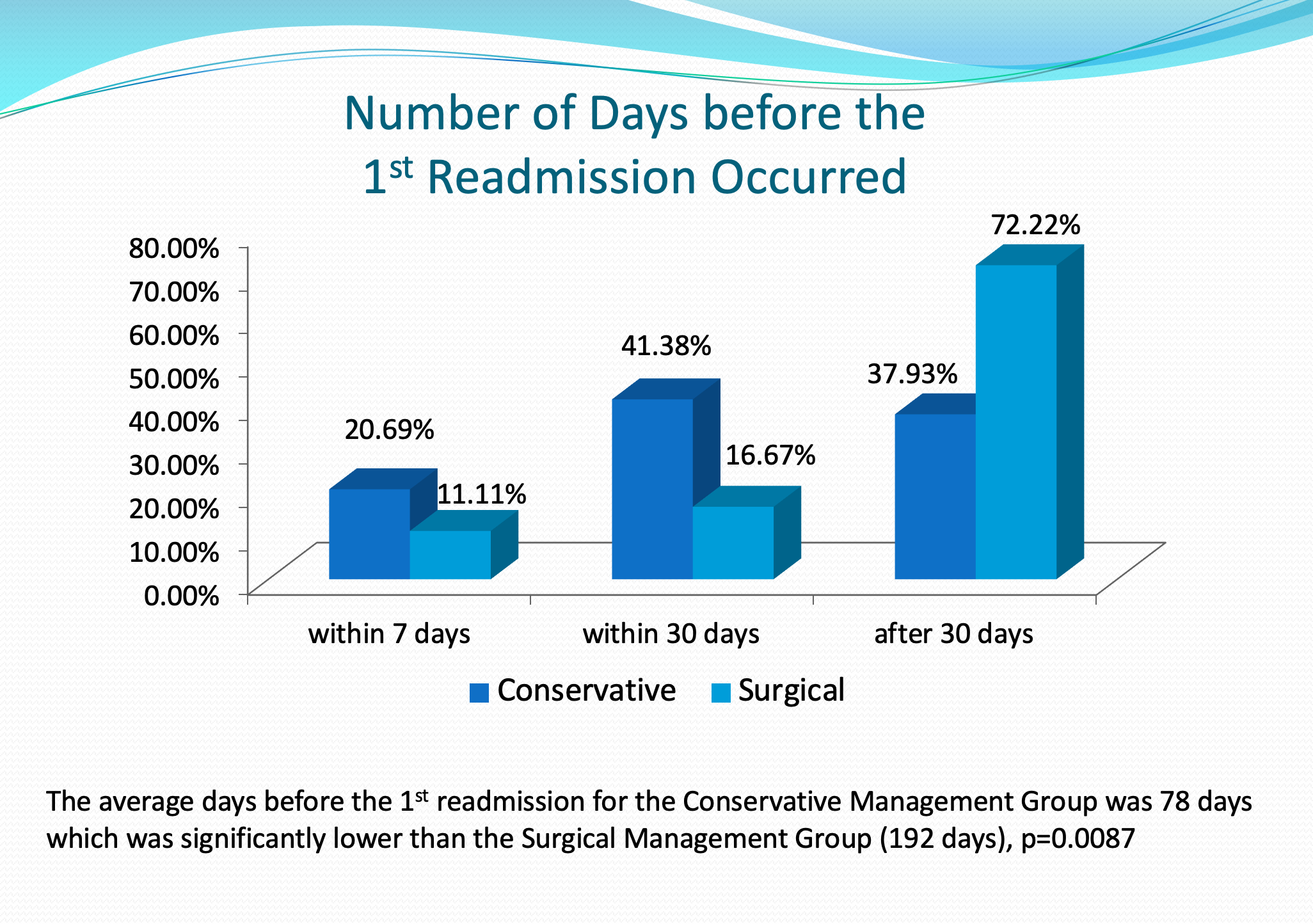
Results: Of 200 SBO cases, 86 were treated conservatively and 114 were treated surgically. The results showed that the length of stay with conservative management was 4.5 +/- 2.7 days versus 9.8 +/- 6.1 days in surgical management (p-value <0.0001). The average recurrence was 33.72 percent in conservative vs. 15.79 percent in surgically treated patients (p-value 0.0031). Average days before first readmission was shorter with a mean of 78 in conservative compared to 192 in surgical management. Also number of patients readmitted for surgery was higher in population treated conservatively ( P-value - 0.0393). The rate of complications did not reach a statistical significant value.
Conclusions: Surgically treated patients had a lower rate of recurrence, longer time interval before first recurrence compared to conservative approach. However, patients treated operatively had longer length of stay. It was also noted that patients with bowel obstruction managed conservatively were operated on readmission. There was no significant risk of complications seen in either approach in our study.