
Background: Ideally, sputum samples should be collected every eight hours for a total of three samples in acid-fast bacillus (AFB) smear testing to rule out tuberculosis (TB). Practically, collection of adequate sputum samples can take many days in a hospital setting.
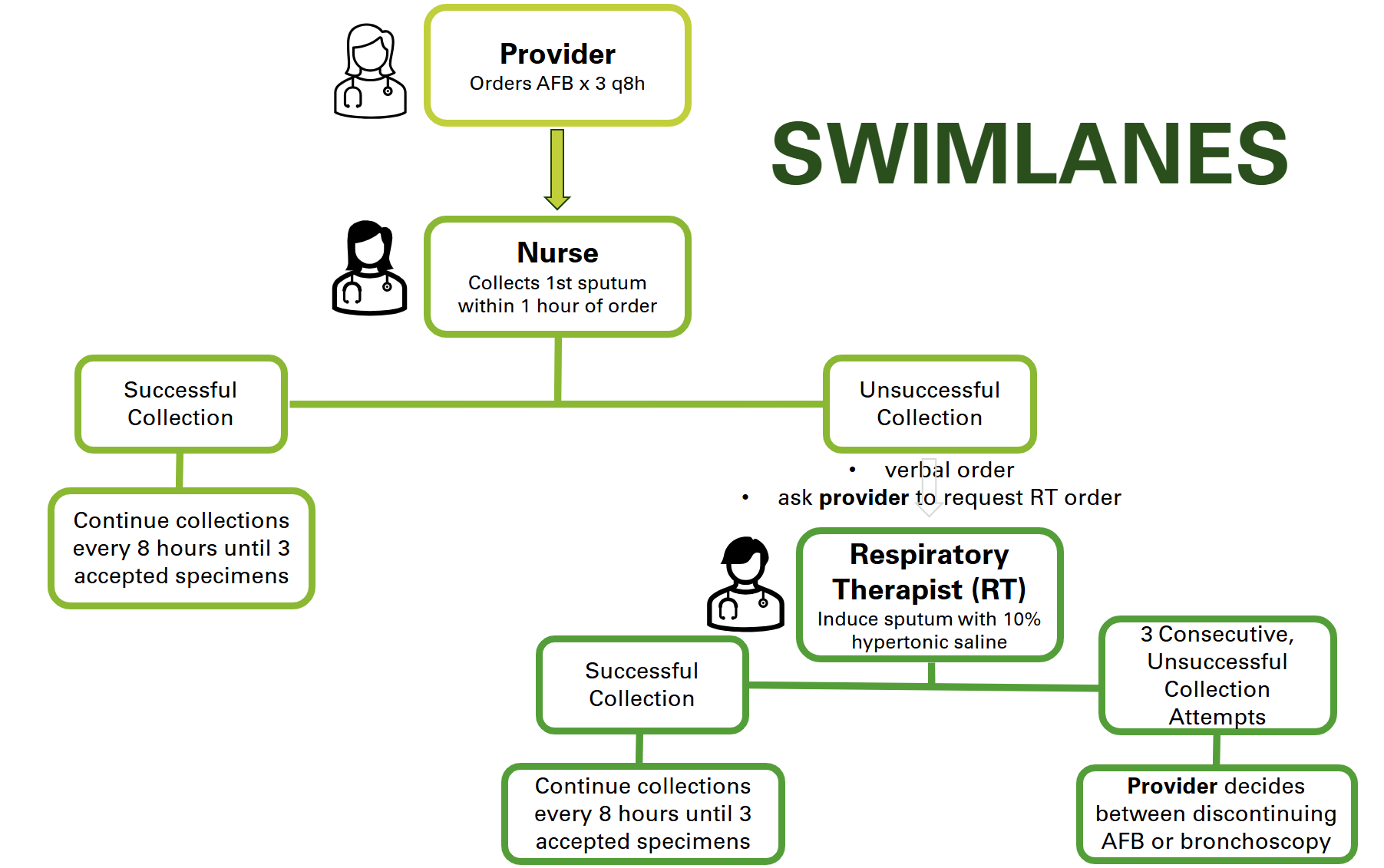
Methods: This project focuses on reducing sputum collection time and therefore patients’ length of stay via seven different interventions implemented over the course of thirty-one weeks. Interventions included: creation of a standardized respiratory therapist (RT) induction order set; automatic documentation of sputum induction attempts in the electronic health record; a structured escalation pathway when patients could not provide samples; termination criteria after three failed inductions; targeted education; visual progress charts in patient rooms; and biweekly stakeholder reflection meetings. These interventions targeted both systemic inefficiencies and interprofessional communication gaps.
Results: In comparing the pre-intervention to post-intervention data, a downward trend was found for both the collection turnaround time (-667 minutes) and length of stay (-0.36 days). However, the results were not statistically significant (p = 0.518 and p= 0.784, respectively). While not statistically significant, statistical process control (SPC) charts demonstrated a downward shift in weekly mean turn-around time (TAT) and improved process stability.
Conclusions: Outlier weeks reflected implementation inconsistencies. Adherence to the interventions was disturbed by shortage of RT required for sputum inductions and variability in protocol familiarity for float nurses. The study was likely underpowered and would require a much larger sample size to detect significant differences.
.png)