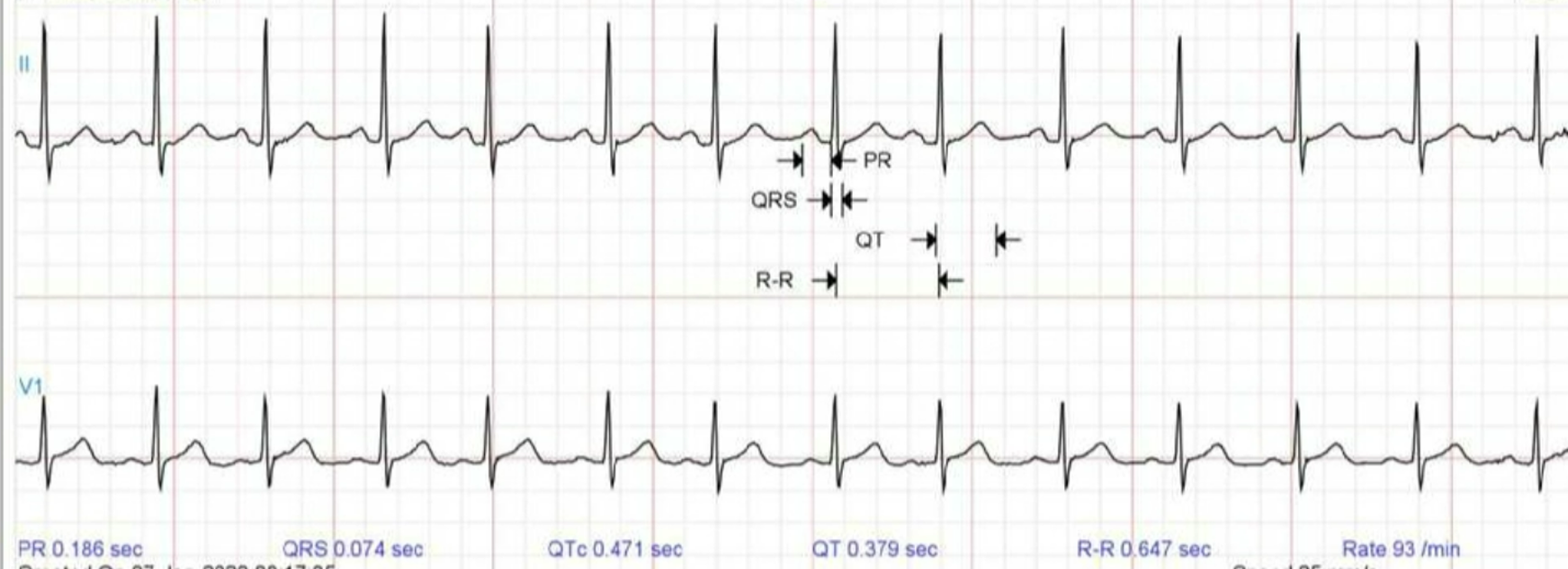
Case Presentation: IntroductionSudden cardiac arrest (SCA) remains a major cause of morbidity and mortality, particularly in elderly patients with multiple comorbidities. We present a case of an elderly patient who developed pulseless electrical activity (PEA) shortly after receiving haloperidol, without preceding changes in telemetry readings.Case PresentationA 78-year-old man presented to the emergency department after a fall from his bed, reporting left leg and hip pain, weakness, and a dry cough. His medical history included hypertension, prediabetes, benign prostatic hyperplasia, and gastroesophageal reflux disease. Initial evaluation revealed mild rhabdomyolysis and exertional dyspnea. Imaging studies showed no acute fractures but identified chronic ischemic changes on a head CT scan. The electrocardiogram (EKG) showed no QT prolongation, and although he tested positive for COVID-19, he exhibited no signs of pneumonia. Management involved supportive care, prophylactic anticoagulation, and hydration.During his hospital stay, the patient became increasingly agitated, which did not resolve with conservative management. His agitation escalated to the point where he removed all IV lines and telemetry leads, prompting the administration of antipsychotic agents, including haloperidol and quetiapine. Over the following days, the patient received 2.5 mg of haloperidol as needed.On the fifth hospital day, he became extremely violent and was administered 5 mg of haloperidol. The last recorded telemetry reading showed a QT interval prolongation from 0.409 to 0.470 seconds. A few hours later, the patient suffered a PEA arrest. He was successfully resuscitated but developed anoxic encephalopathy, and ultimately transitioned to hospice care.
Discussion: Haloperidol has been associated with QT interval prolongation, predisposing patients to lethal arrhythmias such as Torsades de Pointes (TdP). It has also been linked to PEA and sudden cardiac death. While antipsychotics are commonly used to manage delirium, they are not approved for dementia-related psychosis, and no FDA-approved medications exist for this indication. Nevertheless, haloperidol remains one of the most frequently used agents for delirium, followed by benzodiazepines and dexmedetomidine. (1)(2)The Oregon Sudden Unexpected Death Study documented a significant association between antipsychotic use and SCA, particularly PEA. In a study of 818 cases of SCA between 2002 and 2009, antipsychotic use was noted in 13.6% of PEA cases compared to 4.1% of ventricular tachycardia/ventricular fibrillation (VT/VF) controls (3).
Conclusions: This case highlights the importance of cautious use of antipsychotic medications in elderly patients. Prolonged QT interval, ventricular arrhythmias, and cardiac arrest must be considered when prescribing these agents, as they can impair cardiac contractility. Notably, no definitive electrocardiographic predictors of PEA have been identified. Although a moderate QT prolongation was observed in this case, no abnormal rhythms were detected prior to the arrest.In elderly patients, frequent EKG monitoring and regular evaluation of serum electrolytes, including sodium, potassium, and calcium, are essential. Medications associated with QT prolongation should be used with caution or avoided altogether in this population.