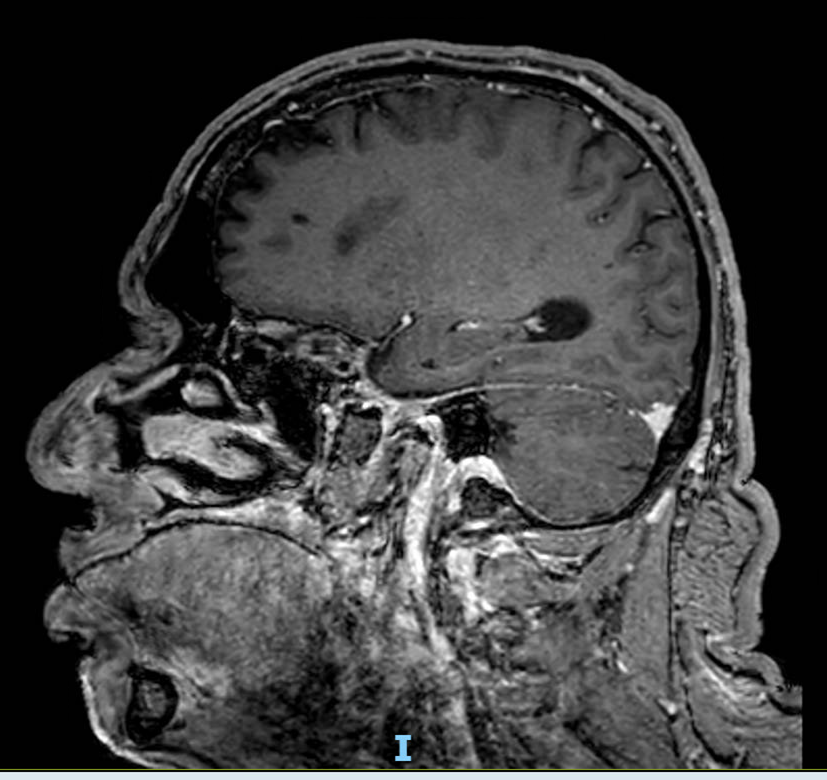
Case Presentation: A 68-year-old male with a history of hypertension, type 2 diabetes mellitus, stable angina, and osteoarthritis presented to the emergency department (ED) after an acute episode of difficulty swallowing and dyspnea while eating dinner. Additionally, he reported acute on chronic right-sided neck and chest pain. Initial assessment in the ED raised concern for angioedema, and the patient received two rounds of a combination of diphenhydramine, dexamethasone, and famotidine without improvement in symptoms. A CT of the neck demonstrated diffuse idiopathic skeletal hyperostosis, with a large anterior vertebral osteophyte at C3/C4 causing prominent posterior impingement of the aerodigestive tract. The patient was admitted to medicine for further workup. Chart review revealed several years of numerous outpatient visits to multiple specialists for a wide range of complaints including chest pain and palpitations, joint pain, weight gain, and difficulty swallowing. A thorough history taking uncovered progressive tongue enlargement, increase in shoe size from 9 to 13, chronic joint pain and stiffness, and dysphagia for the past 8 years, with a recent change in voice. The physical exam was notable for macroglossia, macrognathia, enlarged hands and feet, and poor range of motion in the neck. Based on history and exam findings, the team was highly suspicious for acromegaly and obtained further work-up. A pituitary MRI demonstrated a 3 mm intra-pituitary lesion consistent with a pituitary microadenoma, and IGF-1 levels were elevated. The patient was discharged with close endocrinology and neurosurgery follow up. Neurosurgery completed a trans-sphenoidal resection of the pituitary microadenoma one month following initial diagnosis.
Discussion: While 80% of patients have the pathognomonic acral enlargement and coarsened facial features, these changes occur so gradually that they often go unrecognized for years, as was the case with our patient. Patients often present with symptoms related to acromegaly such as weight gain, arthralgias, or dysphagia, which are treated in isolation rather than recognized as part of a broader underlying disorder. This delayed identification can cause frustration for patients who often experience years of progressive symptoms without a unifying explanation. Additionally, acromegaly is associated with increased cardiovascular, metabolic, and respiratory morbidity causing reduced life expectancy. This further underscores the importance of early recognition and treatment to improve long-term outcomes in these patients.
Conclusions: Acromegaly is a rare endocrine disorder characterized by a unique constellation of physical features. These symptoms often develop insidiously over years, leading to a significant delay in diagnosis ranging from 3 to 14 years after symptom onset. A detailed history, thorough chart review, and high index of suspicion are all necessary for diagnosis, making inpatient medicine teams uniquely positioned to identify this condition.