Background:
Electronic Health Records (EHRs) have enabled significant progress in the area of medication safety. However, there remain challenges in optimizing medication titrations and adjustments in high risk medications such as insulin, heparin, and antibiotics. As an example, continuous infusions of unfractionated heparin are commonly utilized among hospitalists and have been identified as a high risk medication associated with adverse drug events and patient harm. Over the past 20 years, nomograms have driven the titration and maintenance of heparin infusions, but even in the most sophisticated EHRs these nomograms require manual abstraction of data, adjustment of infusion, and documentation. In a review of safety events within our organization, and as highlighted by the Institute for Safe Medication Practices (ISMP), these manual processes have been reported to lead to errors in dosing and patient harm.
Purpose:
Our goal was to create a fully integrated, web‐based calculator that resides within the EHR that would eliminate manual data abstraction, calculation and documentation associated with titrations of continuous infusions of heparin. Further, we then aimed to study the clinical and operational impact of this calculator across a health system of 9 hospitals accounting for 4,450 inpatient beds.
Description:
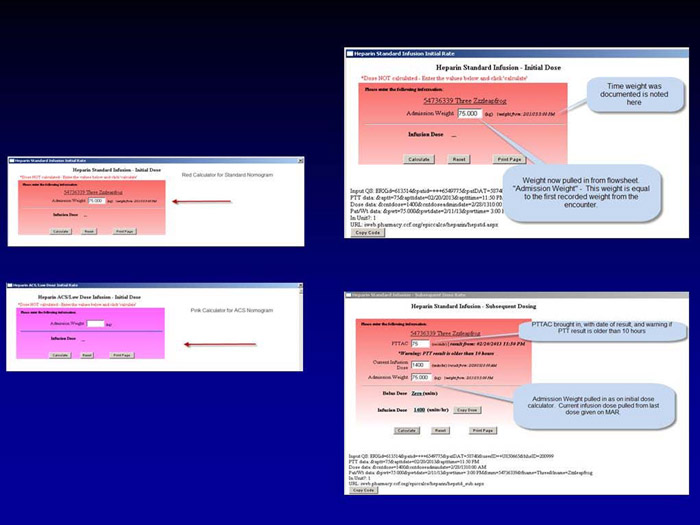
Through close strategic partnering with our health information technology group, we were able to review current technical capabilities and opportunities within our EHR pertaining to complex titration of medications. We found that our EHR vendor did not offer an “out of the box” solution to improve workflow and safety relevant to titratable medications. Given this, we proceeded to build a web‐based tool that could handle nomogram calculations. We then custom developed web services to abstract the required data (patient admission weight, most recent activated partial thromboplastin time (aPTT) values, and current heparin infusion rate) and pass back the recommended intervention from the calculator. Once this was built, we were able to integrate this tool into caregiver workflows including the medication administration record (MAR) within the EHR.
With over 15,000 patients annually on continuous infusions of heparin within our health system, the imbedded calculator is receiving >1000 hits on a daily basis. Since implementation, we have seen a reduction in adverse drug events related to heparin titrations through our event reporting system, and we have seen improvement in clinical outcomes related to the use of the heparin nomogram. Specifically, we have seen a 10% increase in our patients with a therapeutic aPTT within 24 hours (P<0.001) and we have increased our percentage of time in therapeutic range by 5% (P<0.001).
Conclusions:
The heparin nomogram calculator has been successfully implemented across our health system and has not only improved the care we deliver our patients, it has changed caregivers’ perception of how the EHR can help to deliver highly reliable care. This innovation illustrates how hospitalists can drive clinical decision support and continuous improvement by partnering with health information technology specialists. Future opportunities include expanding this concept to other medications that require frequent dose adjustments (insulin, antibiotics, chemotherapeutics) and medications that require complex conversions (opiods).