Background: Communication between providers and consultants is an essential component of providing safe and effective patient care. Poor communication erodes patients’ confidence in their medical team, leads to medical errors, and contributes to physician burnout. There is a pervasive sentiment among clinicians that many consultant interactions are unpleasant or even adversarial. This survey was conducted to assess the current culture of calling consults at Duke including how people were taught to call consults, the rate of negative experiences, and the impact on their practice.
Methods: A cross-sectional survey was created and distributed to medical students, hospital medicine and emergency medicine providers, including interns, residents, attendings, nurse practitioners and physician assistants, to assess their experiences in calling consults within an academic medical center. The survey explored whether participants received formal training in calling consults, if they ever had a negative experience when calling a consult and how those experiences impacted their practice. We used descriptive statistics to evaluate associations between negative consult calls across age, level of training, gender, and type of consults.
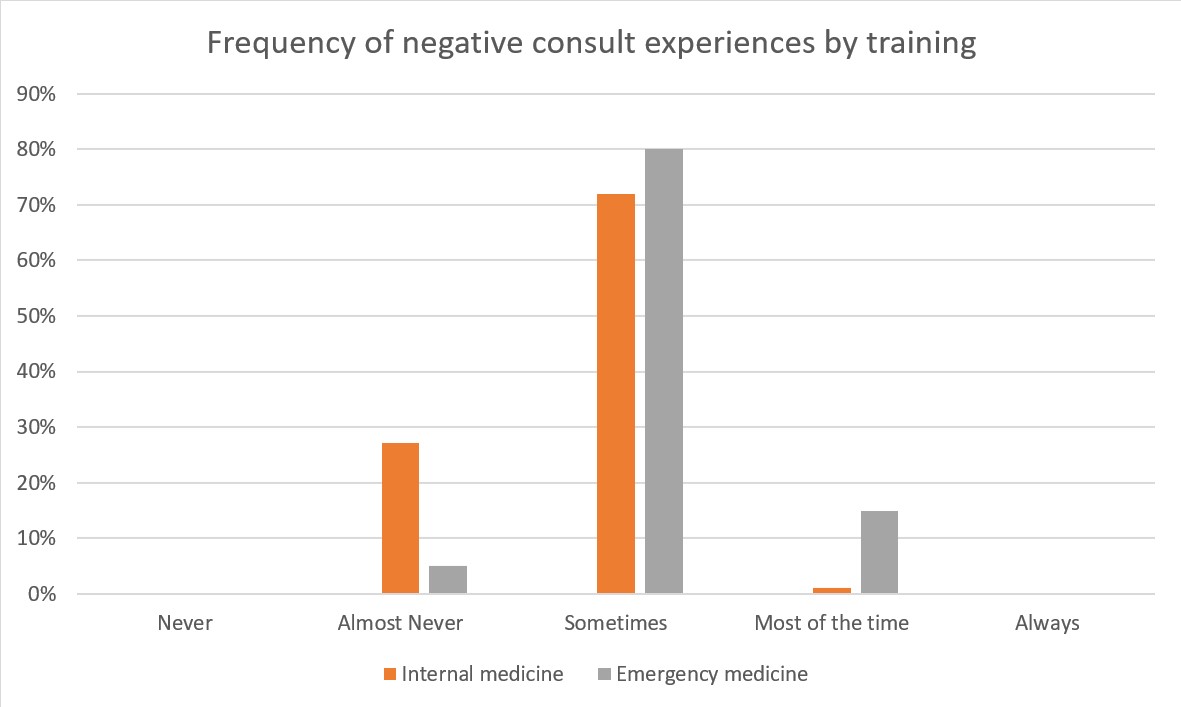
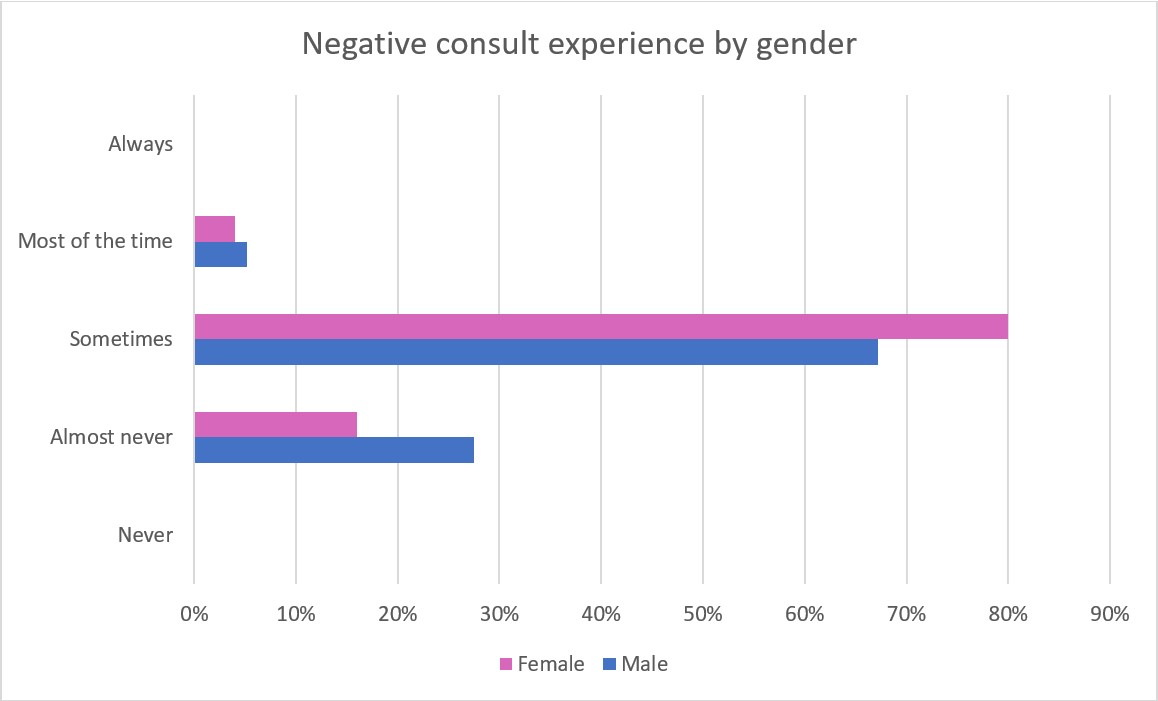
Results: We had a total of 173 respondents out of which, 158 had previously called a consult. Out of 129 respondents, 92 had received formal training during medical school or residency. Most learned how to call a consult from an intern or resident or learned from their own practical experiences. 142 out of 158 respondents had requested a consult that left them feeling uncomfortable. Respondents had both negative and positive reactions after an uncomfortable consult call. Some felt they were less likely to want to call that service again (60%), had increased feelings of burnout (47%), and made them question their medical knowledge (41%). 32% of respondents felt like they were advocating for their patient, helped them learn more about the consultants’ service (18%), and helped inform future consult requests (17%). We did not find significant differences in the number of negative consult call experiences across age or level of training. Across gender, more men than women answered “almost never” when having a negative consult call experience (27.6% of men vs 16.0% of women). More women than men answered “sometimes” when having a negative experience when calling a consult (67.2% of men vs 80.0% of women). More emergency medicine providers answered “most of the time” compared with internal medicine providers when recalling a negative consult call (15% of emergency medicine vs 1.0% of internal medicine).
Conclusions: Most respondents received training on calling consults, although this was not standardized. Regardless of whether they received training, most providers have had a negative experience when calling consults. More women had reported negative consult calling experiences. More emergency medicine compared to internal medicine providers reported negative consult calling experiences. There is room for education and improvement in consult calling culture. These findings highlight a clear opportunity to improve consult etiquette and communication culture through more consistent education and system level interventions. Further study is needed to better understand the drivers of negative consult experiences and to develop targeted strategies to foster more respectful and collaborative interprofessional communication.