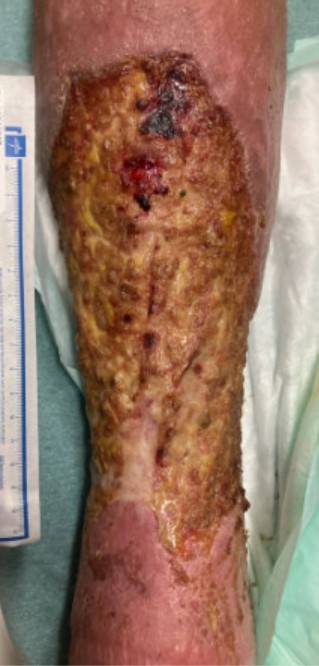
Case Presentation: A 61-year-old man with a history of opioid use disorder, methamphetamine use disorder, and chronic bilateral lower extremity wounds presented with worsening lower extremity pain and drainage (Figures 1 and 2). He was admitted for intravenous antibiotic treatment for lower extremity cellulitis. He reported inhaling fentanyl and methamphetamine on the day of presentation, with recent fentanyl batches testing positive for xylazine on home point-of-care testing.On day 2, he developed severe anxiety, agitation, and diffuse pain. Despite receiving 32 mg buprenorphine-naloxone over 8 hours for suspected opioid withdrawal, his symptoms persisted. He then received oral clonidine and intravenous lorazepam for high clinical suspicion of xylazine withdrawal, but symptoms remained poorly controlled.He was transferred to the intensive care unit for dexmedetomidine and ketamine infusions with significant improvement in symptoms. On day 7, dexmedetomidine infusion was switched to oral tizanidine. Urine immunoassay collected at that time tested positive for xylazine, consistent with reported xylazine adulteration of his fentanyl supply. He was discharged on tizanidine for xylazine withdrawal and extended-release buprenorphine 300 mg for opioid use disorder.
Discussion: Xylazine is an alpha-2 receptor agonist approved for use in veterinary medicine as a sedative. It has been increasingly recognized as an adulterant in illicit substances and linked to overdose deaths.Although this patient was aware his fentanyl supply was laced with xylazine, xylazine use is not always known to people who use drugs and is not routinely tested in toxicology screening. Therefore, hospitalists need to have a high index of suspicion especially in cases of presumed opioid withdrawal not responding to opioid agonists.Data on xylazine withdrawal management is limited with treatment primarily focusing on replacing alpha-2 receptor agonism with clonidine, dexmedetomidine, or tizanidine. In this case, clonidine was escalated to a dexmedetomidine infusion given symptom severity. Sedative medications such as benzodiazepines, anti-psychotics, gabapentin, phenobarbital, and ketamine have been suggested as adjunctive treatments.This patient’s chronic lower extremity wounds on extensor surfaces were consistent with xylazine-associated wounds. Xylazine wounds are typically located at drug injection sites but have been reported with drug inhalation and insufflation. The suspected mechanism of action is peripheral vasoconstriction resulting in poor tissue perfusion. In this case, the wounds were treated with xylazine cessation and wound care.
Conclusions: Xylazine withdrawal presents diagnostic and therapeutic challenges but can be effectively managed in the inpatient setting. Concurrent management of opioid use and associated wounds is essential for optimal care in this patient population.