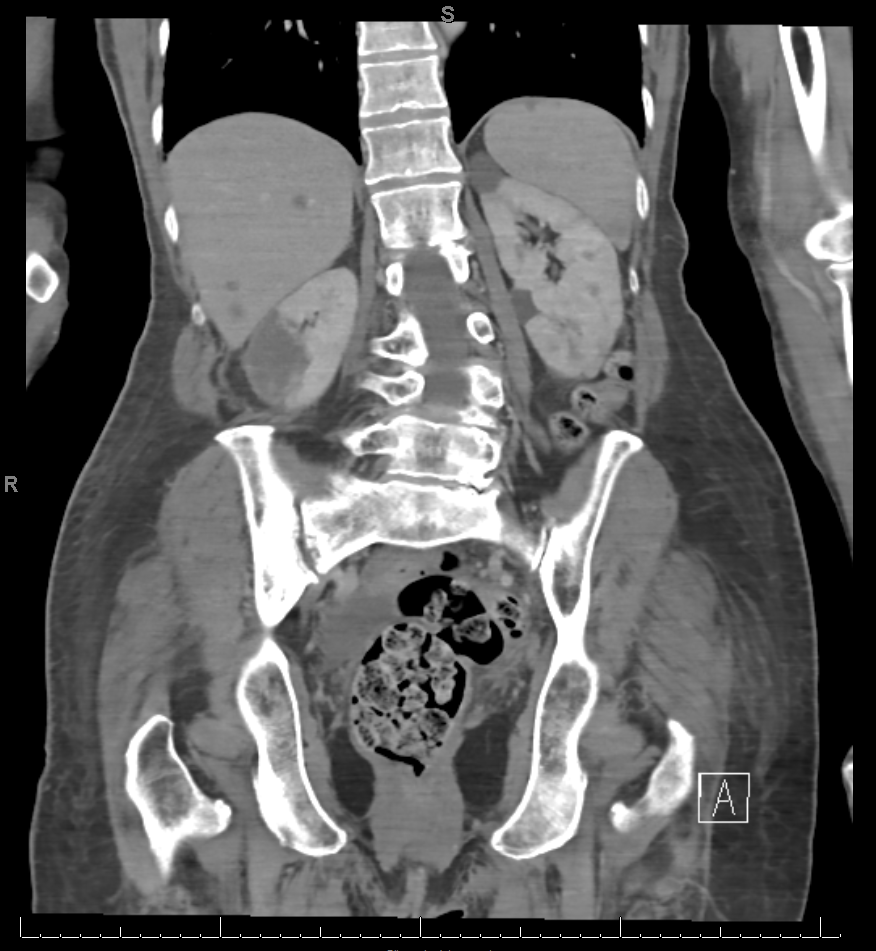
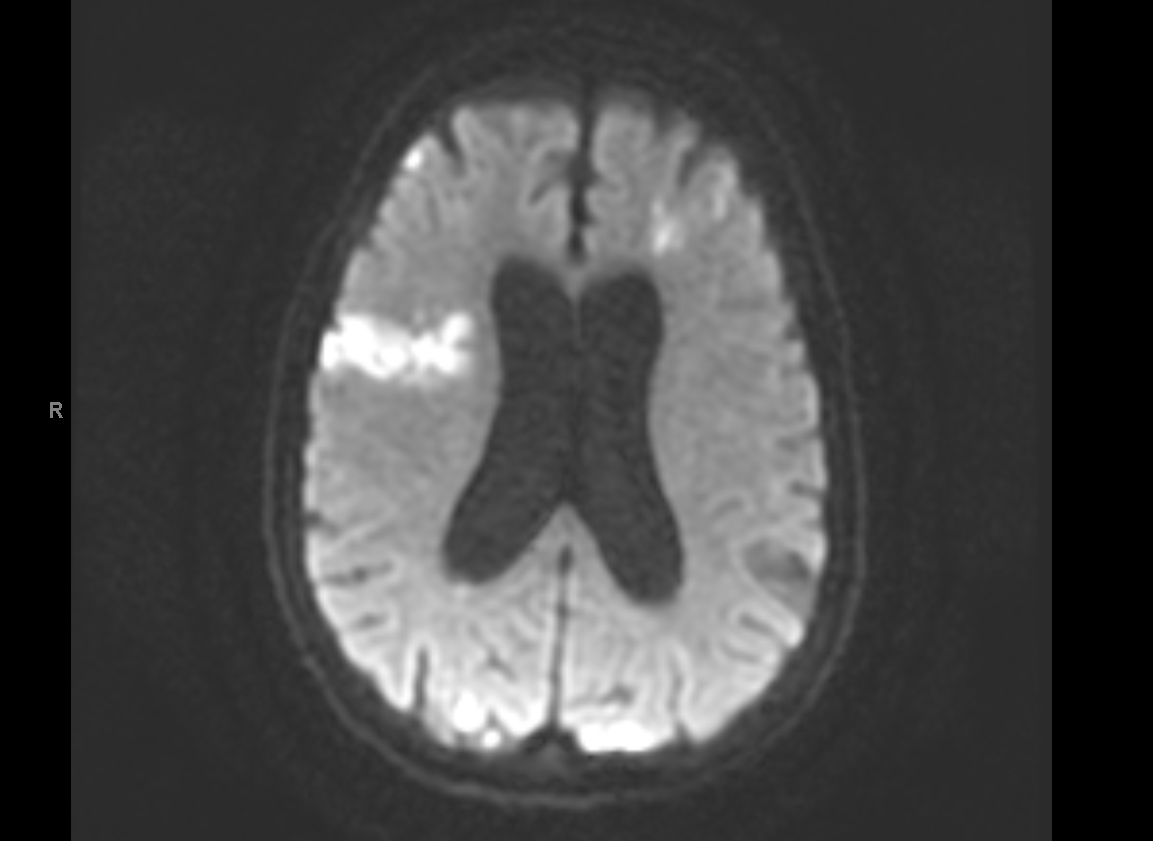
Case Presentation: A 71-year-old woman with hypertension and asthma initially presented with a right-leg tattoo infection and was incidentally found to have a right lower extremity deep vein thrombosis and bilateral pulmonary emboli, initially attributed to recently initiated estrogen therapy. She was discharged on apixaban.Ten days later, she re-presented with flank pain. CT imaging revealed new right renal infarcts and multiple hepatic hypodensities. She was transitioned to therapeutic enoxaparin. Transesophageal echocardiography showed no intracardiac thrombus or patent foramen ovale. MRI abdomen demonstrated innumerable hepatic lesions, and biopsy confirmed poorly differentiated adenocarcinoma favored to be cholangiocarcinoma. Tumor markers (CA 19-9, CA-125) were markedly elevated. A comprehensive hypercoagulable panel was negative.Within hours of discharge, she returned with acute confusion and aphasia. MRI brain showed multifocal acute infarcts involving bilateral anterior and posterior circulations. CTA demonstrated high-grade right M2/M3 stenosis with < 50% cervical carotid disease. Platelets, coagulation studies, and renal function remained normal. Spine MRI showed a 13 mm enhancing T3 epidural mass suspicious for metastasis.Given recurrent venous thrombosis, visceral infarcts, and bilateral cerebral emboli despite sequential therapeutic anticoagulation (DOAC → LMWH), the presentation was consistent with Trousseau’s syndrome. Anticoagulation was escalated to a continuous heparin infusion, and oncology was consulted for urgent cancer-directed therapy.
Discussion: This case demonstrates the aggressive trajectory of malignancy-associated hypercoagulability. An initially estrogen-associated DVT masked an underlying adenocarcinoma that rapidly declared itself through visceral and cerebral ischemic events. The combination of multifocal arterial and venous thromboses, negative cardiac evaluation, and progression despite anticoagulation strongly supported Trousseau’s syndrome.Importantly, heparin-based anticoagulation remains preferred in cancer-associated thrombosis, as DOAC failure is well-documented in Trousseau’s syndrome. Early recognition allows for prompt escalation of anticoagulation, expedited evaluation for occult malignancy, and coordinated management to mitigate further catastrophic events.
Conclusions: Trousseau’s syndrome should be suspected when thromboses occur in multiple vascular territories, recur rapidly, or develop despite adequate anticoagulation. Early identification enables appropriate heparin-based therapy, timely malignancy workup, and proactive multidisciplinary care to prevent further thrombotic complications.