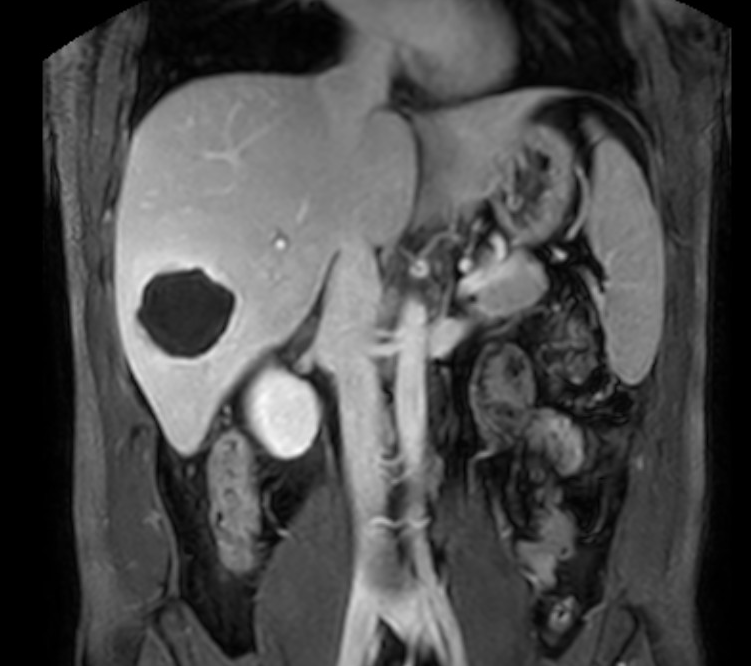
Case Presentation: A 32-year-old male with a history of alcohol use disorder presented with dull epigastric pain, fever, and chills. Physical examination revealed moderate epigastric tenderness. Laboratory findings included WBCs 14.6×10⁹/L, Hb 12.5 g/dL, INR 1.4, with normal liver enzymes. MRI of the abdomen demonstrated a 6.7×6.6 cm lesion in the right hepatic lobe with a necrotic core, thick rim, and hepatosplenomegaly.Further history revealed recent immigration from South America six months prior and treatment for Entamoeba histolytica 15 years ago. His presenting symptoms were typical for a subacute amebic liver abscess. Empiric therapy with piperacillin-tazobactam and metronidazole was initiated. Blood testing confirmed E. histolytica IgG positivity; the Echinococcus antibody was negative. The patient underwent catheter drainage of the liver abscess. At discharge, he was prescribed a 14-day course of metronidazole and ciprofloxacin and a 7-day course of paromomycin for intraluminal cyst clearance.
Discussion: Amebic liver abscess (ALA) caused by Entamoeba histolytica is rare in the United States, with an annual incidence of 2.2 cases per million. If left untreated, ALA has a mortality rate of 20%, which decreases to 1-3% with early intervention. The incidence is higher among individuals traveling from endemic regions, such as South America, Africa, and Southeast Asia.Men aged 30-60 are disproportionately affected, likely due to testosterone’s suppression of IFN-γ secretion by NK T cells, a mechanism essential for clearing the pathogen. This might explain the higher incidence in sexual minority men. Chronic alcohol consumption further suppresses immune function and alters gut microbiota, increasing susceptibility to recurrence. Disruption of the gut microbiota by factors such as diet, antibiotics, or alcohol promotes the persistence of E. histolytica cysts, increasing the likelihood of abscess formation.The development of ALA is relatively uncommon, but its presentation is often nonspecific, with symptoms such as fever, right upper quadrant pain, and malaise mimicking other abdominal conditions, which may delay diagnosis. Currently, there are no established guidelines recommending routine screening for ALA following an episode of amebiasis. Addressing risk factors is essential for preventing recurrence in individuals with a history of amebiasis. Lifestyle modifications, including alcohol cessation and dietary improvements, and ensuring complete eradication of cysts with luminal agents, such as paromomycin, are crucial for reducing recurrence risk.
Conclusions: Host immunity, microbial persistence, and environmental factors influence the recurrence of amebic liver abscesses. Internists should be aware of the tendency of ALA to recur even many years after the initial Entamoeba histolytica infection. Preventive management of risk factors, particularly in individuals with alcohol use disorder or a history of endemic exposure, is essential to mitigate recurrence and prevent long-term complications.