Background: Patients undergoing induction chemotherapy for acute myeloid leukemia (AML) and acute lymphoblastic leukemia (ALL) often experience prolonged hospital stays due to the length of induction therapy, follow-up bone marrow biopsies, and count recovery. While the average length of stay (LOS) for these patients may exceed 30 days, most diagnosis-related groups (DRGs) assign a LOS of 14 days. Traditional early discharge programs have been implemented in other institutions to safely transition these patients to an outpatient setting [1]. Our hospital identified that the most frequent cause of extended LOS was waiting for count recovery, prompting the exploration of a hospital-at-home model to address this issue and improve bed capacity.
Purpose: The goal of this project was to develop a pathway that enables AML and ALL patients to continue their count recovery phase at home, reducing hospital LOS and improving bed utilization.
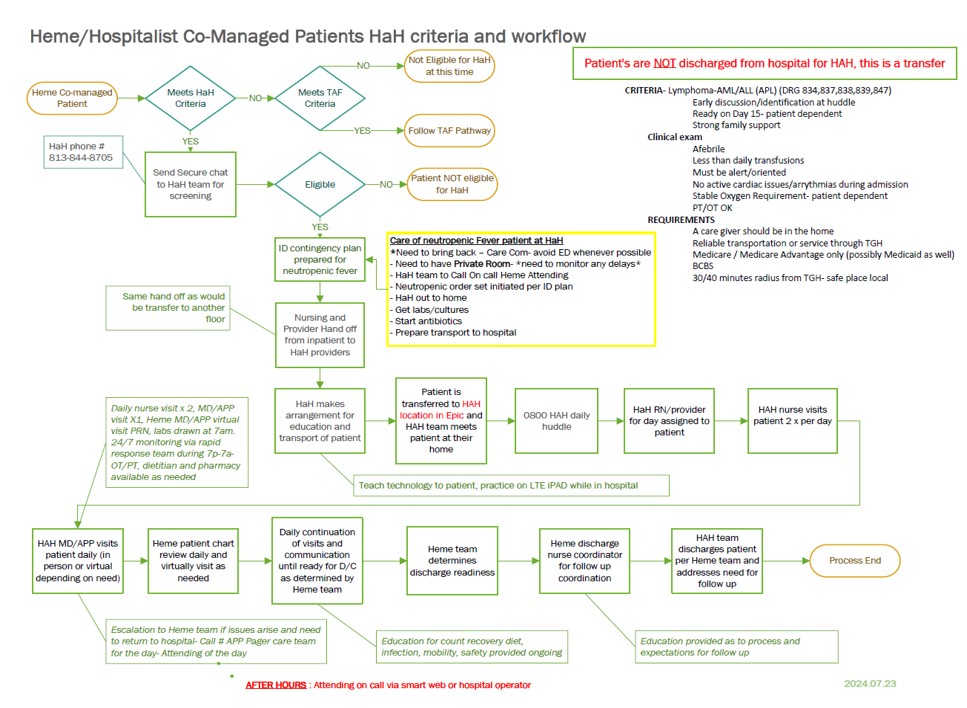
Description: A co-management approach was established between the hospital medicine and hematology teams to provide collaborative care to leukemic patients. Six months after co-management inception, a review of patients with >14 day LOS revealed that prolonged count recovery accounted for 90% of excess days. In response, a collaboration with the hospital-at-home program was initiated to facilitate transitions to home care during the recovery phase. Medical inclusion criteria for the hospital-at-home program included no fever for 7 days, no new oxygen requirement, not requiring cardiac monitoring, less than daily blood transfusions, a 24-hour caregiver, and reliable transportation. The hospital at home program has distance from the hospital and insurance exclusions. A structured transition pathway was developed (figure 1), where the hospital medicine physician, hematology team and hospital-at-home staff mutually agreed on patient selection, transition date, and daily monitoring. Additionally, protocols for managing neutropenic fever and potential re-hospitalization were established during the pilot phase, with the understanding that all patients would receive IV antibiotics and cultures before returning to the hospital if needed. In the past 3 months, we enrolled 3 patients to the hospital-at-home program, saving 14 bed days. Six other patients were eligible for the program however were excluded for insurance type and distance from the hospital. Patients who continued care at home received daily labs, continuous vital sign monitoring, nursing visit twice a day and blood transfusions as required. There were no adverse events after transition. Patients were pleased with the early transition home.
Conclusions: This collaborative approach successfully transitioned 3 patients to the hospital-at-home program, saving 14 bed days. Ongoing assessments are being conducted to identify additional eligible patients, and further resources, such as local hotels, are being explored to support patient care. This pilot demonstrates the potential of hospital-at-home models to improve bed capacity and patient care for leukemic patients undergoing count recovery.