Background: Hospitalized patients often report that they lack the opportunity to share their priorities, and currently there is no standard protocol for hospitalists to elicit their patients’ priorities. Additionally, changes in 2025 to CMS reimbursement rules will require hospitals to have protocols for eliciting what matters to admitted patients, further necessitating the development of an evidence-based, generalizable protocol for learning patients’ priorities.
Purpose: To establish a culture and standard practice where every admitted patient is asked, “What matters most to you today?” by their hospitalist daily.
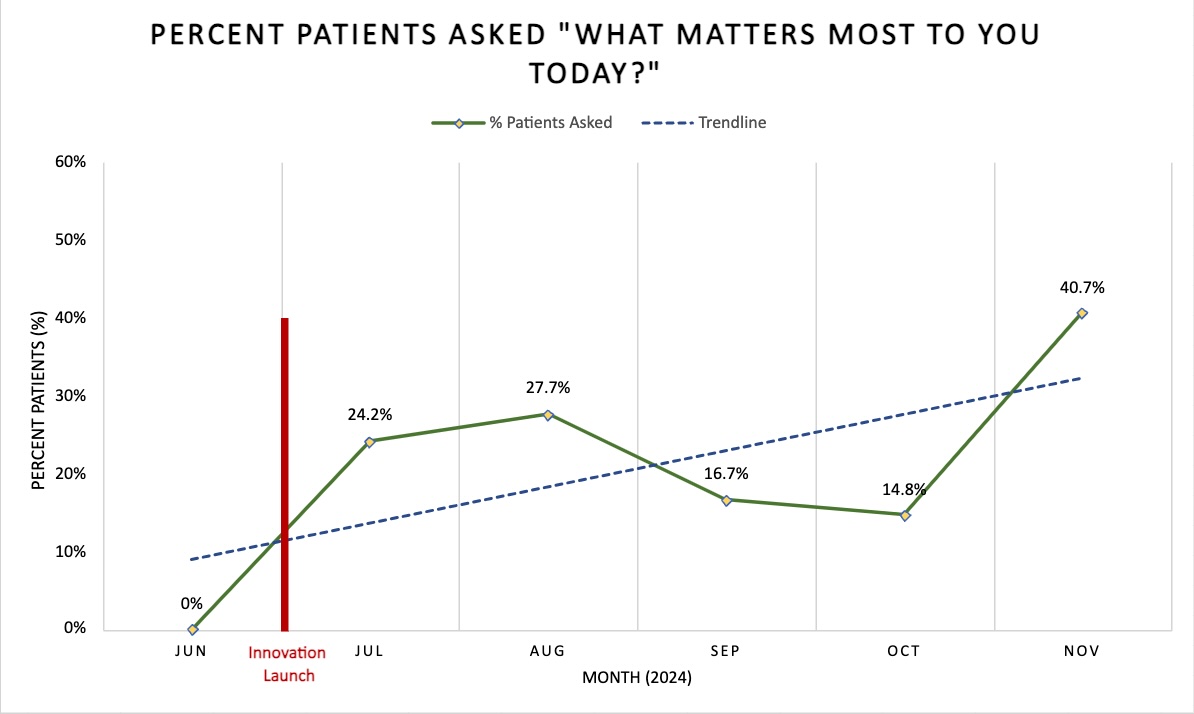
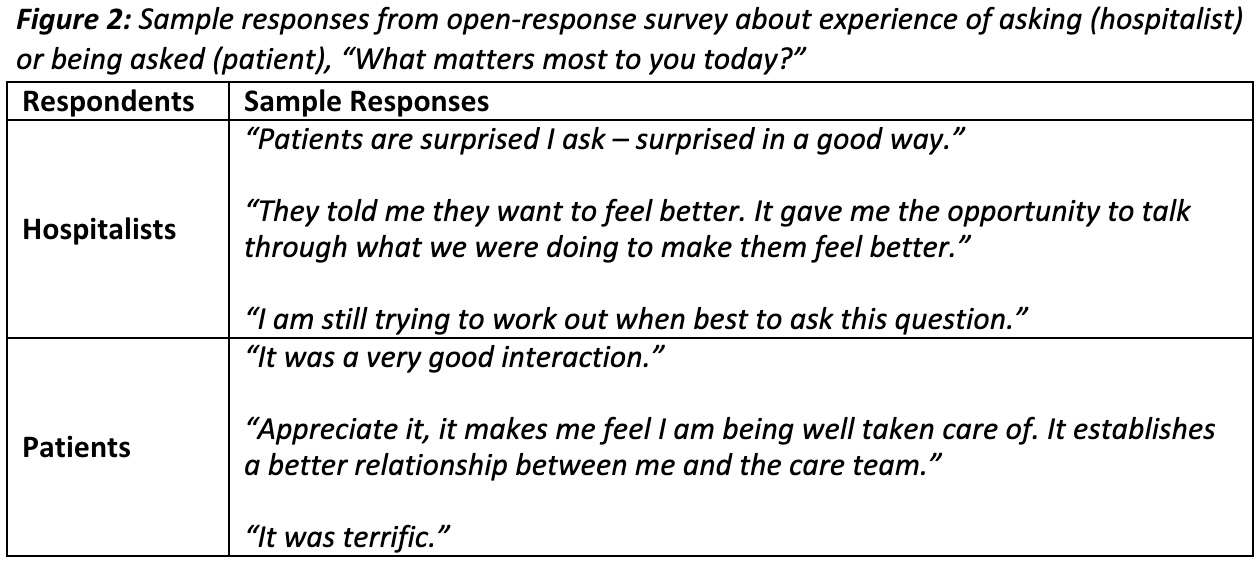
Description: In July 2024, we launched a multi-pronged innovation in our 600-bed academic hospital encouraging direct-care hospitalists to ask each patient on their service, “What matters most to you today?” during daily rounds. Prior to launch, we identified “What matters?” as an evidence-based, generalizable question, adjusting it to “What matters most to you today?” to time limit responses to the inpatient setting. The innovation was informed by key stakeholders (patients/families, nurses, hospitalists) and patient pilot survey data, both prior to launch. Additionally, we spread awareness at the Hospital Medicine divisional level, including advocating for its inclusion as a priority divisional quality metric for the 2024-25 academic year. At launch, we educated hospitalists on this innovation, including a suggested workflow. We performed targeted outreach using specifically-designed marketing materials in hospitalist workrooms, patient rooms, and virtual spaces (e.g., Zoom backgrounds). We also performed in-person check-ins in hospitalist workrooms on weekday afternoons and discussed the innovation at weekly divisional meetings to provide education and get feedback on the innovation. We measured uptake using an electronic survey sent twice weekly to hospitalists, and augmented this with in-person open- and closed-response surveys on other days. In November 2024, we also started collecting patient-reported data using in-person surveys to corroborate hospitalist self-reported data. Before launch, hospitalists were unfamiliar with the “What matters” question, and no hospitalist asked this exact question on rounds. Since launch, monthly data indicates hospitalists have started asking their patients “What matters most to you today?”, with most recent data for November 2024 showing a rate of 41% (Figure 1). Similarly, 32% of patients (n=90) report being asked this question by their hospitalist in November 2024. Qualitative feedback from patients and hospitalists has been broadly positive. Many hospitalists report asking patients what matters most to them has led to improved therapeutic relationships, though some also report barriers in changing practice habits (Figure 2). Other barriers include difficulty with measurement (survey reliance), frequent hospitalist turnover, and competing time priorities.
Conclusions: We implemented a novel, timely innovation in which hospitalists ask patients, “What matters most to you today?” to enhance understanding of patient priorities and improve the patient experience. Future work includes disseminating best practices from successful adopters, evaluating its impact on patient experience measures, incorporating responses into the electronic health record, and spreading this innovation to other services.