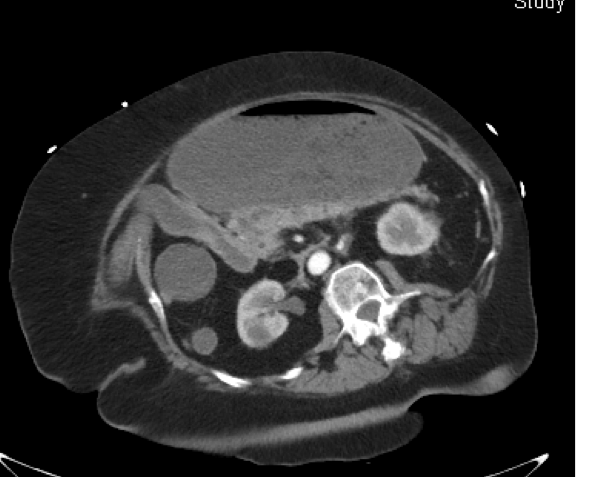
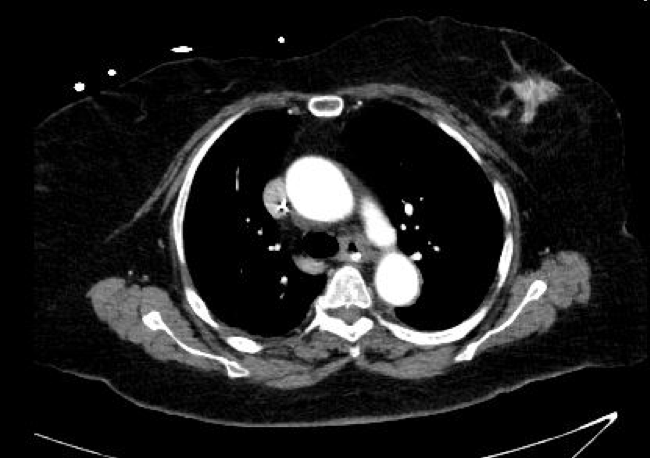
Case Presentation: A 79-year-old woman presented with three days of vomiting with associated sharp epigastric pain. She endorsed three months of progressively decreased appetite, early satiety, and weight loss. No family or personal history of cancer was reported. Vital signs and physical exam were benign. Lab tests were unremarkable. CT of the abdomen/pelvis obtained in the ED demonstrated severe distension of the stomach highly concerning for complete outlet obstruction, as well as hypoattenuating appearance of the pancreatic head and severe distension of the gallbladder. Endoscopy was performed, which demonstrated near complete stenosis of the duodenum. Duodenal biopsies returned positive for gastric adenocarcinoma with signet ring cells. For staging purposes, CT chest was obtained, and demonstrated a 2.7cmx1.6cm spiculated left breast mass. Needle core biopsy was performed, which was positive for invasive mammary lobular carcinoma. The duodenal lesion from the previous biopsy was found to be metastatic from the invasive ER/PR+ HER2 negative breast carcinoma. The patient ultimately opted for hospice care.
Discussion: Gastric outlet obstruction (GOO) is the result of any process that creates an impediment to gastric emptying. Common causes of GOO include duodenal cancer or metastasis to the duodenum, peptic ulcer disease, pancreatitis, and Crohn’s disease. Definitive treatment should involve addressing the underlying etiology with endoscopic balloon therapy, stenting, chemotherapy, or surgery.
While primary malignancies, most commonly pancreatic adenocarcinoma and distal gastric cancer are commonly associated with GOO, metastases to the GI tract may also be observed in the stomach, small bowel, duodenum, esophagus, or colon. Clinical symptoms of GI metastasis are nonspecific and include weight loss, dyspepsia, dysphagia, and bowel obstruction. The increased use of endoscopy and CT scans has resulted in greater findings of metastasis in the GI tract. Three malignancies commonly associated with GI tract metastasis are melanoma, lung cancer, and breast cancer.
Breast cancer is the most widely diagnosed malignancy in the world, and its classification requires histological evaluation to differentiate subtypes and to determine optimal treatment. One subtype of breast cancer, invasive lobular carcinoma (ILC), shows different patterns of metastasis compared to invasive ductal carcinoma. ILCs are the second most common type of invasive breast cancer, and autopsy studies have revealed that GI metastases account for 6-18% of overall metastasis. Additionally, when GI metastases of breast cancers are diagnosed via endoscopy, they are typically due to lobular breast carcinoma compared to ductal.
Conclusions: Gastric outlet obstruction has been associated with primary GI cancers and metastatic disease. Evaluation to distinguish the type of cancer is critical as treatments vary drastically.