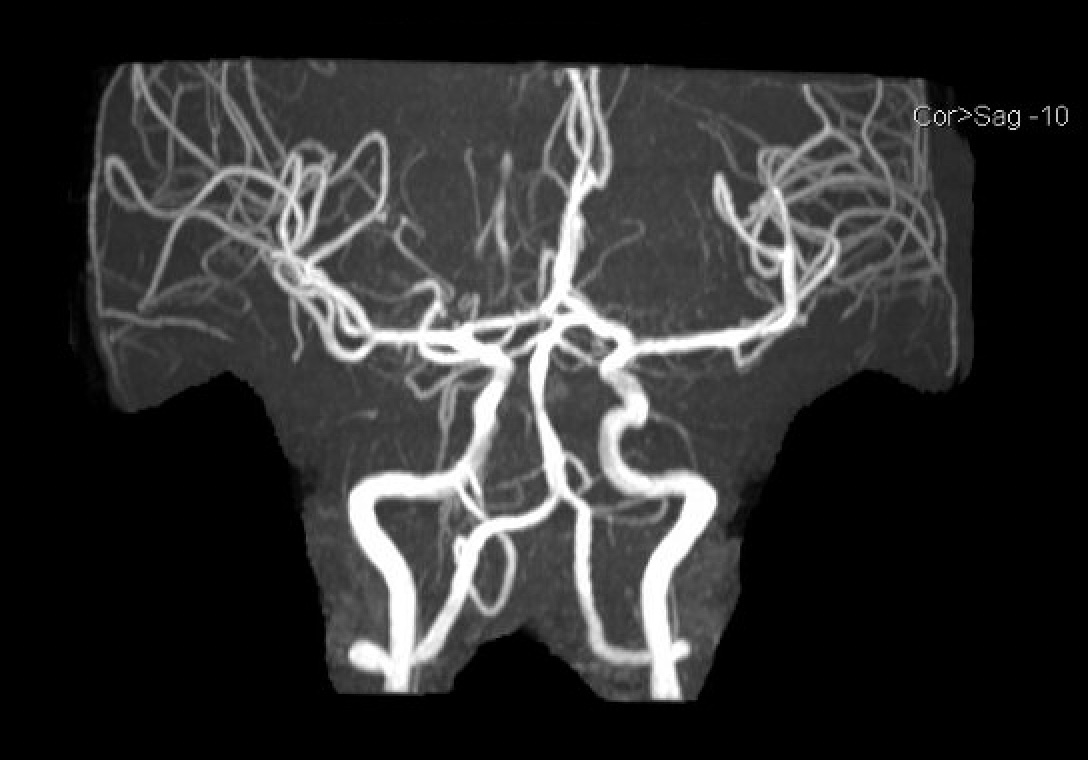
Case Presentation: The patient was a 31-year-old healthy female who presented with acute onset headache reaching maximum severity within one minute (thunderclap) associated with sexual activity at the time of orgasm. The first episode had occurred one week prior to presentation with three subsequent episodes, each with the same trigger. During each episode, she reported sudden onset of 10/10 pain in the back of her head, associated with nausea, vomiting, photo- and phonophobia, and global weakness. She denied any other associated neurologic deficits. Headaches lasted from seconds to one hour. CT angiography of the head and neck was notable for basilar artery and left cervical vertebral artery narrowing, and she was admitted for further workup and monitoring. Basilar artery narrowing was confirmed on MRA Brain (Figure 1). Autoimmune and vasculitis workup was unremarkable. She underwent diagnostic cerebral angiography (DCA), which demonstrated resolution of her basilar artery narrowing, consistent with a diagnosis of Reversible Cerebral Vasoconstriction Syndrome (RCVS). She was discharged on verapamil with a plan for outpatient follow up.
Discussion: RCVS is an uncommon but underdiagnosed syndrome marked by multifocal narrowing of cerebral arteries triggered by acute physiologic stress, often presenting with recurrent thunderclap headaches. Most patients do not develop any focal neurologic symptoms, however there is a risk of ischemic stroke or hemorrhage from vasoconstriction. Symptoms generally resolve within days to weeks. Treatment includes supportive measures and calcium channel blockers to treat vasoconstriction if it does not self-resolve. In this case, the imaging and angiography findings were diagnostic, with vasoconstriction observed on CTA and MRA brain and subsequent resolution on DCA several days later, typical of RCVS. In conventional medical teaching, thunderclap headache is a red flag symptom treated as a neurologic emergency, with subarachnoid hemorrhage (SAH) leading the differential. This patient presented with multiple classic thunderclap headaches associated with orgasm and without lasting neurologic deficits, suggesting an alternate diagnosis. The differential included RCVS, primary angiitis of the central nervous system (PACNS), and primary sex headache. This case offered a unique opportunity to review uncommon causes of thunderclap headache besides SAH in a patient who is otherwise stable and without neurologic deficits. Additionally, the association with orgasm is an uncommon finding. Onset of symptoms with physiologic stress is typical of RCVS, however the specific association with orgasm in this case expanded the differential to include such diagnoses as primary sex headache, an uncommon and poorly understood benign headache disorder possibly related to migraine.
Conclusions: RCVS is an uncommon cause of thunderclap headaches but should be considered in a patient presenting with recurrent headaches triggered by physiologic stress without neurologic deficits.