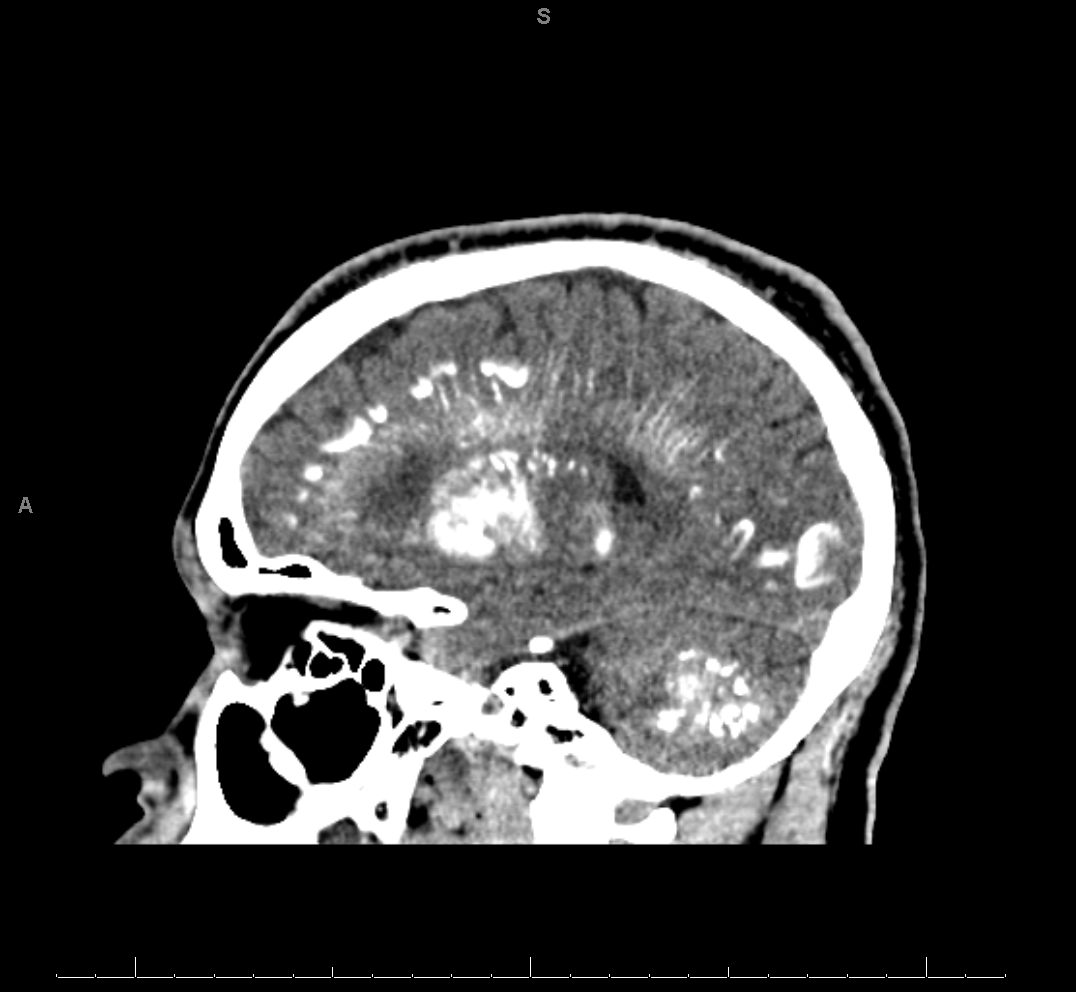
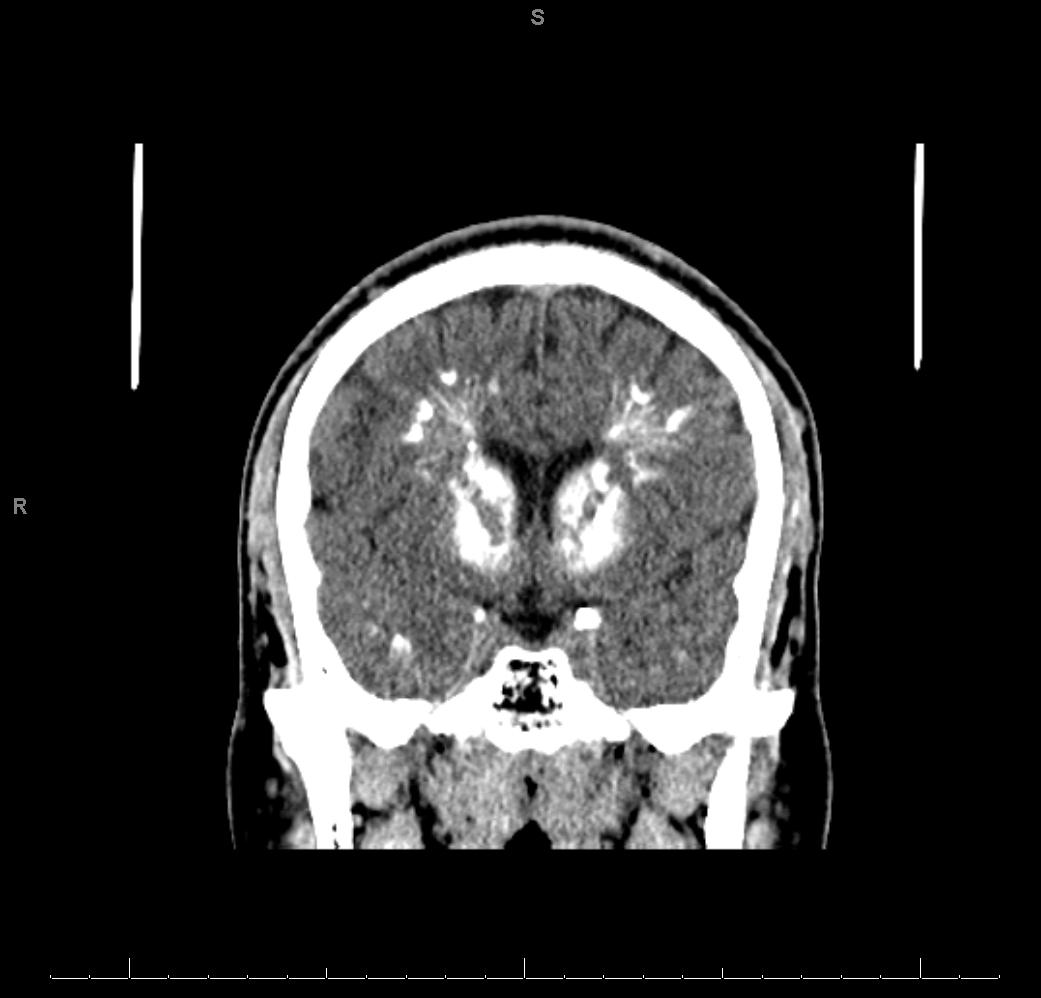
Case Presentation: A 30-year-old male with history of seizure disorder presented to the emergency department following a witnessed epileptic event. His only medical history is two tablets of tums three times a day with meals; however, he accidentally missed two days-worth of doses. Physical examination was unremarkable. Labs were pertinent for Ionized Calcium 0.46 mmol/L and Creatine Kinase 1,565 U/L. CT Head was significant for bilateral calcifications with particular hyperintensity foci in the cerebellum, basal ganglia, and frontal lobes. Besides calcium repletion and initiation of an antiepileptic, the patient was admitted to the hospital for further evaluation and management. An electroencephalography was negative and a MRI Brain was consistent with prior imaging findings which were highly suggestive of Fahr’s Syndrome. The patient remained asymptomatic throughout his hospitalization. He was eventually discharged with calcium supplementation and an antiepileptic.
Discussion: Fahr’s syndrome, a rare neuropsychiatric disorder with a prevalence less than 1/1,000,000, is characteristic for bilateral idiopathic basal ganglia calcifications. At an age of onset between 30 – 40, this neurological phenomenon is a result of an underlying endocrinopathy, infection, or genetic predisposition.The metabolic disorders most frequently linked to Fahr’s syndrome are hypoparathyroidism and pseudoparathyroidism. The exact mechanism is unknown, however several potential pathways have been proposed. These include the formation of calcium-phosphorus complexes, local disruptions to the blood-brain barrier, and abnormalities in neuronal calcium metabolism, all of which may contribute to the deposition of calcium within the brain parenchyma.Our case of Fahr’s syndrome stands out amongst the rest due to the patient’s inadvertent delay of symptom onset due to ingestion of tums since his teenage years alongside his lack of any residual neurological deficits. His labs were consistent with hypoparathyroidism which was the underlying cause of his hypocalcemia. It is well known that tums contains calcium carbonate, thus, it can be theorized that he unknowingly elevated his electrolyte levels enough to prevent hypocalcemia. As soon as he missed two days’ worth of doses he presented with epileptic activity. After acute management of his seizure, he continued to show no signs of motor, memory impairment, or emotional disturbance despite intracranial calcifications found in his cerebellum, basal ganglia, and frontal lobes.From a hospitalist standpoint this case highlights, not only the necessity of prompt treament of electrolyte abnormalities, but also the identification and diagnosis of this rare disorder. There is no cure for Fahr’s syndrome, but correcting metabolic abnormalities, dietary modification, and symptomatic treatment with medications can improve symptoms and cease progression. This will ultimately prevent hospital readmissions and further delterious adverse events for these patients.
Conclusions: This case highlights Fahr’s syndrome secondary to hypoparathyroidism, uniquely masked for years by calcium carbonate supplementation. While there have been multiple proposed mechanisms, the underlying pathophysiology is yet unclear. Early recognition and prompt treatment by hospitalists is essential to prevent further disease progression and hospital readmissions.