Background: Hospitalized patients often present with conditions that stimulate antidiuretic hormone (ADH) secretion, increasing the risk of hyponatremia. About one-third of serum sodium measurements fall below 135 mmol/L. Real-world evidence on association between IV fluids and Hyponatremia prevalence is limited. From October to December 2024, Hurricane Helene disrupted IV fluid production, creating a natural experiment to assess the impact of reduced IV fluid availability on hyponatremia.
Methods: We performed a retrospective analysis using de-identified data from EPIC Cosmos and Patient Cohort Explorer for adult and pediatric patients admitted during the last quarter of each year from 2020–2024. IV fluid use was measured as the number of encounters with IV fluid administration. Hyponatremia (< 135 mmol/L) was assessed at two levels:Encounter-level: Percentage of encounters flagged for hyponatremia.Lab-level: Percentage of sodium measurements < 135 mmol/L.Descriptive statistics and 95% confidence intervals were calculated.
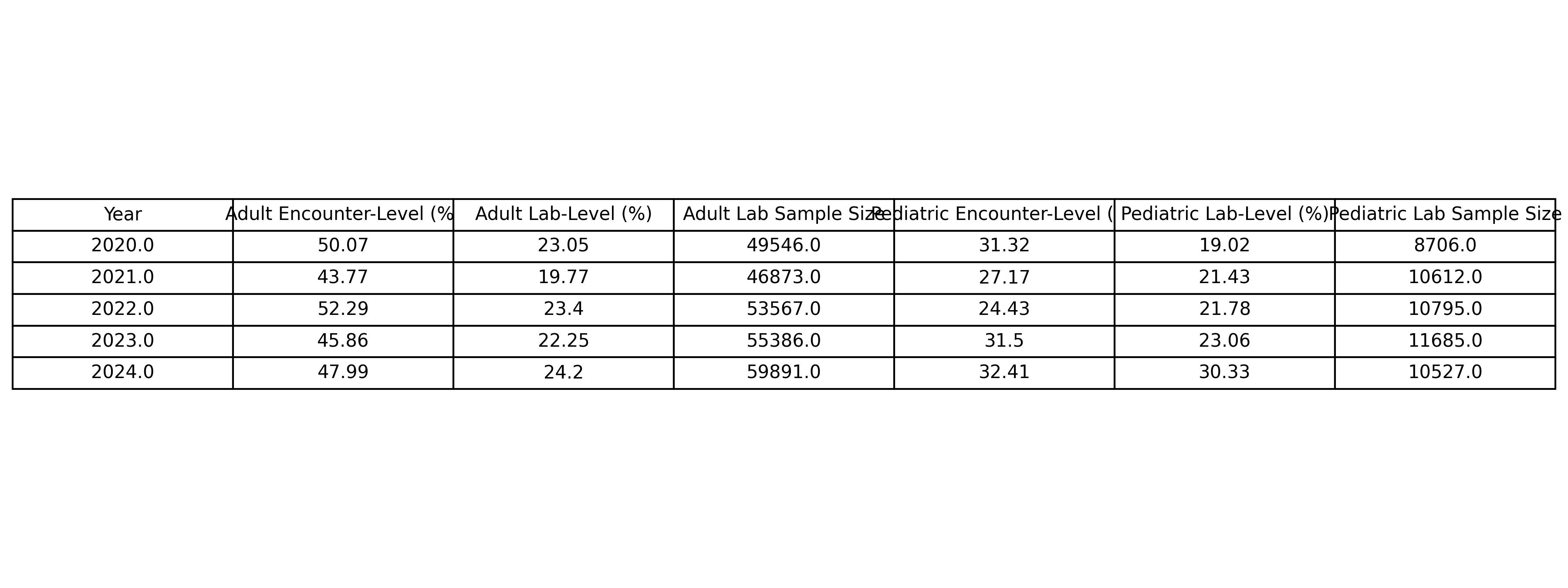
Results: IV fluid use declined sharply in 2024 (adults: 3,461 in 2020 vs. 1,777 in 2024; pediatrics: 798 vs. 501). Encounter-level hyponatremia prevalence remained stable across most years (adults ~45–50%, pediatrics ~31–32%), except for pandemic-related decreased prevalence in 2021 (adults: 43.8%) and 2022 (pediatrics: 24.4%). During the shortage, prevalence did not rise (adults: 48.0%; pediatrics: 32.4%). Lab-level prevalence showed a different pattern: adults increased to 24.2% in 2024, and pediatrics rose markedly to 30.3%, suggesting prolonged hyponatremia during the shortage.
Conclusions: Principal FindingsIV fluid use declined significantly in both adults and pediatrics during the last quarter of 2024 due to Hurricane Helene-induced shortages. Encounter-level hyponatremia prevalence remained stable across most years, even during the shortage, while lab-level prevalence increased, particularly in pediatrics.Interpretation of TrendsThe stability of encounter-level prevalence suggests that the proportion of patients with ADH-stimulating conditions was similar across years. However, the rise in lab-level prevalence during the shortage indicates that patients who developed hyponatremia may have remained in that state longer due to limited access to IV fluids. The effect appeared more visible in children, likely because their smaller body size amplifies fluid and electrolyte shifts, making imbalances more apparent compared to adults.Pandemic-Related OutliersLower level of hyponatremia prevalence in adults during 2021 and in pediatrics during 2022 coincided with COVID-19 hospitalization surges. Operational changes during these waves—such as isolation protocols limiting access to free water—may have influenced hydration patterns. These effects were transient and unrelated to IV fluid availability, as prevalence remained stable in other years.Clinical ImplicationsIV fluid shortages did not increase encounter-level hyponatremia prevalence but were associated with higher lab-level prevalence, particularly in pediatrics, likely due to reliance on oral hydration without electrolytes.
.jpg)