Background:
Paracentesis, thoracentesis, and lumbar puncture are three of the most commonly performed inpatient medicine procedures (MP). Our hospital has no specific resource to outline safe practices and standardization of MP performance and documentation. As a result, laboratory tests were often ordered incorrectly, documentation lacked key information, and the entire procedure process became inefficient and cumbersome. Furthermore, given these difficulties in the setting of increasing resident duty hour restrictions, many patients are being inappropriately referred to specialty services resulting in missed educational opportunities and lack of resident confidence related to core procedural skills.
Purpose:
To develop a fully‐integrated procedure note template within the Computerized Patient Record System (CPRS) at our institution which would include all aspects of MP from start to finish. The ultimate objective was to make the process of performing MP safer, efficient, and more effective for patients, while increasing resident exposure to core procedural skills.
Description:
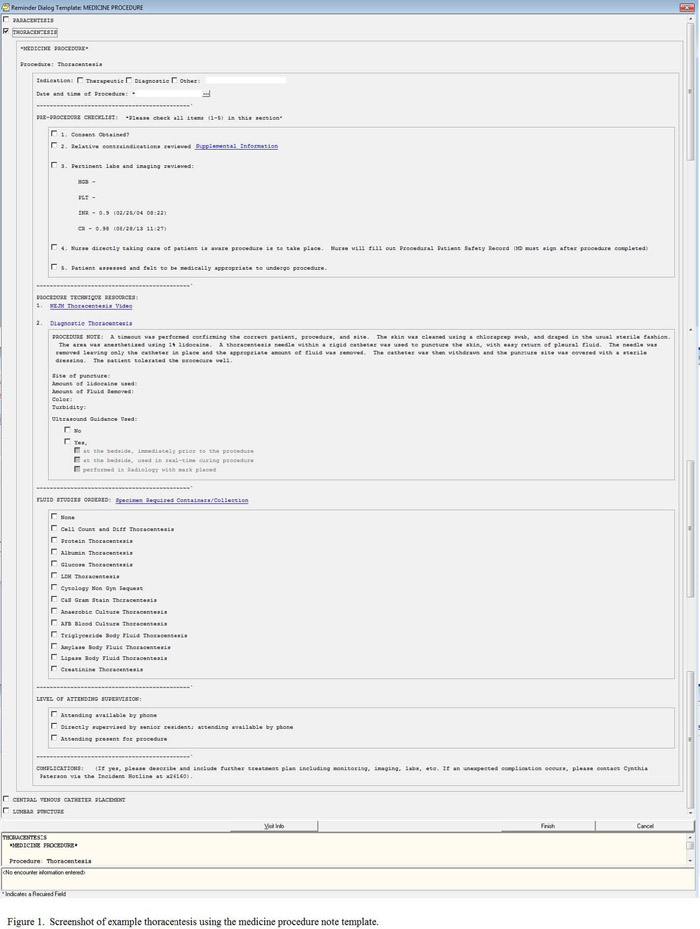
An interactive note template (known as a CPRS reminder dialogue) was constructed, which is initiated prior to performing any inpatient MP. This includes a pre‐procedure checklist confirming that consent has been obtained, relevant lab values were reviewed, and appropriate indications and contraindications were considered. The pre‐procedure section includes links to resources for procedure techniques (including videos), indications, and management of complications. The following section allows ordering of the most commonly requested fluid analysis test. At this point the template is saved in draft form, and the procedure is performed. The physician then returns to the note to complete the prompted sections; documenting the technique used, level of attending involvement, use of image guidance, and any immediate complications encountered. The note is then signed, at which point it is immediately available for all users to view in the medical record. Please see Figure 1 for an example thoracentesis using the MP note template.
Conclusions:
It is possible to develop an integrated inpatient MP template. By having one standardized source which includes a pre‐procedure assessment, interactive lab ordering, and standardized documentation process we hope to increase efficiency, documentation compliance, and patient safety. Furthermore, by streamlining this process we believe resident exposure to MP will increase, and aid in achieving core procedural skills. This tool could easily by implemented at other institutions.