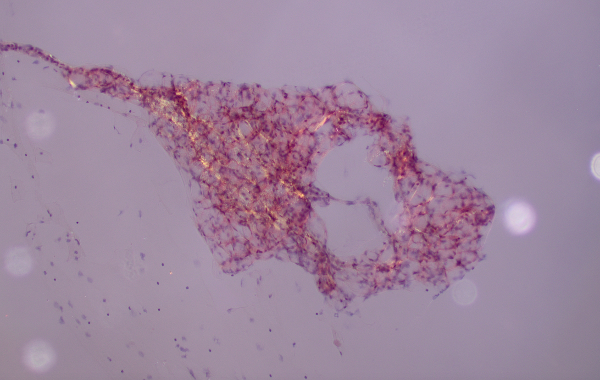
Case Presentation: A 61-year-old man with a history of non-ischemic cardiomyopathy presented with recurrent abdominal pain. He was initially admitted one month prior for abdominal pain with concern for acute bowel ischemia. He underwent exploratory laparotomy which showed good perfusion but required detorsion of a portion of the jejunum. After discharge, he was soon readmitted with persistent symptoms. His physical exam was notable for normal vital signs, bilateral lower extremity pitting edema, and diffuse abdominal distention and tenderness with a well-healed midline scar. Laboratory studies revealed elevated B-type natriuretic peptide, normal lactic acid, and no electrolyte abnormalities. CT scan demonstrated a dilated proximal middle small bowel and decompressed distal ileum, suggesting obstruction but with no clear transition point. The leading diagnosis was a stricture at the prior torsion site. He was being medically managed with NG tube decompression with ongoing large volume NG tube output, requiring initiation of total parenteral nutrition (TPN). He underwent repeat diagnostic laparoscopy twelve weeks after surgery with no evidence of stricture or obstruction. Alternative etiologies for ileus were explored. Serum protein electrophoresis showed a monoclonal spike of 0.3. Given his chronic gut dysmotility and non-ischemic cardiomyopathy, there was concern for systemic amyloidosis. Abdominal fat pad biopsy demonstrated Congo-red-positive stain with apple-green birefringence consistent with amyloidosis. He was not a treatment candidate due to disseminated disease and poor functional status and was discharged to a long-term acute care hospital on TPN with a gastrostomy tube.
Discussion: Amyloidosis is characterized by extracellular deposition of misfolded protein fibrils known as amyloid leading to organ dysfunction and failure. Amyloidosis can affect many organ systems including skin and soft tissue, heart, lungs, kidneys, gastrointestinal (GI) tract, joints, blood, and nervous system. Systemic amyloidosis prevalence is approximately 51–191 cases per million with higher rates in older adults. The heart is the most commonly affected organ, often presenting as heart failure symptoms. Approximately 17% of patients have GI involvement; symptoms are often nonspecific, including weight loss, diarrhea, constipation, abdominal pain, nausea/vomiting, and GI bleeding. These symptoms are often attributed to other causes which can delay diagnosis. Amyloid deposition disrupts key structures involved in GI motility, including the enteric nervous system, vasculature, and smooth muscle. Of those with GI involvement, approximately 23% of patients have gastroparesis symptoms. Survey data indicate that only 26% of patients with amyloidosis are diagnosed within one year of symptom onset. Therapy options include select immunomodulatory and chemotherapeutic drugs. For some patients with good performance status and limited organ dysfunction, autologous stem cell transplant therapy can be highly effective.
Conclusions: Amyloidosis is an uncommon but clinically significant infiltrative disease with highly variable, multisystem presentations.GI amyloidosis can mimic common gastrointestinal disorders, and it should be included on the differential when nonspecific symptoms persist despite standard evaluation and therapy.GI dysmotility can occur in amyloidosis by various mechanisms and should be considered when no mechanical or metabolic cause for motility impairment is found.