Background: Extended respiratory viral panels (RVPs) are routinely used across healthcare settings despite limited evidence of clinical benefit for most immunocompetent patients.1,2,3 Guidelines advise against routine use, citing minimal impact on management and high cost.4,5,6 Existing interventions to reduce RVP overuse have relied on education, audit and feedback, and order restrictions.7,8 Escovedo et al. demonstrated the efficacy of non-intrusive clinical decision support (CDS) tools in the electronic medical record (EMR) to curb extended RVP overuse.9 We developed a multifaceted strategy designed to reduce extended RVP utilization and promote more specific viral testing when appropriate.
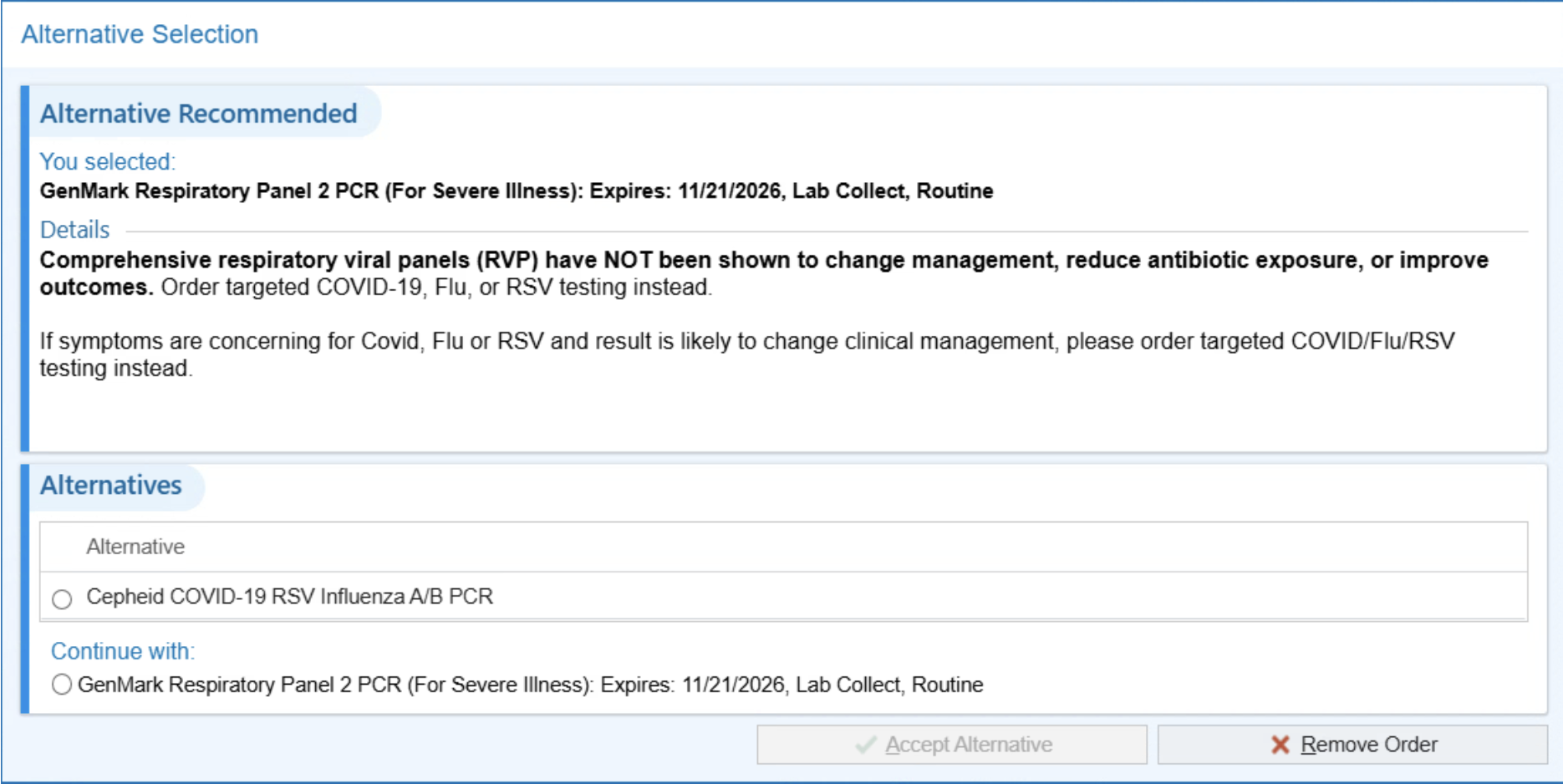
Methods: This quality improvement initiative was conducted in a large municipal public health system composed of 11 acute care hospitals and 70+ ambulatory clinics. We targeted three separate extended RVP tests available to order in our system. The intervention included three CDS components: updated test display titles with guidance on appropriate use (for the immunocompromised or severely ill); mandatory in-order prompts requiring users to confirm appropriate indications; and a best practice advisory (BPA) recommending more specific testing for COVID-19, Respiratory Syncytial Virus (RSV), and influenza (Figure 1). Additionally, adult emergency and primary care settings disabled ordering of extended RVP. We compared extended RVP orders per 1,000 encounters or inpatient days during 52-week pre- and post-intervention periods between November 2022 and January 2025. Advisory acceptance was defined as accepting the alert’s recommendation to remove the original RVP order and replace it with more specific testing. Antibiotic administrations/prescribing for pneumonia-related encounters (orders per 1,000 encounters or inpatient days) served as a balancing measure. This project was deemed a quality improvement project by our institution’s research office, and was exempted from IRB review.
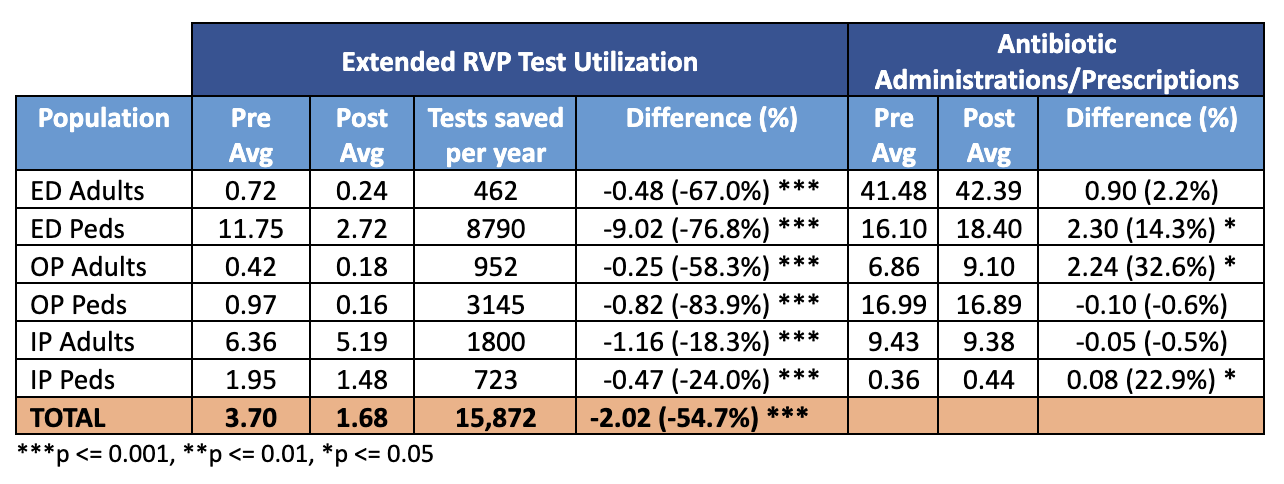
Results: Results are presented in Table 1. Systemwide extended RVP utilization decreased by 54.7% (p< 0.001), preventing an estimated 15,872 tests annually. The largest reductions occurred in the pediatric emergency (76.8%,) and pediatric outpatient (83.9%) settings (p < 0.001). Adult emergency and outpatient areas showed reductions of 67.0% and 58.3%, respectively (p < 0.001). Inpatient testing declined more modestly (18.3% in adult settings, 24.0% in pediatric settings, p< 0.001). Advisory acceptance rate was 6.6%. There was no significant increase in antibiotic use for the indication of pneumonia in the adult inpatient, adult emergency department, and pediatric outpatient settings. However, antibiotic use did increase in the pediatric inpatient and emergency departments, along with the outpatient adult setting.
Conclusions: Our multi-faceted intervention substantially reduced extended RVP use across a large health system without clinically significant increases in antibiotic use in several clinical settings. These findings demonstrate that CDS strategies emphasizing informed clinician choice along with more restrictive approaches, can meaningfully curb low-value testing at scale and may offer a sustainable model for promoting appropriate viral testing. Future work should evaluate patient-level appropriateness criteria and downstream clinical outcomes following such interventions.