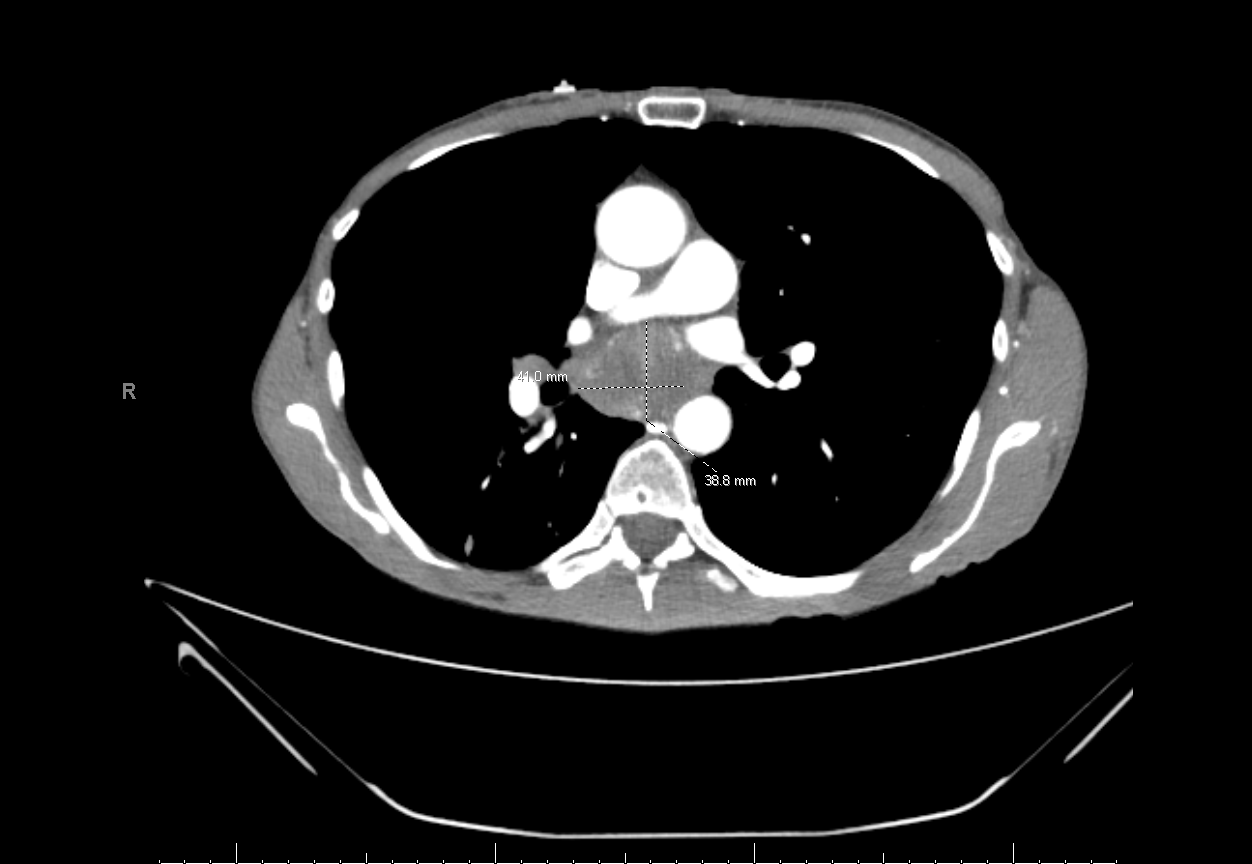
Case Presentation: A 57 -year-old male with a history of small cell lung cancer with metastases to the liver and bone, status post four cycles of chemotherapy, presented with coffee-ground emesis and constipation. Endobronchial ultrasound- guided fine-needle aspiration revealed small cell lung carcinoma with malignant cells in the #7 node and carina, positive for CD56. Ultrasound- guided liver biopsy demonstrated metastatic moderately differentiated adenocarcinoma with necrosis. Chest CT showed a right infracarinal lymph node (3.9 x 4.1 x 5.6 cm), bibasilar nodular densities (intermediate for infection or malignancy), a stable T7 lytic lesion (1.0 cm) and multiple hypoenhancing hepatic lesions (up to 2.6 x 2.6 x 3.2 cm), consistent with metastatic disease. EGD and colonoscopy showed no malignancy, but identified tubular adenomas in the descending and transverse colon and a hyperplastic rectal polypOn admission, hemoglobin was 7.3 g/dL, WBC 30.26 x 10⁹/L, with significant left shift and 4% nucleated red blood cells. Bone marrow aspiration and biopsy showed focal infiltration of the marrow by metastatic moderately differentiated adenocarcinoma with necrosis. Repeat EGD revealed focal acute gastritis with fungal organism consistent with Candida species.This case is remarkable for the coexistence of two different malignancies- small cell carcinoma and adenocarcinoma. Combined small cell carcinoma of the lung is rare, and prognosis is poor. The oncology team recommended palliative care and patient decided comfort measure.
Discussion: In this patient’s presentation, mediastinal lymph node biopsies confirmed SCLC, while liver and bone biopsies demonstrated moderately differentiated adenocarcinoma with necrosis. Management of dual malignancies of SCLC and adenocarcinoma is challenging. SCLC is primarily treated with platinum-based chemotherapy and radiotherapy, while adenocarcinoma may benefit from targeted therapies and immunotherapies. The coexistence of malignancies may limit available treatment options. Therefore, multidisciplinary collaboration is critical for guiding prognosis and goals-of-care discussions. Early involvement of palliative care is essential for symptoms management and quality-of-life concerns.
Conclusions: The clinical case highlights the complexity and challenge of synchronous small cell lung carcinoma and metastatic adenocarcinoma in a single patient. The coexistence of two distinct malignancies complicates both diagnosis and treatment, as therapeutic strategies for each differ significantly. Given the aggressive nature and poor prognosis of combined disease, multidisciplinary collaboration and timely goals-of-care discussions are crucial to ensure patient-centered decision-making and optimize quality of life.
.png)