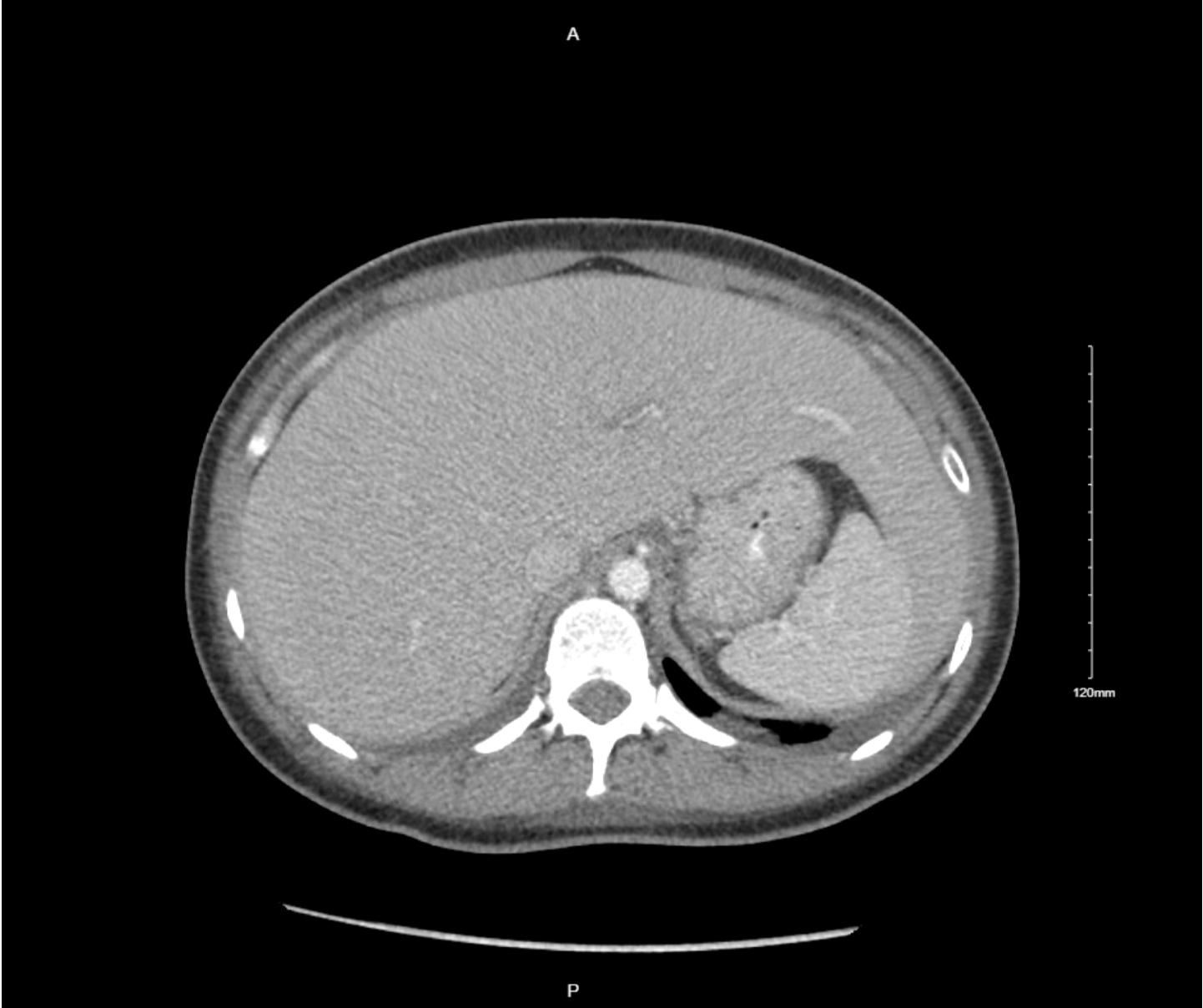
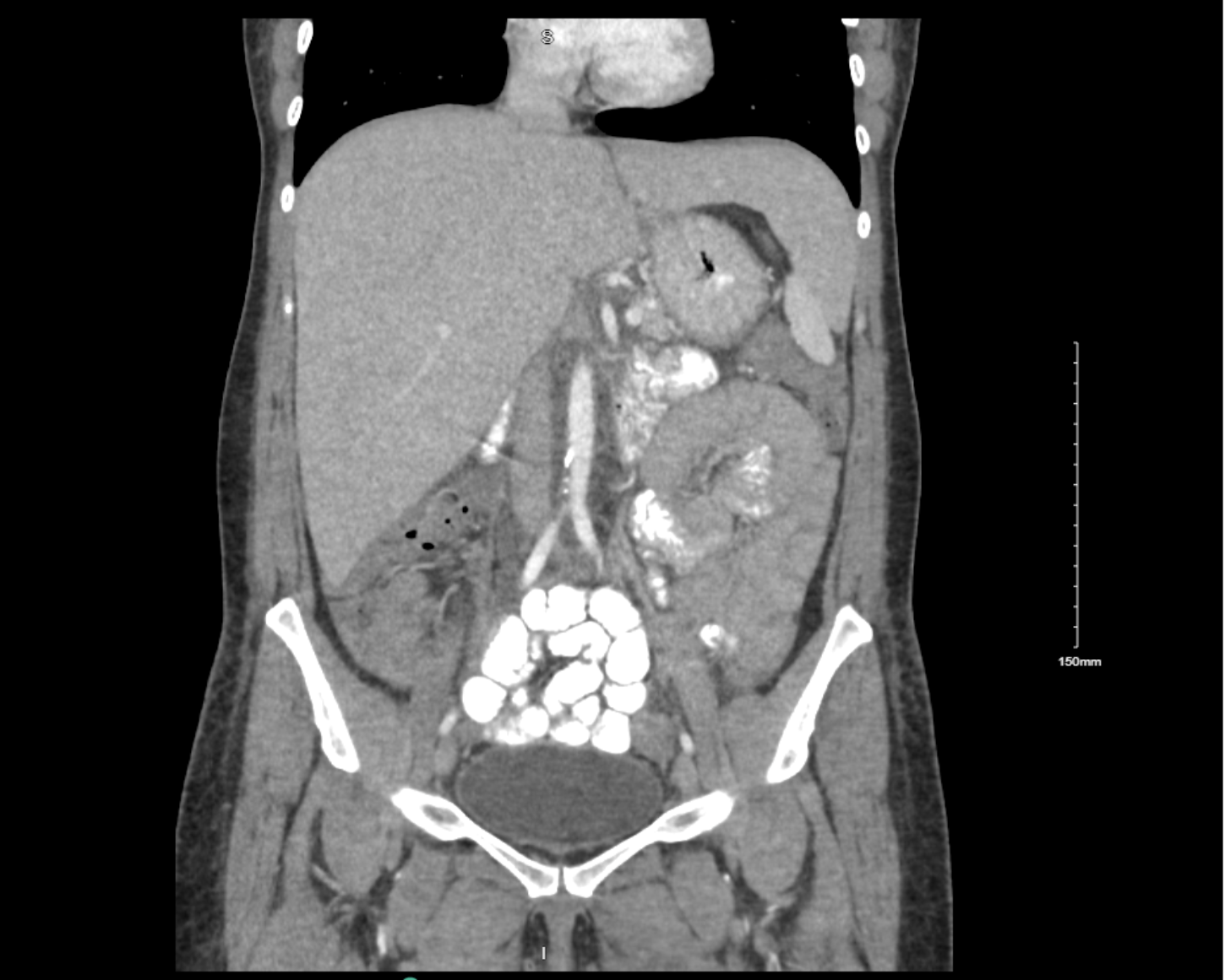
Case Presentation: A 34-year-old, un-domiciled, woman with T1DM, hypertension, hypothyroidism, polysubstance use disorder, and depression presented with nausea, vomiting, and diffuse abdominal pain for 24 hours. She had run out of her long-acting insulin one month prior and was substituting with short-acting insulin until she ran out of that as well two days before admission. On exam, she was tachycardic to 114 and had periumbilical tenderness. Labs were notable for glucose level of 742 mg/dL (74-106 mg/dL), pH 7.10 (7.32-7.43), CO2 6 mmol/L (22-29 mmol/L), lactate 2.1(0.6-1.4 mmol/L), anion gap 36 mmoL/L (5-15 mmoL/L), β-hydroxybutyrate 11.3 mmol/L (< 0.4 mmol/L), ALT 184 U/L (0-33 U/L), AST 60 U/L (5-32 U/L), Bilirubin 0.4 (0.0-1.2 mg/dL), alkaline phosphatase 211 U/L (35-104 U/L), and Lipase 22 (13-60 U/L). The patient was diagnosed with diabetic ketoacidosis and was started on an insulin drip and later transitioned to subcutaneous insulin. On day 2, the patient reported increasing abdominal discomfort and had bilateral upper quadrant abdominal tenderness on exam. Labs were notable for lactate of 6.1 mmol/L, ALT 769 U/L, and AST 2,738 U/L. CT scan of the abdomen revealed hepatomegaly with a right lobe length of 24 cm and a contracted gallbladder. Hepatitis A, B, C, E, EBV, CMV, and HSV serologies, ANA, anti-smooth muscle antibodies, LKM antibodies, acetaminophen level, antimitochondrial antibodies, ceruloplasmin, and tissue transglutaminase antibodies were all negative. Glycogenic hepatopathy (GH) was suspected as other etiologies of hepatitis were ruled out. Over the next 48 hours, the patient's pain improved, transaminases decreased dramatically, and lactate levels normalized. The patient was discharged two days later.
Discussion: GH is predominantly observed in children with T1DM but has also been reported in adults and rarely in T2DM. It is caused by fluctuation in glucose and insulin levels leading to accumulation of glycogen in hepatocytes. During episodes of hyperglycemia, glucose enters hepatocytes through passive diffusion and is converted to glycogen under the influence of insulin. In patients with uncontrolled diabetes, this process is exaggerated, resulting in hepatomegaly and elevated liver enzymes, typically without significant fibrosis or inflammation. Histologically, GH is characterized by glycogen-filled hepatocytes with pale, swollen cells and minimal inflammatory changes. Diagnosis of GH is difficult and is often made by liver biopsy once other etiologies are excluded. Glycemic control is the main treatment for GH, and once it is achieved, GH resolves within days.
Conclusions: GH is a reversible liver disorder associated with poorly controlled T1DM. It is characterized by a transient rise in liver enzymes and hepatomegaly. GH can mimic many other liver diseases such as viral hepatitis, shock liver, and drug-induced liver injury. Recognizing this little known complication can help clinicians avoid unnecessary interventions. In cases where GH is suspected and other conditions have been ruled out, a biopsy may be deferred in clinically stable patients to assess response to glycemic control.