Background: Growth faltering (or failure to thrive) is a common paediatric problem, found in approximately 3-5% of hospitalized children1,2. Inpatient evaluation of growth faltering generally focuses on identifying the underlying etiology of poor weight gain, but complex genetic conditions can be difficult to identify during a short hospital admission. In a recent study that followed patients with growth faltering for 2 years post-discharge, most genetic disorders were undiagnosed during admission, and 36% of patients ultimately diagnosed with a genetic disorder were not suspected of having a genetic disorder during admission. This study is a sub-analysis of this prior work to assess if an abnormal mechanical swallowing assessment was associated with an increased incidence of genetic abnormalities among patients with growth faltering.
Methods: This is a retrospective cohort study of patients who were admitted to the UPMC Children’s Hospital of Pittsburgh with an index admission for growth faltering between 2013 and 2017. Patients with known medical conditions, who were premature under 35 weeks GA, or who lacked 2-year follow-up data post-discharge were excluded. Clinical data during the initial admission and follow-up were reviewed to determine the relationship between the patient’s speech assessment and the presence of a genetic condition.
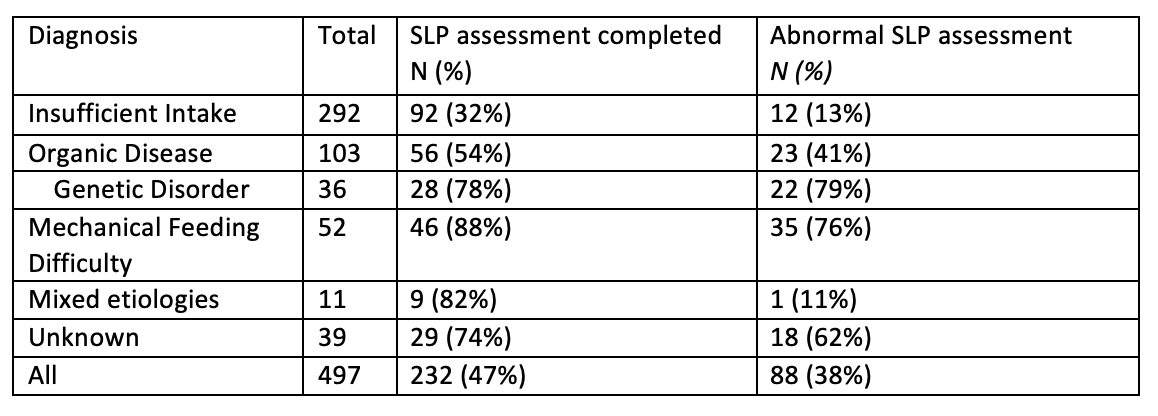
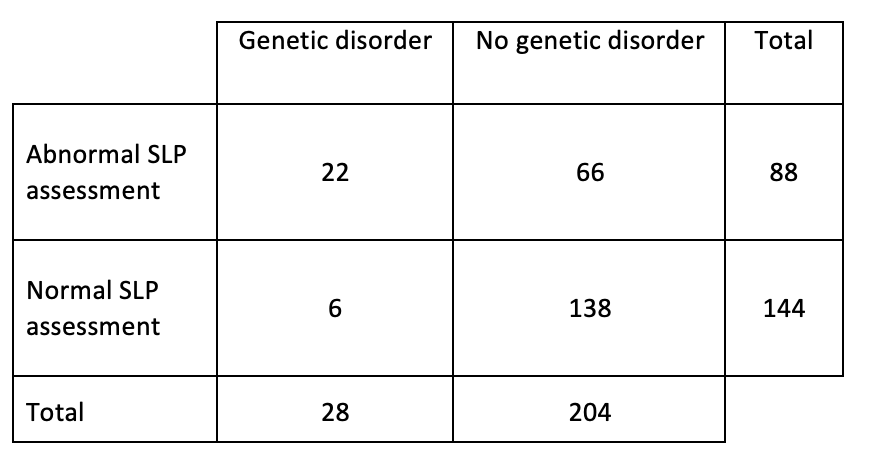
Results: 497 patients were included in the initial study, of whom 232 (47%) underwent a swallowing assessment by a paediatric speech language pathologist. The presence of a feeding evaluation on its own was associated with increased likelihood of a genetic disorder (OR 4.41, 95%CI = 1.97, 9.88). Abnormal results on feeding evaluation were strongly associated with underlying genetic disorder. 79% of patients with genetic disorders (22 of 28) who underwent a swallowing assessment had an abnormal result, compared to 32% of patients with other diagnoses (66 of 204). Of 88 patients with an abnormal swallowing assessment, 22 (25%) had a genetic disorder. Overall, an abnormal feeding evaluation increased the likelihood of a genetic disorder by almost 8 times (OR 7.97, 95%CI = 2.97, 19.81).
Conclusions: Among patients admitted to hospital with growth faltering, an abnormal speech assessment was significantly associated with an eventual diagnosis of an underlying genetic disorder. As genetic disorders frequently went unsuspected during admission, this study suggests that an abnormal speech assessment should prompt further genetic evaluation and testing.